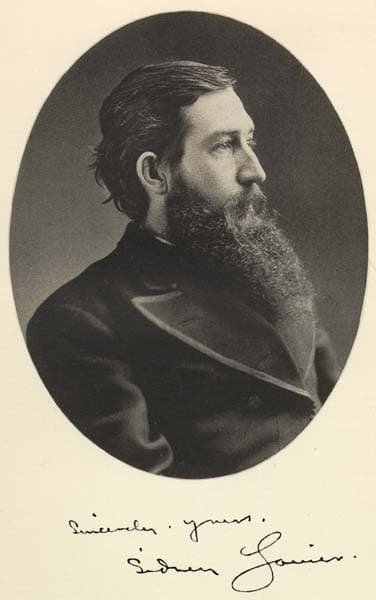
Sidney Lanier
Sidney Clopton Lanier was an influential American poet, musician, and author whose life was marked by a blend of artistic pursuits and personal struggles. Born in Georgia, he served as a private in the Confederate Army during the Civil War, an experience that deeply affected his worldview and later influenced his writing. After the war, Lanier faced significant health challenges, including tuberculosis, which he contracted while working on a blockade-running ship. Despite these hardships, he pursued a diverse career that included teaching, performing music, and practicing law, ultimately becoming a professor of literature at Johns Hopkins University in Baltimore. Lanier's poetry is notable for its musicality and use of dialects, often reflecting the cultural landscape of the South. His works, such as "The Marshes of Glynn" and "Song of the Chattahoochee," showcase his ability to weave natural imagery with profound emotional depth. He is recognized for adapting musical meter to poetry, creating a unique rhythm that enhances the lyrical quality of his verses. Hailed as the 'poet of the Confederacy,' Lanier's legacy endures in American literature, with numerous schools and landmarks named in his honor, and a 1972 U.S. postage stamp commemorating his contributions to poetry.
Famous Quotes
View all 3 quotes“Music is love in search of a word.”
“Through the seas of dreams and the seas of fantasies, through the seas of solitudes and vacancies, and through myself, the deepest of the seas, I strive to thee, Nirvana.”
“like the old saying goes,if you want to be found stand where the seeker seeks”
Books from the author



















Link to this page
Add a free, dofollow link to Lex on your blog, forum, syllabus, or reading list.

<a href="https://lex-books.com/author/sidney-lanier"><img src="https://lex-books.com/badges/read-on-lex.svg" alt="Sidney Lanier on Lex" width="160" height="40"></a>[](https://lex-books.com/author/sidney-lanier)[url=https://lex-books.com/author/sidney-lanier][img]https://lex-books.com/badges/read-on-lex.svg[/img][/url]Sidney Lanier on Lex: https://lex-books.com/author/sidney-lanier