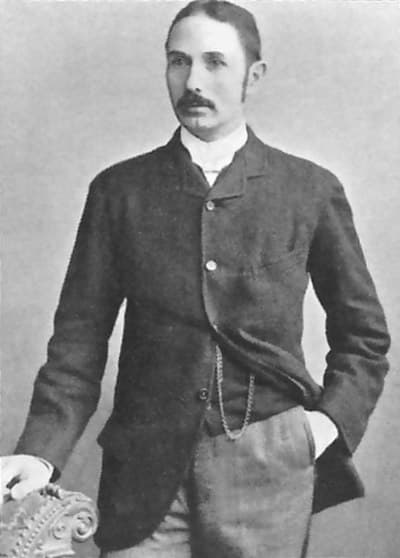
John Hartley
Famous Quotes
View all 3 quotes“R. V. L. Hartley, the inventor of the Hartley oscillator, was thinking philosophically about the transmission of information at about this time, and he summarized his reflections in a paper, “Transmission of Information,” which he published in 1928.””
“H, the information of the message, as the logarithm of the number of possible sequences of symbols which might have been selected and showed that H = n log s Here n is the number of symbols selected, and s is the number of different symbols in the set from which symbols are selected. This is acceptable in the light of our present knowledge of information theory only if successive symbols are chosen independently and if any of the s symbols is equally likely to be selected. In this case, we need merely note, as before, that the logarithm of s, the number of symbols, is the number of independent 0-or-1 choices that can be represented or sent simultaneously, and it is reasonable that the rate of transmission of information should be the rate of sending symbols per second n, times the number of independent 0-or-1 choices that can be conveyed per symbol. Hartley goes on to the problem of encoding””
“Finally, Hartley stated, in accord with Nyquist, that the amount of information which can be transmitted is proportional to the band width times the time of transmission. But this makes us wonder about the number of allowable current values, which is also important to speed of transmission. How are we to enumerate them?””
Books from the author



Link to this page
Add a free, dofollow link to Lex on your blog, forum, syllabus, or reading list.

<a href="https://lex-books.com/author/john-hartley"><img src="https://lex-books.com/badges/read-on-lex.svg" alt="John Hartley on Lex" width="160" height="40"></a>[](https://lex-books.com/author/john-hartley)[url=https://lex-books.com/author/john-hartley][img]https://lex-books.com/badges/read-on-lex.svg[/img][/url]John Hartley on Lex: https://lex-books.com/author/john-hartley