Twice-Told Tales
1837
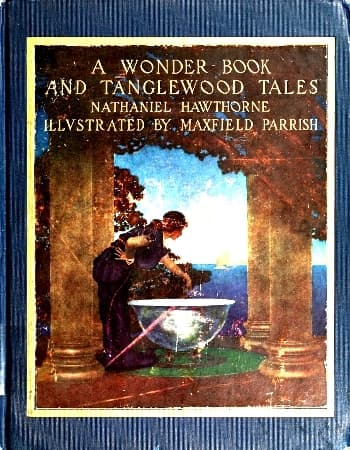
Before America had a literature of its own, Nathaniel Hawthorne built one. Twice-Told Tales, his first collection, gathers stories that still crackle with quiet dread more than a century and a half later. These are not mere ghost stories but excavation jobs into the American soul, digging beneath the primped surface of Puritan New England to find what actually lives there: secret sin, suffocating guilt, the terrors that hide behind respectable doors. Young Goodman Brown walks into a forest and loses his faith forever. A village gathers to witness a man wear a black veil, and no one dares ask why. A scientist's daughter becomes her father's experiment. Each tale operates on two levels: as a gripping narrative and as an allegory that refuses to resolve into easy meaning. Hawthorne understood that American history was not a triumphant march but a landscape haunted by what its people did and concealed. The prose has the antique polish of Gothic glass, but what it reflects is unmistakably American darkness. This is where American short fiction begins, and it remains unnervingly alive.
Editions
X-Ray
“Pleasant is a rainy winter's day, within doors! The best study for such a day, or the best amusement,”
— Nathaniel Hawthorne
“Thus from beneath the black veil there rolled a cloud into the sunshine, an ambiguity of sin or sorrow, which enveloped the poor minister, so that love or sympathy could never reach him.””
— Nathaniel Hawthorne
“Perhaps a germ of love was springing in their hearts so pure that it might blossom in Paradise, since it could not be matured on earth;””
— Nathaniel Hawthorne
“I know what to think when a young girl shivers by a warm hearth and complains of lonesomeness at her mother's side. Shall I put these feelings into words?””
— Nathaniel Hawthorne
“I look around me, and, lo! on every visage a black veil!””
— Nathaniel Hawthorne
“All through life that piece of crape had hung between him and the world; it had separated him from cheerful brotherhood and woman's love and kept him in that saddest of all prisons his own heart;””
— Nathaniel Hawthorne
“I wonder he is not afraid to be alone with himself." "Men sometimes are so," said her husband.””
— Nathaniel Hawthorne
“The subject had reference to secret sin and those sad mysteries which we hide from our nearest and dearest, and would fain conceal from our own consciousness, even forgetting that the Omniscient can detect them.””
— Nathaniel Hawthorne
“Yet perhaps the pale-faced congregation was almost as fearful a sight to the minister as his black veil to them.””
— Nathaniel Hawthorne
Link to this book
Add a free, dofollow link to Lex on your blog, forum, syllabus, or reading list.

<a href="https://lex-books.com/book/twice-told-tales-5ba86399-d8cb-40e3-88a0-d22b762554d1"><img src="https://lex-books.com/badges/read-on-lex.svg" alt="Read Twice-Told Tales by Nathaniel Hawthorne free on Lex" width="160" height="40"></a>[](https://lex-books.com/book/twice-told-tales-5ba86399-d8cb-40e3-88a0-d22b762554d1)[url=https://lex-books.com/book/twice-told-tales-5ba86399-d8cb-40e3-88a0-d22b762554d1][img]https://lex-books.com/badges/read-on-lex.svg[/img][/url]Read Twice-Told Tales by Nathaniel Hawthorne free on Lex: https://lex-books.com/book/twice-told-tales-5ba86399-d8cb-40e3-88a0-d22b762554d1Cite this book
Reading this edition for a paper or guide? Copy a citation.
Hawthorne, Nathaniel. Twice-Told Tales. Lex, lex-books.com/book/twice-told-tales-5ba86399-d8cb-40e3-88a0-d22b762554d1.Hawthorne, N. (1837). Twice-Told Tales. Lex. https://lex-books.com/book/twice-told-tales-5ba86399-d8cb-40e3-88a0-d22b762554d1Hawthorne, Nathaniel. Twice-Told Tales. Lex. https://lex-books.com/book/twice-told-tales-5ba86399-d8cb-40e3-88a0-d22b762554d1.