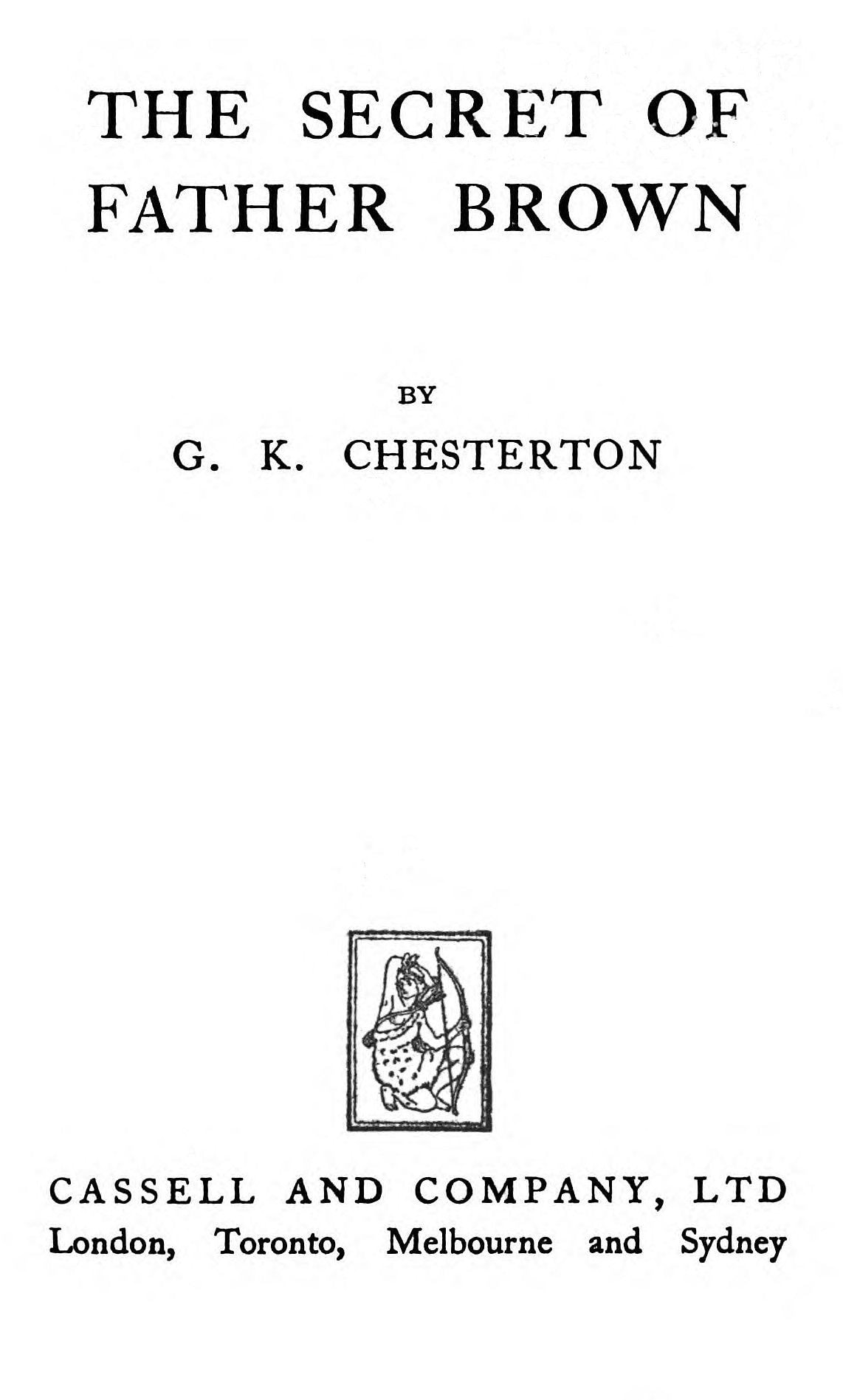
The Secret of Father Brown
1927
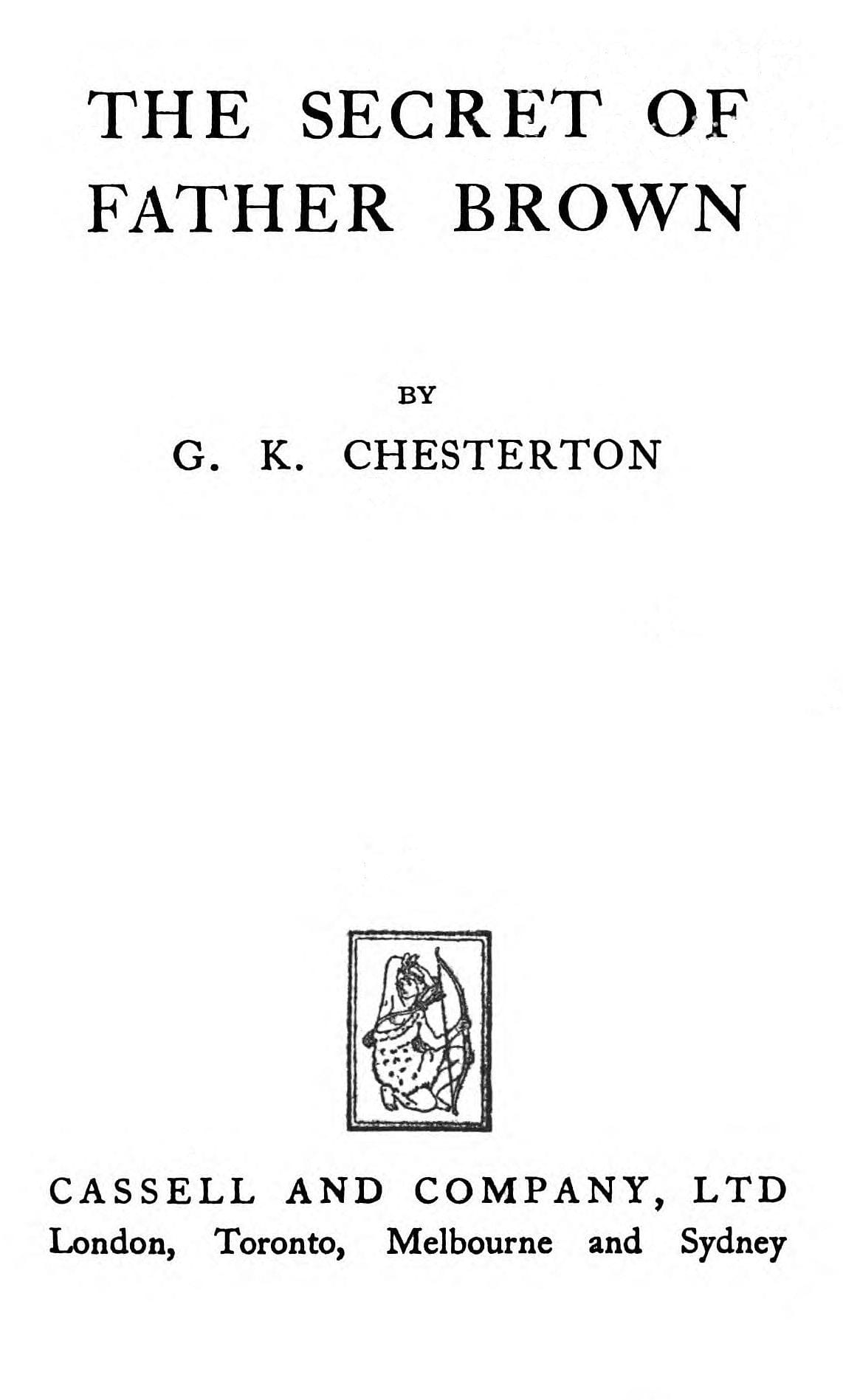
The Secret of Father Brown is the fourth collection in G.K. Chesterton's beloved detective series, and it contains some of the most psychologically rich stories in the canon. Here the gentle priest-sleuth encounters Flambeau in a Spanish castle, and the two discuss Brown's uncanny method: he understands criminals not by analyzing evidence but by empathizing with the darkness within himself. This disarming confession sets the tone for a series of mysteries where moral complexity matters more than clues. What distinguishes Father Brown from every other fictional detective is precisely his priesthood. He sees sin where others see mere motive. He offers forgiveness before delivering justice. His cherubic face and enormous umbrella mask a mind that has contemplated human fallenness in the confessional and emerged with compassion intact. Chesterton uses each case to explore the nature of evil not as a puzzle to be solved but as a wound to be understood. These stories endure because they offer something most detective fiction does not: a celebration of moral seriousness, the possibility of redemption, and the radical notion that understanding oneself is the first step toward understanding crime.
Editions


X-Ray
“No man's really any good till he knows how bad he is, or might be; till he's realised exactly how much right he has to all this snobbery, and sneering, and talking about 'criminals,' as if they were apes in a forest ten thousand miles away; till he's got rid of all the dirty self-deception of talking about low types and deficient skulls; till he's squeezed out of his soul the last drop of the oil of the Pharisees; till his only hope is somehow or other to have captured one criminal, and kept him safe and sane under his own hat.””
— G. K. Chesterton
“You are my only friend in the world, and I want to talk to you. Or, perhaps, be silent with you.””
— G. K. Chesterton
“There is a limit to human charity," said Lady Outram, trembling all over."There is," said Father Brown dryly, "and that is the real difference between human charity and Christian charity. You must forgive me if I was not altogether crushed by your contempt for my uncharitableness today; or by the lectures you read me about pardon for every sinner. For it seems to me that you only pardon the sins that you don't really think sinful. You only forgive criminals when they commit what you don't regard as crimes, but rather as conventions. So you tolerate a conventional duel, just as you tolerate a conventional divorce. You forgive because there isn't anything to be forgiven.””
— G. K. Chesterton
“The priest looked puzzled also, as if at his own thoughts; he sat with knotted brow and then said abruptly: ‘You see, it’s so easy to be misunderstood. All men matter. You matter. I matter. It’s the hardest thing in theology to believe.””
— G. K. Chesterton
“We matter to God”
— G. K. Chesterton
“People will tell you that theories don’t matter and that logic and philosophy aren’t practical. Don’t you believe them. Reason is from God, and when things are unreasonable there is something the matter.””
— G. K. Chesterton
“There’s another thing you’ve got to remember. You talk about these highbrows having a higher art and a more philosophical drama. But remember what a lot of the philosophy is! Remember what sort of conduct those highbrows often present to the highest! All about the Will to Power and the Right to Live and the Right to Experience”
— G. K. Chesterton
“There’d be a lot less scandal if people didn’t idealize sin and pose as sinners.””
— G. K. Chesterton
“We have to touch such men, not with a bargepole, but with a benediction,” he said. “We have to say the word that will save them from hell. We alone are left to deliver them from despair when your human charity deserts them. Go on your own primrose path pardoning all your favourite vices and being generous to your fashionable crimes; and leave us in the darkness, vampires of the night, to console those who really need consolation; who do things really indefensible, things that neither the world nor they themselves can defend; and none but a priest will pardon. Leave us with the men who commit the mean and revolting and real crimes; mean as St. Peter when the cock crew, and yet the dawn came.””
— G. K. Chesterton
Link to this book
Add a free, dofollow link to Lex on your blog, forum, syllabus, or reading list.

<a href="https://lex-books.com/book/the-secret-of-father-brown-e33e7c6e-da75-4462-976c-8c76d6f9fb9d"><img src="https://lex-books.com/badges/read-on-lex.svg" alt="Read The Secret of Father Brown by G. K. Chesterton free on Lex" width="160" height="40"></a>[](https://lex-books.com/book/the-secret-of-father-brown-e33e7c6e-da75-4462-976c-8c76d6f9fb9d)[url=https://lex-books.com/book/the-secret-of-father-brown-e33e7c6e-da75-4462-976c-8c76d6f9fb9d][img]https://lex-books.com/badges/read-on-lex.svg[/img][/url]Read The Secret of Father Brown by G. K. Chesterton free on Lex: https://lex-books.com/book/the-secret-of-father-brown-e33e7c6e-da75-4462-976c-8c76d6f9fb9dCite this book
Reading this edition for a paper or guide? Copy a citation.
Chesterton, G. K.. The Secret of Father Brown. Lex, lex-books.com/book/the-secret-of-father-brown-e33e7c6e-da75-4462-976c-8c76d6f9fb9d.Chesterton, G. K. (1927). The Secret of Father Brown. Lex. https://lex-books.com/book/the-secret-of-father-brown-e33e7c6e-da75-4462-976c-8c76d6f9fb9dChesterton, G. K.. The Secret of Father Brown. Lex. https://lex-books.com/book/the-secret-of-father-brown-e33e7c6e-da75-4462-976c-8c76d6f9fb9d.