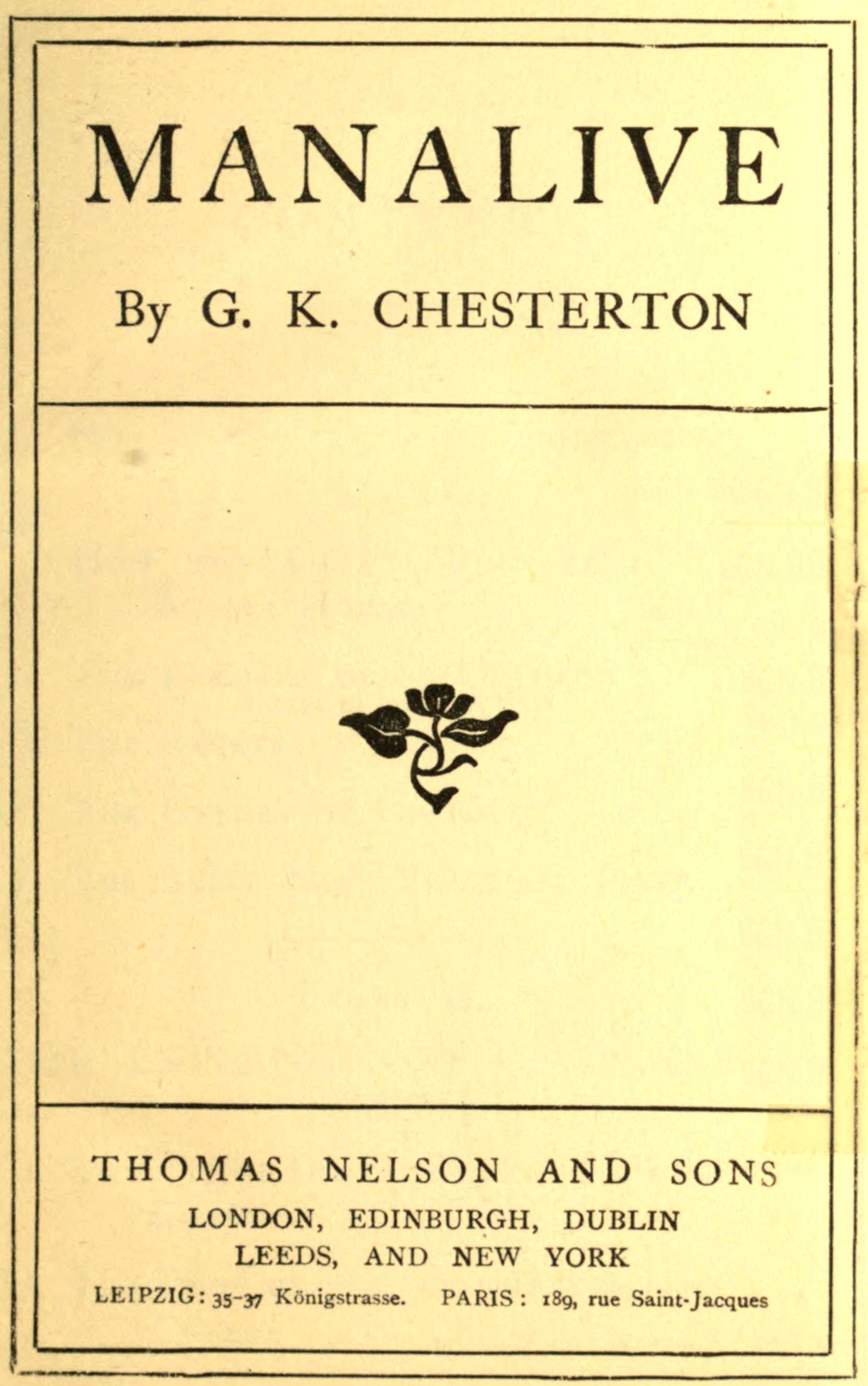
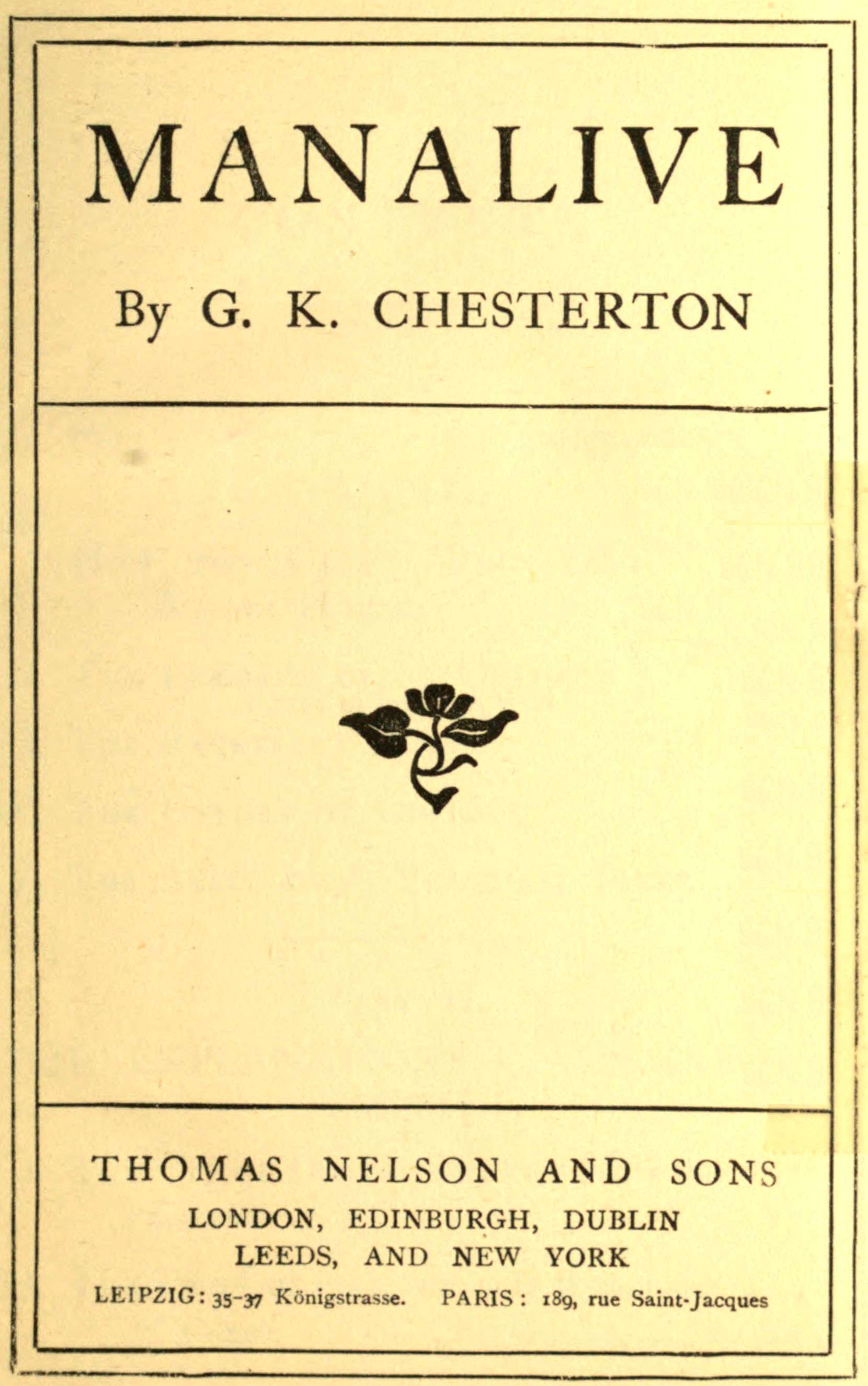
Manalive
1912
The wind that opens this novel is not merely weather. It is a metaphor made flesh: a gale of joy that blows through a tired London boarding house, shattering the careful boredom its residents have mistaken for sophistication. Innocent Smith arrives like a thunderbolt, leaping over garden walls and searching for lost hats with the earnest urgency of a man who has never forgotten how to be alive. His fellow tenants, a cynical journalist, a shy intellectual, a practical young woman, and an heiress suffocating on her own privilege, have all but given up on wonder. Smith will force them to remember. But this is no simple tale of a fool who teaches dull people to smile. Smith is accused of murder. He is denounced as a philanderer. The joy he brings becomes its own kind of danger, and Chesterton asks a question that still stings: Is innocence itself a form of madness?
Editions

X-Ray
“I don't deny," he said, "that there should be priests to remind men that they will one day die. I only say that at certain strange epochs it is necessary to have another kind of priests, called poets, actually to remind men that they are not dead yet.””
— G. K. Chesterton
“Madness does not come by breaking out, but by giving in; by settling down in some dirty, little, self-repeating circle of ideas; by being tamed.””
— G. K. Chesterton
“I am going to hold a pistol to the head of the Modern Man. But I shall not use it to kill him–only to bring him to life.””
— G. K. Chesterton
“She had never really listened to anyone in her life; which, some said, was why she had survived.””
— G. K. Chesterton
“If Innocent is happy, it is because he is innocent. If he can defy the conventions, it is just because he can keep the commandments. It is just because he does not want to kill but to excite to life that a pistol is still as exciting to him as it is to a schoolboy. It is just because he does not want to steal, because he does not covet his neighbour's goods, that he has captured the trick (oh, how we all long for it!), the trick of coveting his own goods. It is just because he does not want to commit adultery that he achieves the romance of sex; it is just because he loves one wife that he has a hundred honeymoons.””
— G. K. Chesterton
“This man's spiritual power has been precisely this, that he has distinguished between custom and creed. He has broken the conventions, but he has kept the commandments.””
— G. K. Chesterton
“It was not the house that grew dull, but I that grew dull in it. My wife was better than all women, and yet I could not feel it.””
— G. K. Chesterton
“No,' said Gould, with an unusual and convincing gravity; 'I do not believe that being perfectly good in all respects would make a man merry.' 'Well,' said Michael quietly, 'will you tell me one thing? Which of us has ever tried it?””
— G. K. Chesterton
“A puddle repeats infinity, and is full of light; nevertheless, if analyzed objectively, a puddle is a piece of dirty water spread very thin on mud.””
— G. K. Chesterton
Link to this book
Add a free, dofollow link to Lex on your blog, forum, syllabus, or reading list.

<a href="https://lex-books.com/book/manalive-0ac219db-8041-44ef-8c80-585d2d8c80b8"><img src="https://lex-books.com/badges/read-on-lex.svg" alt="Read Manalive by G. K. Chesterton free on Lex" width="160" height="40"></a>[](https://lex-books.com/book/manalive-0ac219db-8041-44ef-8c80-585d2d8c80b8)[url=https://lex-books.com/book/manalive-0ac219db-8041-44ef-8c80-585d2d8c80b8][img]https://lex-books.com/badges/read-on-lex.svg[/img][/url]Read Manalive by G. K. Chesterton free on Lex: https://lex-books.com/book/manalive-0ac219db-8041-44ef-8c80-585d2d8c80b8Cite this book
Reading this edition for a paper or guide? Copy a citation.
Chesterton, G. K.. Manalive. Lex, lex-books.com/book/manalive-0ac219db-8041-44ef-8c80-585d2d8c80b8.Chesterton, G. K. (1912). Manalive. Lex. https://lex-books.com/book/manalive-0ac219db-8041-44ef-8c80-585d2d8c80b8Chesterton, G. K.. Manalive. Lex. https://lex-books.com/book/manalive-0ac219db-8041-44ef-8c80-585d2d8c80b8.