Beyond Good and Evil
1886
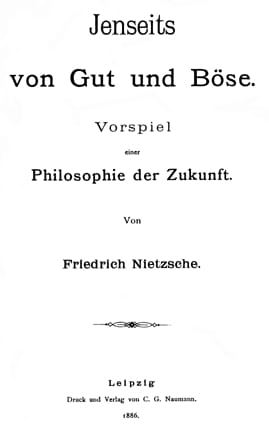
Nietzsche was angry when he wrote this. That anger pulses through every aphorism. Beyond Good and Evil is not a gentle philosophical treatise. It is an assault on the entire Western tradition of moral thinking, a demand that readers abandon the comfortable notion that good and evil are fixed categories waiting to be discovered. Nietzsche argues that what we call 'morality' is merely the revenge of the weak against the strong, a slave morality fabricated to shackle those with the power to create their own values. He turns his fury on the philosophers who came before him, accusing them of cowardice, of building grand systems while refusing to examine their own assumptions. The famous warning about gazing into the abyss captures the book's spirit: this is philosophy as confrontation with the terrifying freedom of human existence. Rather than offering new moral certainties, Nietzsche demands we embrace the chaos, impose our will on a universe without inherent meaning, and become what we are.
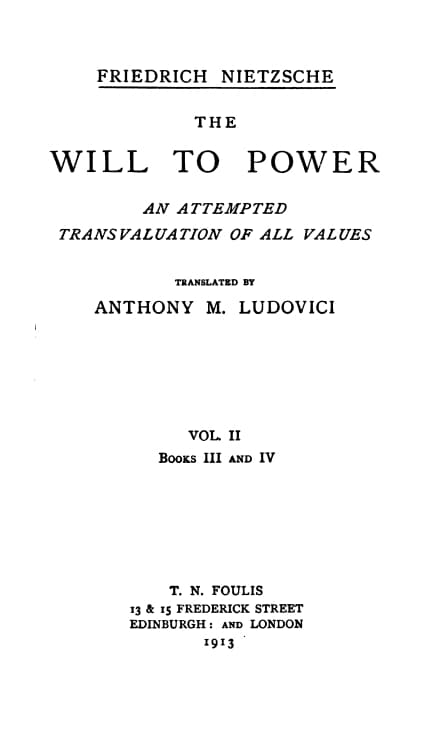
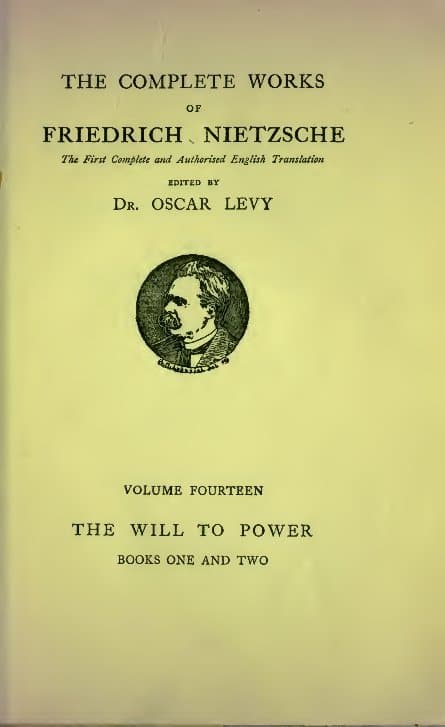
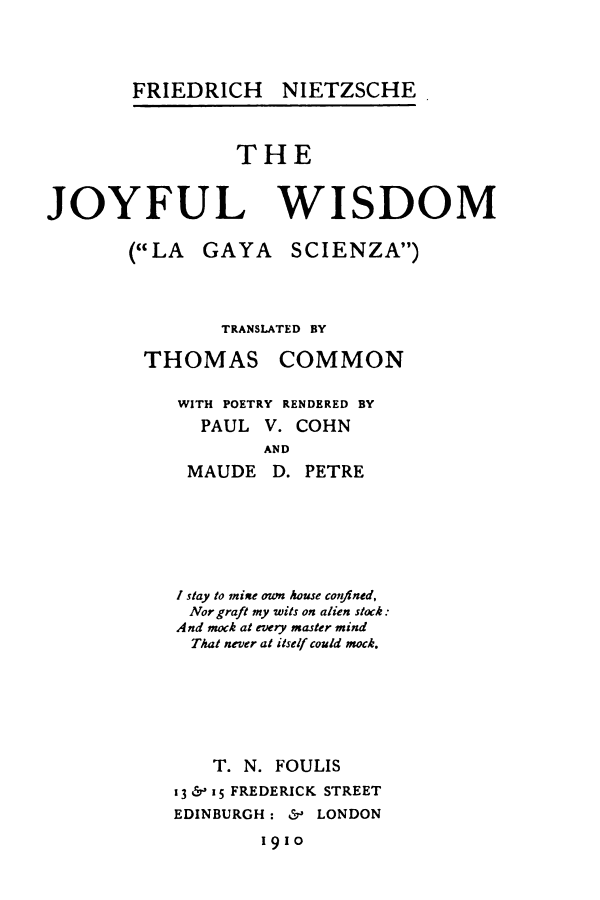
Editions


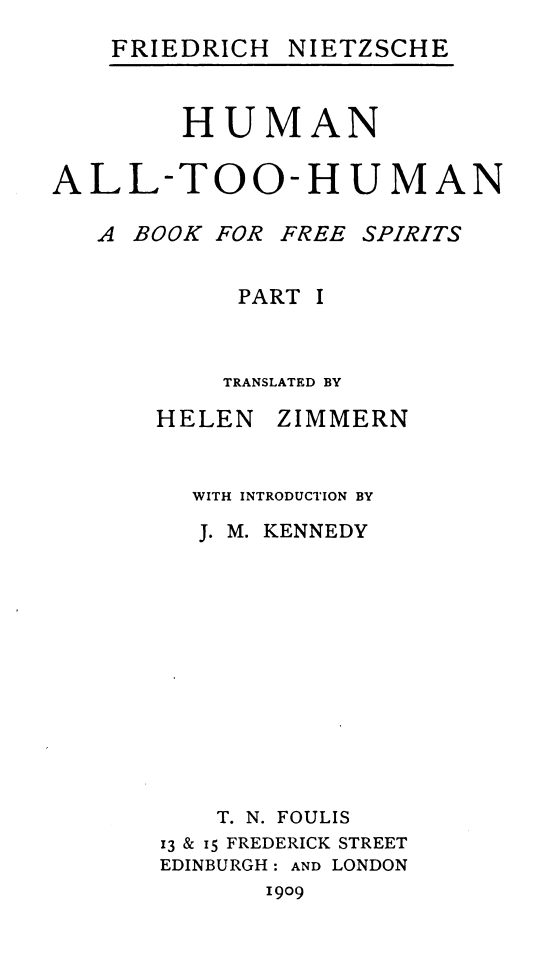
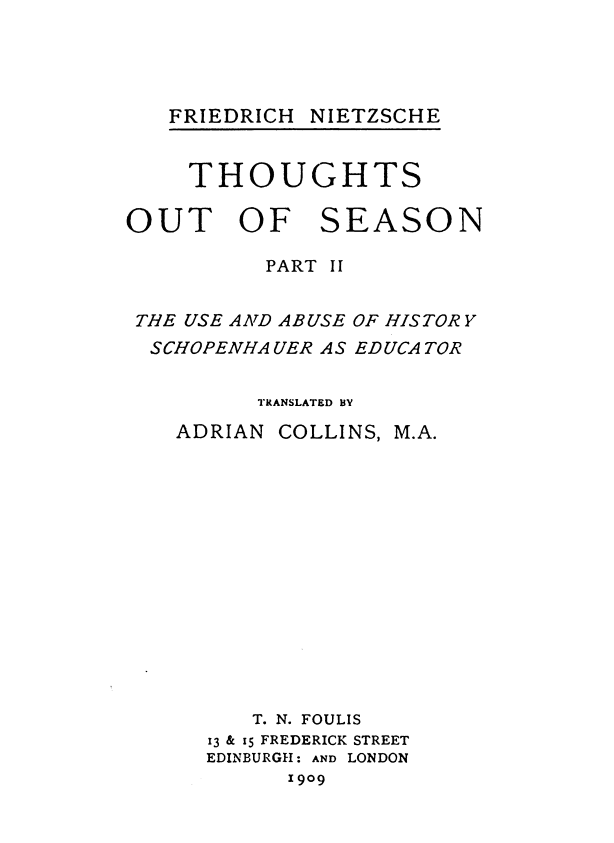
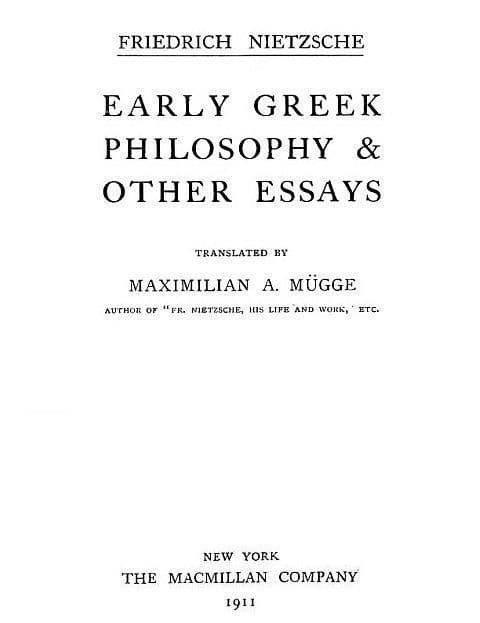
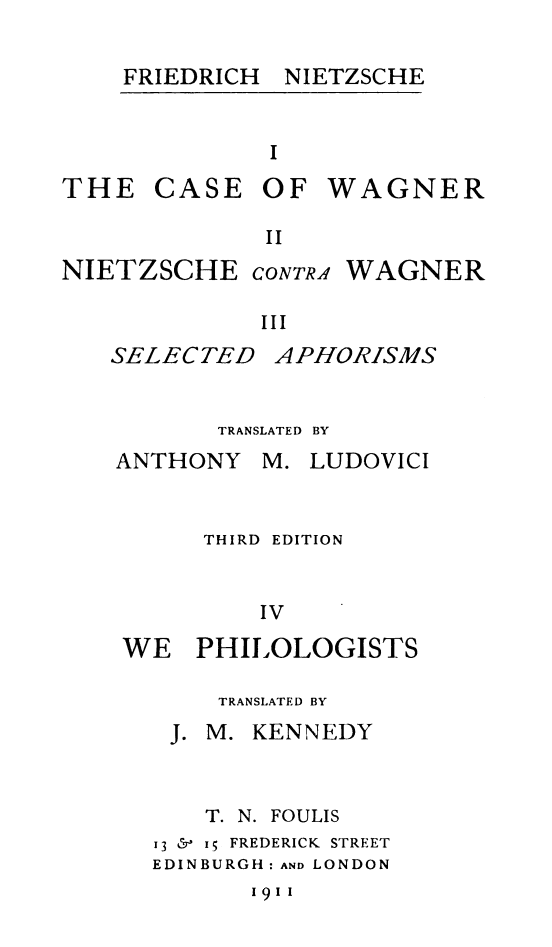
X-Ray
“One must shed the bad taste of wanting to agree with many. "Good" is no longer good when one's neighbor mouths it. And how should there be a "common good"! The term contradicts itself: whatever can be common always has little value. In the end it must be as it is and always has been: great things remain for the great, abysses for the profound, nuances and shudders for the refined, and, in brief, all that is rare for the rare.””
— Friedrich Wilhelm Nietzsche
“Madness is something rare in individuals”
— Friedrich Wilhelm Nietzsche
“There is a point in the history of society when it becomes so pathologically soft and tender that among other things it sides even with those who harm it, criminals, and does this quite seriously and honestly. Punishing somehow seems unfair to it, and it is certain that imagining "punishment" and "being supposed to punish" hurts it, arouses fear in it. "Is it not enough to render him undangerous? Why still punish?Punishing itself is terrible." With this question, herd morality, the morality of timidity, draws its ultimate consequence.””
— Friedrich Wilhelm Nietzsche
“The strength of a person's spirit would then be measured by how much 'truth' he could tolerate, or more precisely, to what extent he needs to have it diluted, disguised, sweetened, muted, falsified.””
— Friedrich Wilhelm Nietzsche
“It is the business of the very few to be independent; it is a privilege of the strong. And whoever attempts it, even with the best right, but without being OBLIGED to do so, proves that he is probably not only strong, but also daring beyond measure. He enters into a labyrinth, he multiplies a thousandfold the dangers which life in itself already brings with it; not the least of which is that no one can see how and where he loses his way, becomes isolated, and is torn piecemeal by some minotaur of conscience. Supposing such a one comes to grief, it is so far from the comprehension of men that they neither feel it, nor sympathize with it. And he cannot any longer go back! He cannot even go back again to the sympathy of men!””
— Friedrich Wilhelm Nietzsche
“One loves ultimately one's desires, not the thing desired.””
— Friedrich Wilhelm Nietzsche
“I obviously do everything to be "hard to understand" myself””
— Friedrich Wilhelm Nietzsche
“He who fights with monsters might take care lest he thereby become a monster. And if you gaze for long into an abyss, the abyss gazes also into you.””
— Friedrich Wilhelm Nietzsche
“The text has disappeared under the interpretation.””
— Friedrich Wilhelm Nietzsche
Link to this book
Add a free, dofollow link to Lex on your blog, forum, syllabus, or reading list.

<a href="https://lex-books.com/book/beyond-good-and-evil-e04b7aaa-f12e-4a61-8301-d76238fac5f2"><img src="https://lex-books.com/badges/read-on-lex.svg" alt="Read Beyond Good and Evil by Friedrich Wilhelm Nietzsche free on Lex" width="160" height="40"></a>[](https://lex-books.com/book/beyond-good-and-evil-e04b7aaa-f12e-4a61-8301-d76238fac5f2)[url=https://lex-books.com/book/beyond-good-and-evil-e04b7aaa-f12e-4a61-8301-d76238fac5f2][img]https://lex-books.com/badges/read-on-lex.svg[/img][/url]Read Beyond Good and Evil by Friedrich Wilhelm Nietzsche free on Lex: https://lex-books.com/book/beyond-good-and-evil-e04b7aaa-f12e-4a61-8301-d76238fac5f2Cite this book
Reading this edition for a paper or guide? Copy a citation.
Nietzsche, Friedrich Wilhelm. Beyond Good and Evil. Lex, lex-books.com/book/beyond-good-and-evil-e04b7aaa-f12e-4a61-8301-d76238fac5f2.Nietzsche, F. W. (1886). Beyond Good and Evil. Lex. https://lex-books.com/book/beyond-good-and-evil-e04b7aaa-f12e-4a61-8301-d76238fac5f2Nietzsche, Friedrich Wilhelm. Beyond Good and Evil. Lex. https://lex-books.com/book/beyond-good-and-evil-e04b7aaa-f12e-4a61-8301-d76238fac5f2.