The Dawn of Day
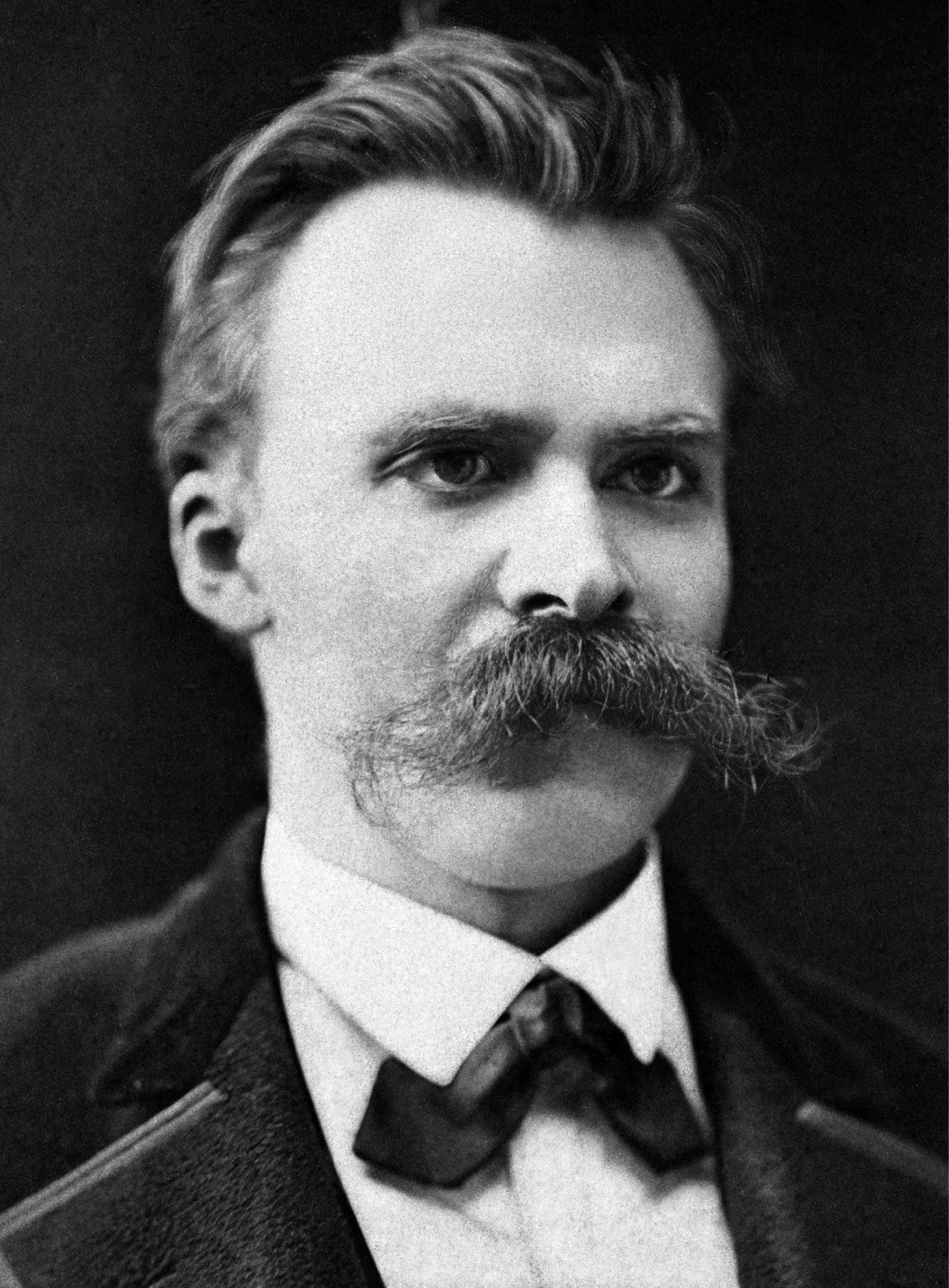
Here is where Friedrich Nietzsche declares war on morality itself. Written in 1881, The Dawn of Day marks the true beginning of his assault on conventional ethical frameworks, the book he would later call 'the campaign against morality.' This is Nietzsche stripped of his later theatrical flourishes, working in leaner, more aphoristic prose as he excavates the foundations of our moral beliefs. He introduces the figure of the 'subterrestrial':the thinker who digs beneath the surface of accepted values to discover what lies buried beneath. The result is a unsettling inquiry into how moral concepts evolved, how they constrain human behavior, and whether they serve us or we serve them. Nietzsche challenges the reader to question why we call something 'good' or 'right' in the first place, revealing that many moral judgments rest on prejudice rather than reason. For those who have encountered his later, more famous works, Daybreak offers something invaluable: the raw, uncompromising moment when one of philosophy's most dangerous minds first turned his attention toward the pillars of ethical certainty.
Editions
X-Ray
“Doubt as sin.”
— Friedrich Wilhelm Nietzsche
“We laugh at a man who, stepping out of his room at the very minute when the sun is rising, says, “It is my will that the sun shall rise”; or at him who, unable to stop a wheel, says, “I wish it to roll”; or, again, at him who, thrown in a wrestling match, says, “Here I lie, but here I wish to lie.” But, joking apart, do we not act like one of these three persons whenever we use the expression “I wish”?””
— Friedrich Wilhelm Nietzsche
“A: So you intend to return to your desert?B: I am not quick moving. I have to wait for myself”
— Friedrich Wilhelm Nietzsche
“. - In the glorification of 'work', in the unwearied talk of the 'blessing of work', I see the same covert idea as in the praise of useful impersonal actions: that of fear of everything individual. Fundamentally, one now feels at the sight of work - one always means by work that hard industriousness from early till late - that such work is the best policeman, that it keeps everyone in bounds and can mightily hinder the development of reason, covetousness, desire for independence. For it uses up an extraordinary amount of nervous energy, which is thus denied to reflection, brooding, dreaming, worrying, loving, hating; it sets a small goal always in sight and guarantees easy and regular satisfactions. Thus a society in which there is continual hard work will have more security: and security is now worshipped as the supreme divinity. - And now! Horror! Precisely the 'worker' has become ! The place is swarming with 'dangerous individuals'! And behind them the danger of dangers - individual!””
— Friedrich Wilhelm Nietzsche
“This woman is beautiful and clever: but how much cleverer she would have become if she were not beautiful!””
— Friedrich Wilhelm Nietzsche
“I deny morality as I deny alchemy.””
— Friedrich Wilhelm Nietzsche
“Whatever they may think and say about their "egoism", the great majority nonetheless do nothing for their ego their whole life long: what they do is done for the phantom of their ego which has formed itself in the heads of those around them and has been communicated to them.””
— Friedrich Wilhelm Nietzsche
“He who is punished is never he who performed the deed. He is always the scapegoat.””
— Friedrich Wilhelm Nietzsche
“In the end I also write slowly. Nowadays it is not only my habit, it is also to my taste - a malicious taste, perhaps? - no longer to write anything which does not reduce to despair every sort of man who is 'in a hurry'. For philology is that venerable art which demands of its votaries one thing above all: to go aside, to take time, to become still, to become slow- it is a goldsmith's art and connoisseurship of the word which has nothing but delicate, cautious work to do and achieves nothing if it does not achieve it Lento. But for precisely this reason it is more necessary than ever today, by precisely this means does it entice and enchant us the most, in the midst of an age of 'work', that is to say, of hurry, of indecent and perspiring haste, which wants to 'get everything done' at once, including every old or new book: - this art does not so easily get anything done, it teaches to read well, that is to say, to read slowly, deeply, looking cautiously before and aft, with reservations, with doors left open, with delicate eyes and fingers ... My patient friends, this book desires for itself only perfect readers and philologists: Learn to read me well!””
— Friedrich Wilhelm Nietzsche
Link to this book
Add a free, dofollow link to Lex on your blog, forum, syllabus, or reading list.

<a href="https://lex-books.com/book/the-dawn-of-day-f47f6d47-81ff-4ab9-8fe7-7de6b541f454"><img src="https://lex-books.com/badges/read-on-lex.svg" alt="Read The Dawn of Day by Friedrich Wilhelm Nietzsche free on Lex" width="160" height="40"></a>[](https://lex-books.com/book/the-dawn-of-day-f47f6d47-81ff-4ab9-8fe7-7de6b541f454)[url=https://lex-books.com/book/the-dawn-of-day-f47f6d47-81ff-4ab9-8fe7-7de6b541f454][img]https://lex-books.com/badges/read-on-lex.svg[/img][/url]Read The Dawn of Day by Friedrich Wilhelm Nietzsche free on Lex: https://lex-books.com/book/the-dawn-of-day-f47f6d47-81ff-4ab9-8fe7-7de6b541f454Cite this book
Reading this edition for a paper or guide? Copy a citation.
Nietzsche, Friedrich Wilhelm. The Dawn of Day. Lex, lex-books.com/book/the-dawn-of-day-f47f6d47-81ff-4ab9-8fe7-7de6b541f454.Nietzsche, F. W. (n.d.). The Dawn of Day. Lex. https://lex-books.com/book/the-dawn-of-day-f47f6d47-81ff-4ab9-8fe7-7de6b541f454Nietzsche, Friedrich Wilhelm. The Dawn of Day. Lex. https://lex-books.com/book/the-dawn-of-day-f47f6d47-81ff-4ab9-8fe7-7de6b541f454.