A Grammar of the English Tongue
1755
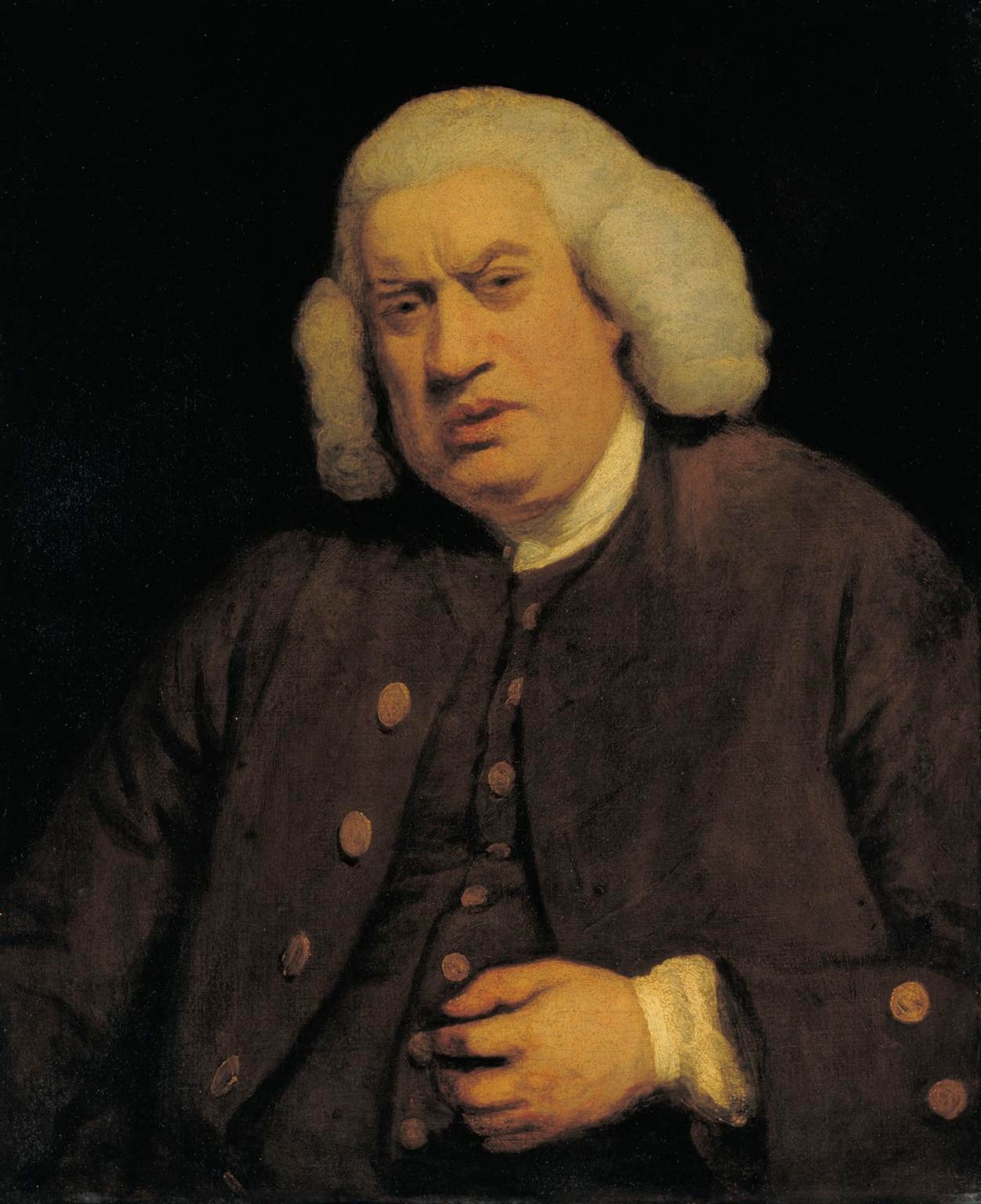
In 1755, the same year he revolutionized lexicography with his monumental Dictionary, Samuel Johnson turned his formidable mind to the very foundations of English itself. This Grammar represents Johnson's attempt to impose order on a language that had long resisted systematic rule-making, blending prescriptive authority with genuine curiosity about how English actually worked. Written in Johnson's characteristic prose, rigorous, opinionated, and surprisingly witty, it tackles orthography, etymology, syntax, and prosody with the confidence of a man who believed language could be mastered through careful study. The book reveals Johnson's phonetic sensitivities and his prescient recognition that spelling and pronunciation had begun to drift apart, a problem that would only intensify over centuries. Yet what emerges is not dry pedantry but a living engagement with English as Johnson found it: irregular, stubborn, and endlessly fascinating. For anyone curious about where our grammatical assumptions come from, or how English came to be organized as it is, this text offers a remarkable window into the moment when the language's rules were still being argued over, and written down.
Editions
X-Ray
“Grammar, which is the art of using words properly, comprises four parts: Orthography, Etymology, Syntax, and Prosody.””
— Samuel Johnson
“For pronunciation the best general rule is, to consider those as the most elegant speakers who deviate least from the written words.””
— Samuel Johnson
“of English, as of all living tongues, there is a double pronunciation, one cursory and colloquial, the other regular and solemn.””
— Samuel Johnson
“C, according to English orthography, never ends a word; therefore we write stick, block, which were originally, sticke, blocke. In such words c is now mute.””
— Samuel Johnson
“C might be omitted in the language without loss, since one of its sounds might be supplied by, s, and the other by k, but that it preserves to the eye the etymology of words, as face from facies, captive from captivus.””
— Samuel Johnson
“Ou is frequently used in the last syllable of words which in Latin end in or and are made English, as honour, labour, favour, from honor, labor, favor. Some late innovators have ejected the u, without considering that the last syllable gives the sound neither of or nor ur, but a sound between them, if not compounded of both; besides that they are probably derived to us from the French nouns in eur, as honeur, faveur.””
— Samuel Johnson
“I consider the English alphabet only as it is English;””
— Samuel Johnson
“Experience has long shown this method to be so distinct as to obviate confusion, and so comprehensive as to prevent any inconvenient omissions.””
— Samuel Johnson
“glass. A broad resembles the a of the German; as all, wall, call. Many words pronounced with a broad were anciently written with au; as sault, mault; and we still say, fault, vault. This was probably the Saxon sound, for it is yet retained in the northern dialects, and in the rustick pronunciation; as maun for man, haund for hand. The short a approaches to the a open, as grass. The long a, if prolonged by e at the end of the word, is always slender, as graze, fame. A forms a diphthong only with i or y, and u or w. Ai or ay, as in plain, wain, gay, clay, has only the sound of the long and slender a, and differs not in the pronunciation from plane, wane. Au or aw has the sound of the German a, as raw, naughty. Ae is sometimes found in Latin words not completely””
— Samuel Johnson
Link to this book
Add a free, dofollow link to Lex on your blog, forum, syllabus, or reading list.

<a href="https://lex-books.com/book/a-grammar-of-the-english-tongue-37c8e6d9-7e8c-4067-85a0-3466efa33102"><img src="https://lex-books.com/badges/read-on-lex.svg" alt="Read A Grammar of the English Tongue by Samuel Johnson free on Lex" width="160" height="40"></a>[](https://lex-books.com/book/a-grammar-of-the-english-tongue-37c8e6d9-7e8c-4067-85a0-3466efa33102)[url=https://lex-books.com/book/a-grammar-of-the-english-tongue-37c8e6d9-7e8c-4067-85a0-3466efa33102][img]https://lex-books.com/badges/read-on-lex.svg[/img][/url]Read A Grammar of the English Tongue by Samuel Johnson free on Lex: https://lex-books.com/book/a-grammar-of-the-english-tongue-37c8e6d9-7e8c-4067-85a0-3466efa33102Cite this book
Reading this edition for a paper or guide? Copy a citation.
Johnson, Samuel. A Grammar of the English Tongue. Lex, lex-books.com/book/a-grammar-of-the-english-tongue-37c8e6d9-7e8c-4067-85a0-3466efa33102.Johnson, S. (1755). A Grammar of the English Tongue. Lex. https://lex-books.com/book/a-grammar-of-the-english-tongue-37c8e6d9-7e8c-4067-85a0-3466efa33102Johnson, Samuel. A Grammar of the English Tongue. Lex. https://lex-books.com/book/a-grammar-of-the-english-tongue-37c8e6d9-7e8c-4067-85a0-3466efa33102.