Preface to Shakespeare
1985
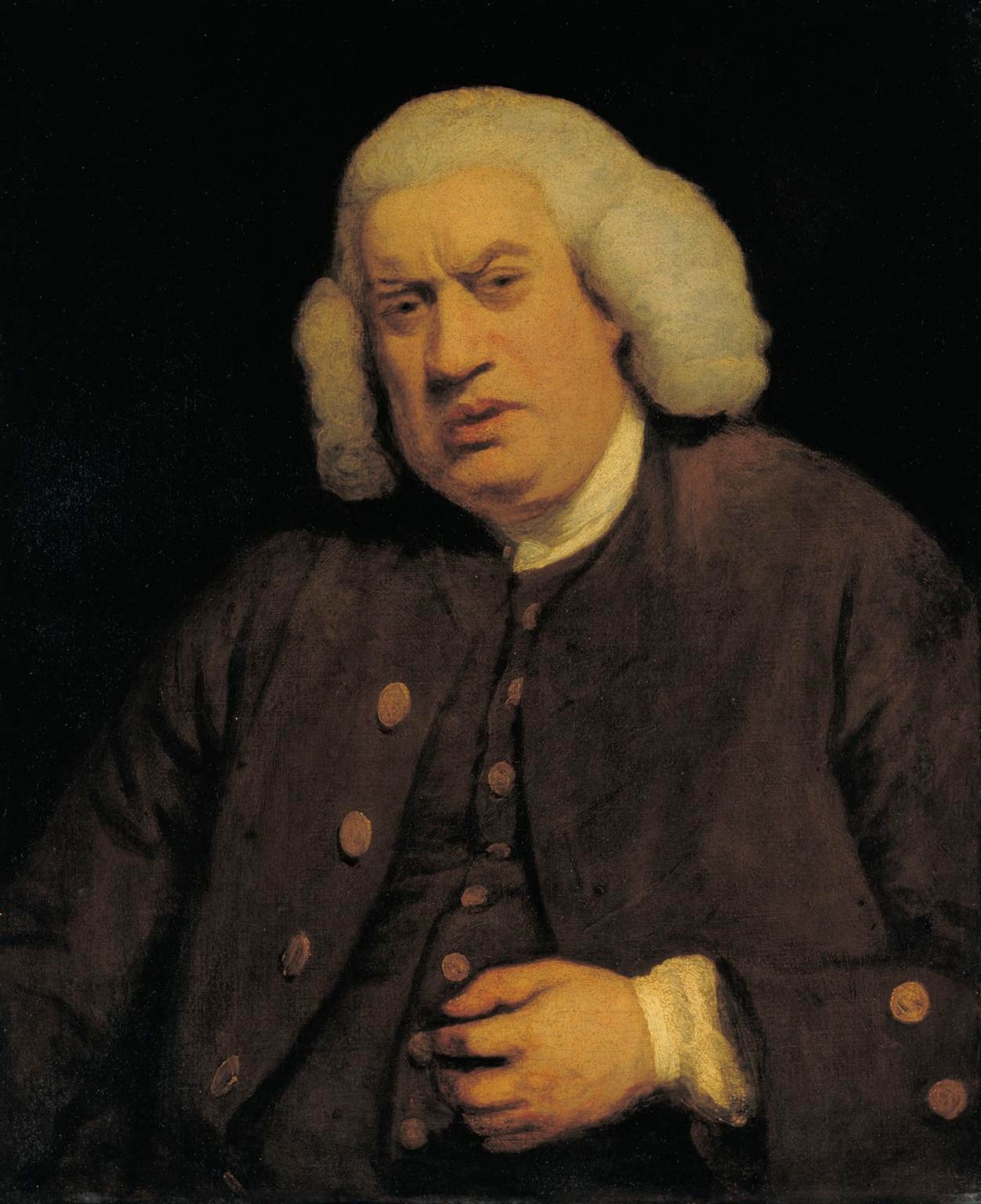
In 1756, Samuel Johnson issued a radical challenge to the literary establishment: why do we worship ancient authors while ignoring the genius living among us? His answer, this preface to Shakespeare's collected plays, became one of the most influential critical essays in the English language. Johnson dismantles the fashionable reverence for antiquity, arguing instead that Shakespeare deserves our attention not because he is old, but because he understood human nature with startling clarity. His characters, Johnson contends, are not medieval relics but mirrors reflecting universal passions that transcend their Elizabethan setting. With characteristic precision, Johnson defends Shakespeare's mingling of tragedy and comedy, his rejection of stiff moralizing, and his willingness to depict life as it actually unfolds. This is criticism as intellectual combat, a brilliant lexicographer and essayist taking on four hundred years of lazy adulation and demanding we read Shakespeare with fresh eyes. For anyone who has ever wondered what it means to defend a writer against the weight of their own reputation, Johnson offers both method and model.
Editions
X-Ray
“Shakespeare is above all writers, at least above all modern writers, the poet of nature; the poet that holds up to his readers a faithful mirrour of manners and of life. His characters are not modified by the customs of particular places, unpractised by the rest of the world; by the peculiarities of studies or professions, which can operate but upon small numbers; or by the accidents of transient fashions or temporary opinions: they are the genuine progeny of common humanity, such as the world will always supply, and observation will always find. His persons act and speak by the influence of those general passions and principles by which all minds are agitated, and the whole system of life is continued in motion. In the writings of other poets a character is too often an individual; in those of Shakespeare it is commonly a species.””
— Samuel Johnson
“The end of writing is to instruct; the end of poetry is to instruct by pleasing.””
— Samuel Johnson
“The opinions prevalent in one age, as truths above the reach of controversy, are confuted and rejected in another, and rise again to reception in remoter times. Thus the human mind is kept in motion without progress.””
— Samuel Johnson
“Shakespeare has united the powers of exciting laughter and sorrow not only in one mind, but in one composition.””
— Samuel Johnson
“The work of a correct and regular writer is a garden accurately formed and diligently planted, varied with shades, and scented with flowers.””
— Samuel Johnson
“Parts are not to be examined till the whole has been surveyed; there is a kind of intellectual remoteness necessary for the comprehension of any great work in its full design and its true proportions; a close approach shews the smaller niceties, but the beauty of the whole is discerned no longer.””
— Samuel Johnson
“His comedy pleases by the thoughts and the language, and his tragedy for the greater part by incident and action. His tragedy seems to be skill, his comedy to be instinct.””
— Samuel Johnson
“Shakespeare's plays are not in the rigorous and critical sense either tragedies or comedies, but compositions of a distinct kind; exhibiting the real state of sublunary nature, which partakes of good and evil, joy and sorrow, mingled with endless variety of proportion and innumerable modes of combination; and expressing the course of the world, in which the loss of one is the gain of another; in which, at the same time, the reveller is hasting to his wine, and the mourner burying his friend; in which the malignity of one is sometimes defeated by the frolick of another; and many mischiefs and many benefits are done and hindered without design.””
— Samuel Johnson
“This therefore is the praise of Shakespeare, that his drama is the mirrour of life; that he who has mazed his imagination, in following the phantoms which other writers raise up before him, may here be cured of his delirious extasies, by reading human sentiments in human language; by scenes from which a hermit may estimate the transactions of the world, and a confessor predict the progress of the passions.””
— Samuel Johnson
Link to this book
Add a free, dofollow link to Lex on your blog, forum, syllabus, or reading list.

<a href="https://lex-books.com/book/preface-to-shakespeare-e686a742-8bec-4a9e-ab3a-c164feb22a92"><img src="https://lex-books.com/badges/read-on-lex.svg" alt="Read Preface to Shakespeare by Samuel Johnson free on Lex" width="160" height="40"></a>[](https://lex-books.com/book/preface-to-shakespeare-e686a742-8bec-4a9e-ab3a-c164feb22a92)[url=https://lex-books.com/book/preface-to-shakespeare-e686a742-8bec-4a9e-ab3a-c164feb22a92][img]https://lex-books.com/badges/read-on-lex.svg[/img][/url]Read Preface to Shakespeare by Samuel Johnson free on Lex: https://lex-books.com/book/preface-to-shakespeare-e686a742-8bec-4a9e-ab3a-c164feb22a92Cite this book
Reading this edition for a paper or guide? Copy a citation.
Johnson, Samuel. Preface to Shakespeare. Lex, lex-books.com/book/preface-to-shakespeare-e686a742-8bec-4a9e-ab3a-c164feb22a92.Johnson, S. (1985). Preface to Shakespeare. Lex. https://lex-books.com/book/preface-to-shakespeare-e686a742-8bec-4a9e-ab3a-c164feb22a92Johnson, Samuel. Preface to Shakespeare. Lex. https://lex-books.com/book/preface-to-shakespeare-e686a742-8bec-4a9e-ab3a-c164feb22a92.