Richard Crashaw
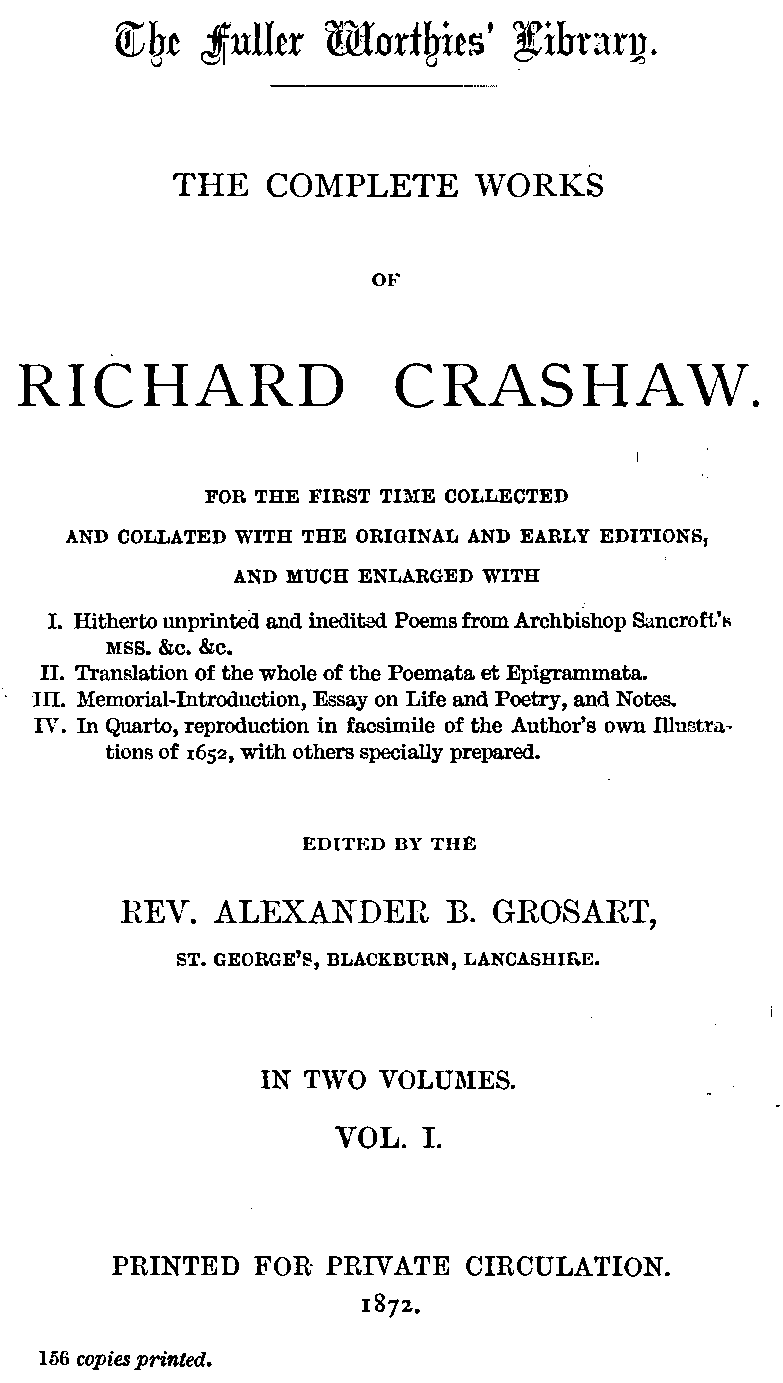
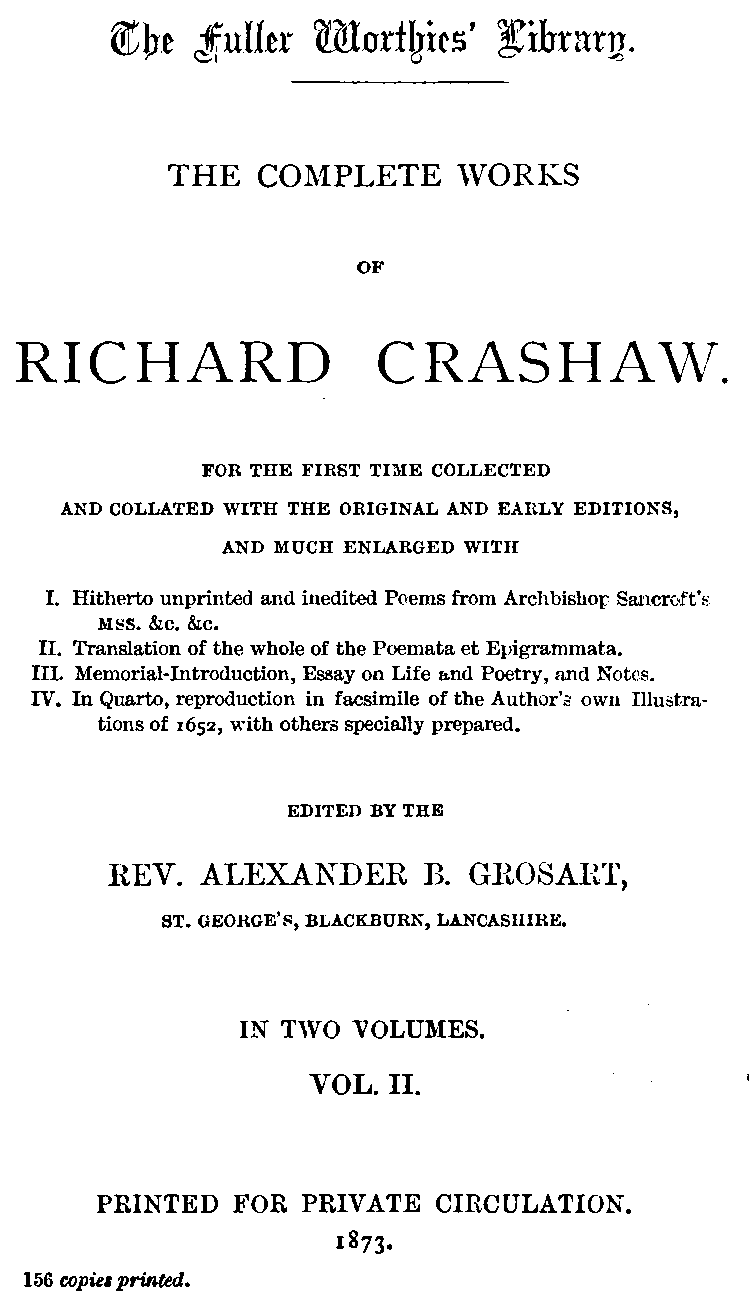
Richard Crashaw was an influential English poet and cleric, recognized as one of the foremost metaphysical poets of the 17th century. Born to a prominent Anglican divine with Puritan beliefs, Crashaw's early life was steeped in religious conflict, particularly following his father's death. He received his education at Charterhouse School and Pembroke College, Cambridge, where he later became a fellow. His poetry, characterized by its mystical nature and fervent Christian devotion, began to gain attention during his tenure at Cambridge, where he embraced High Church Anglicanism under Archbishop Laud's reforms. Crashaw's works, including 'The Steps to the Temple' and 'The Delights of the Muses,' showcase his unique blend of religious fervor and artistic expression, often drawing on Catholic imagery and themes. His controversial embrace of Catholicism and his use of Christian art in worship led to his vilification among Puritans, especially during the turbulent years of the English Civil War. Despite the challenges he faced, Crashaw's poetry left a lasting impact on English literature, influencing later poets with its emotional depth and spiritual intensity. His legacy endures as a testament to the power of faith and creativity in a time of profound societal upheaval.
Famous Quotes
View all 5 quotes“Come and let us live my Deare,Let us love and never feare,What the sowrest Fathers say:Brightest Sol that dies to dayLives againe as blithe to morrow,But if we darke sons of sorrowSet; o then, how long a NightShuts the Eyes of our short light!Then let amorous kisses dwellOn our lips, begin and tellA Thousand, and a Hundred, scoreAn Hundred, and a Thousand more,Till another Thousand smotherThat, and that wipe of another.Thus at last when we have numbredMany a Thousand, many a Hundred;Wee’l confound the reckoning quite,And lose our selves in wild delight:While our joyes so multiply,As shall mocke the envious eye.””
“And when life's sweet fable ends,Soul and body part like friends;No quarrels, murmurs, no delay;A kiss, a sigh, and so away.””
“Eyes are vocal, tears have tongues, \ And there are words not made with lungs””
Books from the author

Link to this page
Add a free, dofollow link to Lex on your blog, forum, syllabus, or reading list.

<a href="https://lex-books.com/author/richard-crashaw"><img src="https://lex-books.com/badges/read-on-lex.svg" alt="Richard Crashaw on Lex" width="160" height="40"></a>[](https://lex-books.com/author/richard-crashaw)[url=https://lex-books.com/author/richard-crashaw][img]https://lex-books.com/badges/read-on-lex.svg[/img][/url]Richard Crashaw on Lex: https://lex-books.com/author/richard-crashaw