King of Babylonia Hammurabi
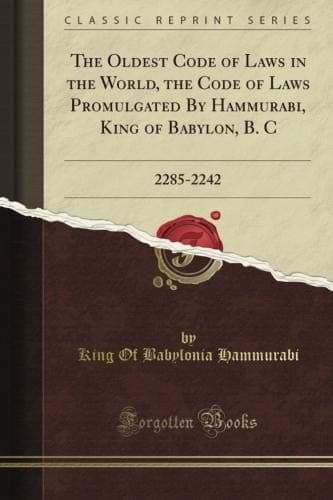
Hammurabi, the sixth king of the First Babylonian Dynasty, is best known for his significant contributions to law and governance in ancient Mesopotamia. Reigning from approximately 1811 to 1751 BC, he is most famously associated with the Code of Hammurabi, one of the earliest and most complete written legal codes in history. This monumental text, inscribed on a stele, outlines a comprehensive set of laws governing various aspects of daily life, including trade, family relations, and civil rights, reflecting the complexities of Babylonian society and its values. The Code is notable for its principle of 'lex talionis' or the law of retaliation, which established a system of justice based on proportionality in punishment. Hammurabi's legacy extends beyond his legal innovations; he is often credited with unifying the diverse city-states of Mesopotamia under a centralized authority, promoting economic stability and cultural development. His code has influenced legal systems throughout history and remains a critical reference point in the study of ancient law and governance. The Code of Laws Promulgated by Hammurabi continues to be a subject of scholarly interest, illustrating the sophistication of early legal thought and the foundational role it played in the evolution of human civilization.
Famous Quotes
View all 4 quotes“For the First Dynasty of Babylon, to which the famous Hammurabi belonged, was very probably of Arab origin, to judge by the forms of some of the royal names. It is by no means impossible that there was some connection between these two conquests, and that both Babylonia and Egypt fell, in the period before the year 2000 B.C. before some great migratory movement from Arabia, which overran Babylonia, Palestine, and even the Egyptian Delta.””
“Under the Sumerians the wife could not obtain a divorce at all, and the penalty for denying her husband was death. These regulations were modified in favour of the woman in Hammurabi's code; for under its provisions, if a man divorced his wife or his concubine, he was obliged to make proper provision for her maintenance.””
“One of Hammurabi's letters proves that the king regulated the calendar, and it is legitimate to suppose that he sought the advice of his astrologers as to the times when intercalary months were to be inserted.””
Books from the author