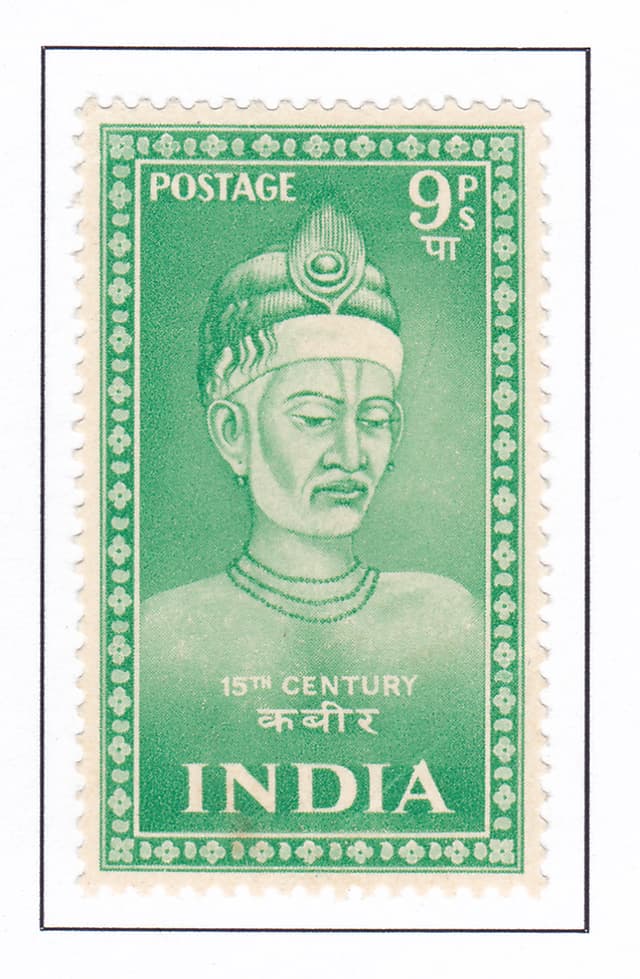
Kabir
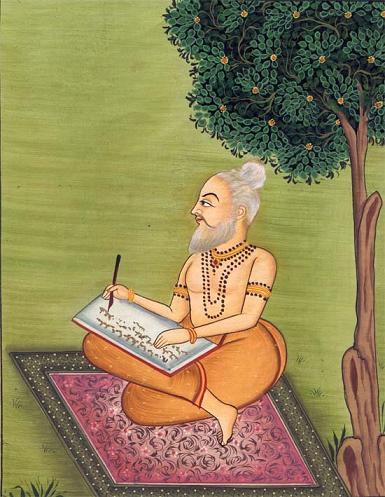
Kabir was a 15th-century Indian poet-saint whose verses transcended religious boundaries, blending elements of Hinduism and Islam. Born into a family of Muslim weavers in Varanasi, he was deeply influenced by the spiritual and cultural milieu of his time. Kabir's poetry, primarily composed in the vernacular Hindi, expressed profound philosophical insights and a deep yearning for divine connection, often challenging the rigid orthodoxy of both Hindu and Islamic traditions. His works, such as the 'Bijak' and 'Sakhis,' utilized simple yet powerful language to convey complex spiritual truths, making them accessible to the common people. Kabir's legacy is significant in the context of Indian literature and spirituality. He is regarded as a key figure in the Bhakti movement, which emphasized personal devotion over ritualistic practices. His teachings advocated for a direct relationship with the divine, rejecting the caste system and promoting equality among all individuals. Kabir's influence extended beyond his lifetime, inspiring countless poets, saints, and reformers, and his verses continue to be celebrated in various forms of music and literature across India. His ability to articulate the universal quest for truth and love has cemented his status as one of the most revered figures in Indian spiritual history.
Famous Quotes
View all 20 quotes“Are you looking for me? I am in the next seat.My shoulder is against yours.you will not find me in the stupas, not in Indian shrine rooms, nor in synagogues, nor in cathedrals:not in masses, nor kirtans, not in legs winding around your own neck, nor in eating nothing but vegetables.When you really look for me, you will see me instantly”
“Many have died; you also will die. The drum of death is being beaten. The world has fallen in love with a dream. Only sayings of the wise will remain.””
“All know that the drop merges into the ocean, but few know that the ocean merges into the drop.””
Books from the author




Link to this page
Add a free, dofollow link to Lex on your blog, forum, syllabus, or reading list.

<a href="https://lex-books.com/author/kabir"><img src="https://lex-books.com/badges/read-on-lex.svg" alt="Kabir on Lex" width="160" height="40"></a>[](https://lex-books.com/author/kabir)[url=https://lex-books.com/author/kabir][img]https://lex-books.com/badges/read-on-lex.svg[/img][/url]Kabir on Lex: https://lex-books.com/author/kabir