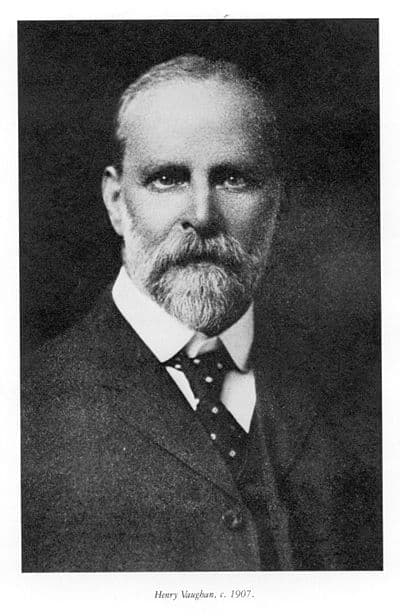
Henry Vaughan
Henry Vaughan was a Welsh metaphysical poet and physician, renowned for his profound religious poetry and philosophical insights. His literary career began with the publication of 'Poems, with the Tenth Satire of Juvenal Englished' in 1646, but it was his collection 'Silex Scintillans,' released in 1650 and followed by a second part in 1655, that established his reputation as a significant voice in English literature. Influenced by the works of George Herbert, Vaughan turned away from secular themes to explore spiritual and existential questions, showcasing his deep convictions in works such as 'Mount of Olives' and 'Solitary Devotions' published in 1652. Vaughan's poetry is characterized by its rich imagery and philosophical depth, often reflecting on the nature of the divine and the human experience. Although he published additional volumes of secular verse, it is his religious poetry that has garnered lasting acclaim. In addition to his literary contributions, Vaughan maintained a medical practice throughout his life, blending his interests in literature and medicine. His legacy endures as a key figure in the metaphysical poetry movement, influencing later poets and leaving a lasting mark on the landscape of English literature.
Famous Quotes
View all 3 quotes“I saw Eternity the other night, Like a great ring of pure and endless light, All calm, as it was bright; And round beneath it, Time in hours, days, years, Driv'n by the spheres Like a vast shadow mov'd; in which the world And all her train were hurl'd.”
“I saw Eternity the other night Like a great Ring of pure and endless light.”
“There is in God (some say) a deep but dazzling darkness.”
Books from the author


Link to this page
Add a free, dofollow link to Lex on your blog, forum, syllabus, or reading list.

<a href="https://lex-books.com/author/henry-vaughan"><img src="https://lex-books.com/badges/read-on-lex.svg" alt="Henry Vaughan on Lex" width="160" height="40"></a>[](https://lex-books.com/author/henry-vaughan)[url=https://lex-books.com/author/henry-vaughan][img]https://lex-books.com/badges/read-on-lex.svg[/img][/url]Henry Vaughan on Lex: https://lex-books.com/author/henry-vaughan