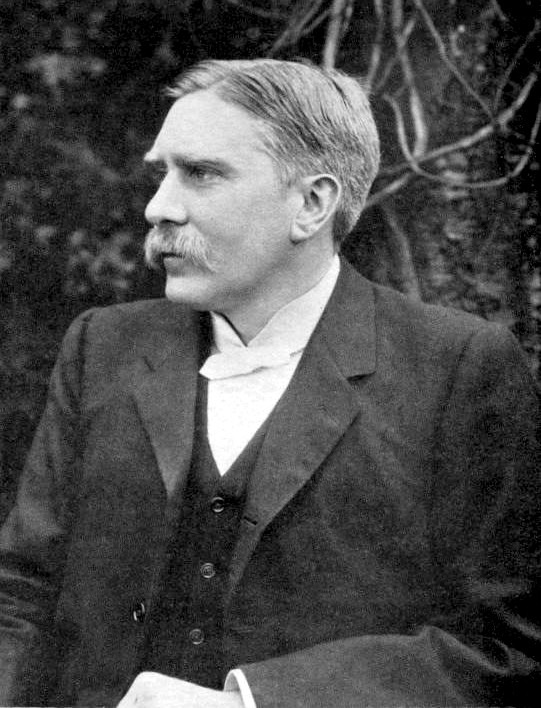
H. Stanley Redgrove
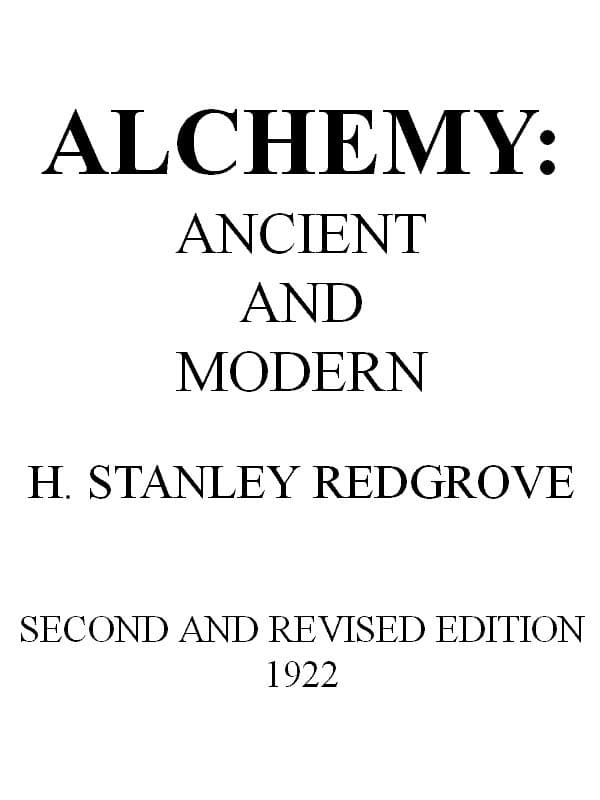
H. Stanley Redgrove was a British author and scholar known for his exploration of alchemical traditions and their intersections with modern science and mysticism. His notable work, "Alchemy: Ancient and Modern," presents a comprehensive overview of alchemical doctrines, tracing their historical significance and relevance to contemporary scientific discoveries. Redgrove's scholarly approach not only elucidates the complexities of alchemy but also highlights its philosophical implications, making it accessible to both enthusiasts and academics alike. In addition to his studies on alchemy, Redgrove authored "Bygone Beliefs," which delves into various historical beliefs and practices, offering readers a glimpse into the intellectual landscape of earlier eras. His writings reflect a deep curiosity about the evolution of thought and the ways in which ancient beliefs continue to influence modern perspectives. Redgrove's contributions to the understanding of alchemy and mysticism have established him as a significant figure in the study of esoteric traditions, bridging the gap between ancient wisdom and contemporary thought.
Famous Quotes
View all 7 quotes“every substance contains undeveloped resources and potentialities, and can be brought outward and forward into perfection.””
“We have said that “Alchemy was the attempt to demonstrate experimentally on the material plane the validity of a certain philosophical view of the Cosmos”; now, this “philosophical view of the Cosmos” was Mysticism. Alchemy had its origin in the attempt to apply, in a certain manner, the principles of Mysticism to the things of the physical plane, and was, therefore, of a dual nature, on the one hand spiritual and religious, on the other, physical and material.””
“Coming to the alchemists, we find the view that the metals are all composed of two elementary principles”
Books from the author














Link to this page
Add a free, dofollow link to Lex on your blog, forum, syllabus, or reading list.

<a href="https://lex-books.com/author/h-stanley-redgrove"><img src="https://lex-books.com/badges/read-on-lex.svg" alt="H. Stanley Redgrove on Lex" width="160" height="40"></a>[](https://lex-books.com/author/h-stanley-redgrove)[url=https://lex-books.com/author/h-stanley-redgrove][img]https://lex-books.com/badges/read-on-lex.svg[/img][/url]H. Stanley Redgrove on Lex: https://lex-books.com/author/h-stanley-redgrove