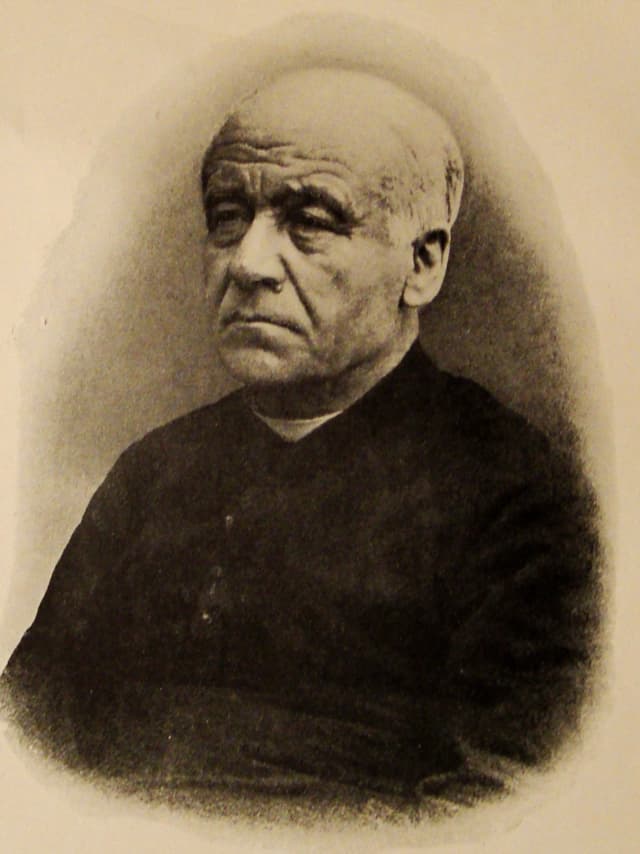
Guido Gezelle
Guido Gezelle was a prominent Belgian poet and Roman Catholic priest, renowned for his innovative use of the West Flemish dialect in literature. Born in Bruges, he developed a deep appreciation for language and nature, which became central themes in his work. Gezelle's poetry often explored the intersection of faith and the natural world, reflecting his spiritual beliefs and his love for the Flemish landscape. His notable works include 'De Lente' and 'Kruideniers', which showcase his lyrical prowess and mastery of dialect, earning him a unique place in Belgian literature. Gezelle's literary significance lies not only in his use of dialect but also in his ability to convey profound emotional depth and philosophical insight through simple yet evocative language. He was a pioneer in Flemish literature, influencing subsequent generations of writers and poets. Despite facing criticism during his lifetime for his unconventional style, Gezelle's legacy endures, as he is celebrated for his contributions to the Flemish literary canon and his role in the revival of regional dialects in poetry. His works continue to be studied and appreciated for their artistic merit and cultural importance.
Famous Quotes
View all 3 quotes“Grote droefheid staat verbaasd, Kleine droefheid roept en raast”
“En ik! Ik kan noch tanden togen, noch hand, noch hiel, noch huid, noch haar, noch voet, noch vuist, noch hoeven zwaar; ik weet van stralen, noch mijn hoofd draagt hoornen, ’t doet; maar, op mijn hoornen staan mijn ogen! Wat zal een arme slak, waar alles vechten moet?”
“k! Ik kan noch tanden togen, noch hand, noch hiel, noch huid, noch haar, noch voet, noch vuist, noch hoeven zwaar; ik weet van stralen, noch mijn hoofd draagt hoornen, ’t doet; maar, op mijn hoornen staan mijn ogen! Wat zal een arme slak, waar alles vechten moet?”
Books from the author



Link to this page
Add a free, dofollow link to Lex on your blog, forum, syllabus, or reading list.

<a href="https://lex-books.com/author/guido-gezelle"><img src="https://lex-books.com/badges/read-on-lex.svg" alt="Guido Gezelle on Lex" width="160" height="40"></a>[](https://lex-books.com/author/guido-gezelle)[url=https://lex-books.com/author/guido-gezelle][img]https://lex-books.com/badges/read-on-lex.svg[/img][/url]Guido Gezelle on Lex: https://lex-books.com/author/guido-gezelle