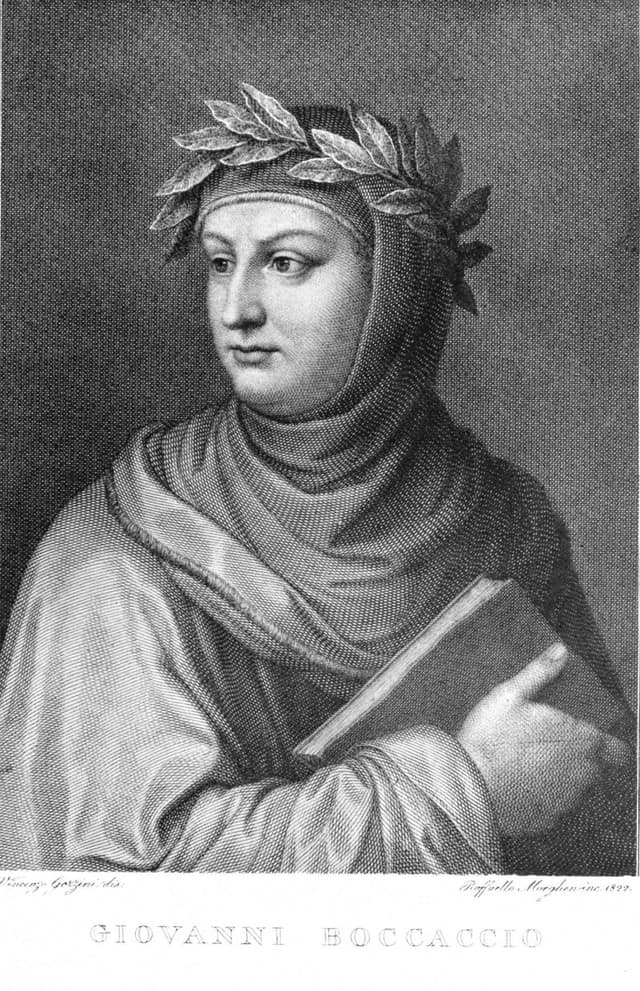
Giovanni Boccaccio
Giovanni Boccaccio was an influential Italian writer and poet, recognized as a pivotal figure in the Renaissance humanist movement. Born in Certaldo, he emerged as one of the most significant literary figures of the fourteenth century, often referred to as 'the Certaldese.' Boccaccio's literary prowess was marked by his ability to blend various genres and styles, showcasing a creativity that set him apart from his contemporaries. His most renowned work, The Decameron, is a collection of short stories that not only shaped Italian literary tradition but also established a model for Italian prose that would be celebrated in the sixteenth century. Additionally, his work On Famous Women further highlighted his versatility and engagement with themes of gender and society. Boccaccio's impact extended beyond Italy, influencing a wide array of European writers, including Geoffrey Chaucer and Miguel de Cervantes. His realistic dialogue and innovative narrative techniques broke away from the formulaic approaches typical of medieval literature, marking a significant shift in storytelling. As one of the 'Three Crowns' of Italian literature, alongside Dante Alighieri and Petrarch, Boccaccio played a crucial role in laying the foundations of humanism in Florence. He was also instrumental in the revival of Dante's works, dedicating himself to the study and promotion of the Divine Comedy. Boccaccio's legacy endures, as he remains a central figure in the evolution of European literature and thought.
Famous Quotes
View all 3 quotes“You must read, you must persevere, you must sit up nights, you must inquire, and exert the utmost power of your mind. If one way does not lead to the desired meaning, take another; if obstacles arise, then still another; until, if your strength holds out, you will find that clear which at first looked dark.”
“To have compassion for those who suffer is a human quality which everyone should possess, especially those who have required comfort themselves in the past and have managed to find it in others.”
“Nothing is so indecent that it cannot be said to another person if the proper words are used to convey it.”
Books from the author











Link to this page
Add a free, dofollow link to Lex on your blog, forum, syllabus, or reading list.

<a href="https://lex-books.com/author/giovanni-boccaccio"><img src="https://lex-books.com/badges/read-on-lex.svg" alt="Giovanni Boccaccio on Lex" width="160" height="40"></a>[](https://lex-books.com/author/giovanni-boccaccio)[url=https://lex-books.com/author/giovanni-boccaccio][img]https://lex-books.com/badges/read-on-lex.svg[/img][/url]Giovanni Boccaccio on Lex: https://lex-books.com/author/giovanni-boccaccio