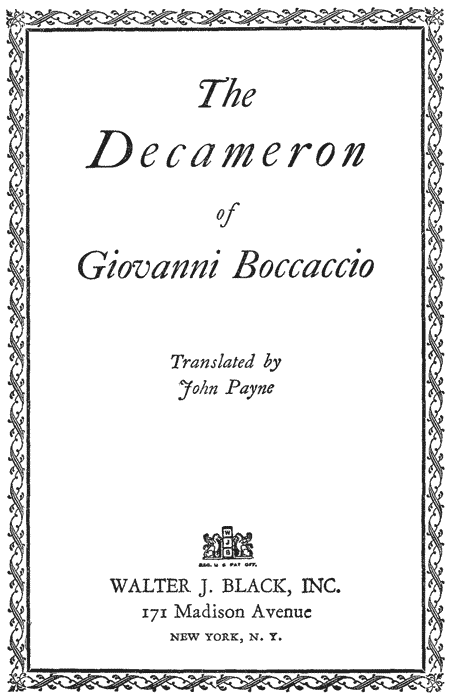
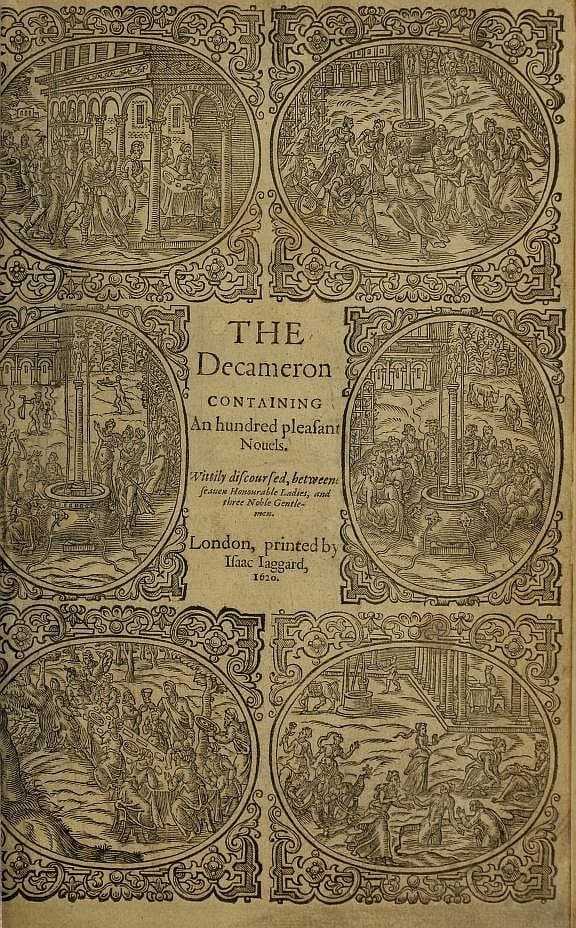
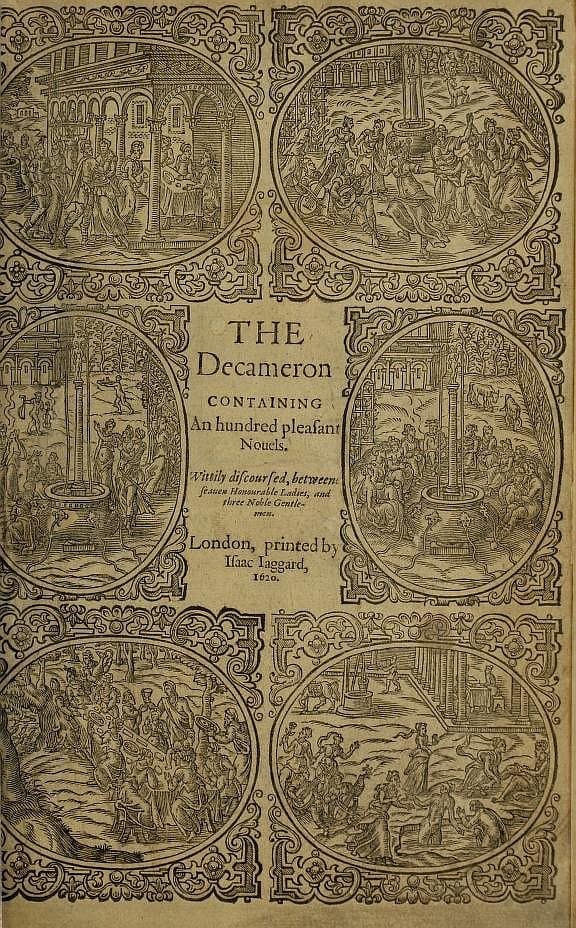
The Decameron, Volume II
1348
The Decameron, Volume II
1348
Translated by J. M. (James Macmullen) Rigg
In 1348, ten young nobles flee the Black Death ravaging Florence and retreat to a country villa, where they agree to tell each other stories to pass the time. What begins as a quarantine entertainment becomes one of literature's most audacious act of survival. Volume II opens with tales of transformation through love: a brutish young man rendered eloquent by desire, a woman who attempts suicide upon hearing her lover has died, only to discover him thriving in a distant land. But Boccaccio's range defies easy categorization. His stories move from slapstick comedy to genuine tragedy, from ribald erotica to spiritual devotion, often within the space of a single tale. These are people testing the boundaries of social convention, exploiting loopholes in fortune's plan, finding cunning ways to love whom they choose. Nearly seven centuries later, The Decameron remains astonishingly alive because it understands that even during catastrophe, humans need stories more than food. This is the novel's ancestor: wild, funny, occasionally obscene, and impossible to put down.
Editions
X-Ray
“To have compassion for those who suffer is a human quality which everyone should possess, especially those who have required comfort themselves in the past and have managed to find it in others. ””
— Giovanni Boccaccio
“Nothing is so indecent that it cannot be said to another person if the proper words are used to convey it.””
— Giovanni Boccaccio
“Kissed mouth don’t lose its fortune, on the contrary it renews itself just as the moon does.””
— Giovanni Boccaccio
“Wrongs committed in the distant past are far easier to condemn than to rectify.””
— Giovanni Boccaccio
“it is obvious that all vices have a grievous effect on those who indulge them and often on others too. But I believe that the one which can transport us with the most unbridled haste into danger is anger. This is nothing other than a sudden thoughtless impulse, provoked by some perceived offence, which banishes reason and clouds the eyes of the mind, rousing the soul to blazing fury.””
— Giovanni Boccaccio
“Let this grisly beginning be none other to you than is to wayfarers a rugged and steep mountain.””
— Giovanni Boccaccio
“The scholar, as wise as he was full of wrath, knowing that threats only serve as weapons to the person so threatened, kept all his resentment within his own breast [...]””
— Giovanni Boccaccio
“No-thing less splendid than a golden sepulchre would have suited so noble a heart.””
— Giovanni Boccaccio
“Senseless creatures, you don't see how much evil is concealed under a little good appearance.””
— Giovanni Boccaccio
Link to this book
Add a free, dofollow link to Lex on your blog, forum, syllabus, or reading list.

<a href="https://lex-books.com/book/the-decameron-volume-ii-9e9d860a-626d-4a91-9766-ce244fc075b0"><img src="https://lex-books.com/badges/read-on-lex.svg" alt="Read The Decameron, Volume II by Giovanni Boccaccio free on Lex" width="160" height="40"></a>[](https://lex-books.com/book/the-decameron-volume-ii-9e9d860a-626d-4a91-9766-ce244fc075b0)[url=https://lex-books.com/book/the-decameron-volume-ii-9e9d860a-626d-4a91-9766-ce244fc075b0][img]https://lex-books.com/badges/read-on-lex.svg[/img][/url]Read The Decameron, Volume II by Giovanni Boccaccio free on Lex: https://lex-books.com/book/the-decameron-volume-ii-9e9d860a-626d-4a91-9766-ce244fc075b0Cite this book
Reading this edition for a paper or guide? Copy a citation.
Boccaccio, Giovanni. The Decameron, Volume II. Lex, lex-books.com/book/the-decameron-volume-ii-9e9d860a-626d-4a91-9766-ce244fc075b0.Boccaccio, G. (1348). The Decameron, Volume II. Lex. https://lex-books.com/book/the-decameron-volume-ii-9e9d860a-626d-4a91-9766-ce244fc075b0Boccaccio, Giovanni. The Decameron, Volume II. Lex. https://lex-books.com/book/the-decameron-volume-ii-9e9d860a-626d-4a91-9766-ce244fc075b0.