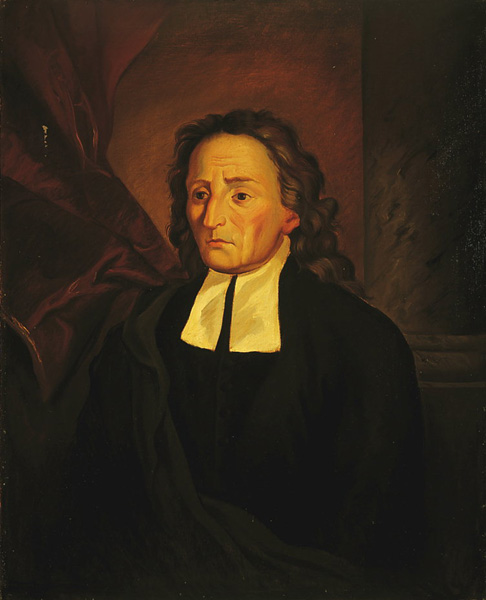
Giambattista Vico
Giambattista Vico was an influential Italian philosopher, historian, and jurist of the Italian Enlightenment, known for his critical stance against modern rationalism and Cartesian thought. He argued that such reductionist approaches were inadequate for understanding the complexities of human life. Vico championed the value of classical antiquity and the Renaissance humanities, positioning himself as a precursor to the Counter-Enlightenment movement. His innovative ideas laid the groundwork for the modern fields of social science and semiotics, with his famous aphorism 'Verum esse ipsum factum' encapsulating his constructivist epistemology, which posits that truth is created through human action and interpretation. Vico's seminal work, 'Scienza Nuova' (New Science), published in 1725, is regarded as his magnum opus. In this text, he sought to unify the humanities under a single scientific framework, exploring the historical cycles that govern the rise and fall of societies. Although he did not use the term 'philosophy of history,' his insights into the narrative of philosophical development have significantly influenced later thinkers, including historicists like Isaiah Berlin and Edward Said. Vico's legacy endures as a foundational figure in the philosophy of history, whose ideas continue to resonate in contemporary discussions of culture, history, and human understanding.
Famous Quotes
View all 3 quotes“The most sublime labour of poetry is to give sense and passion to insensate things; and it is characteristic of children to take inanimate things in their hands and talk to them in play as if they were living persons... This philological-philosophical axiom proves to us that in the world's childhood men were by nature sublime poets...”
“peoples, like so many beasts, have fallen into the custom of each man thinking only of his own private interests and have reached the extreme of delicacy, or better of pride, in which like wild animals they bristle and lash out at the slightest displeasure. Thus no matter how great the throng and press of their bodies, they live like wild beasts in a deep solitude of spirit and will, scarcely any two being able to agree since each follows his own pleasure and caprice.”
“A city divided by religion is either already in ruins or close to it.”
Books from the author

Link to this page
Add a free, dofollow link to Lex on your blog, forum, syllabus, or reading list.

<a href="https://lex-books.com/author/giambattista-vico"><img src="https://lex-books.com/badges/read-on-lex.svg" alt="Giambattista Vico on Lex" width="160" height="40"></a>[](https://lex-books.com/author/giambattista-vico)[url=https://lex-books.com/author/giambattista-vico][img]https://lex-books.com/badges/read-on-lex.svg[/img][/url]Giambattista Vico on Lex: https://lex-books.com/author/giambattista-vico