The Life of Reason: The Phases of Human Progress
1905

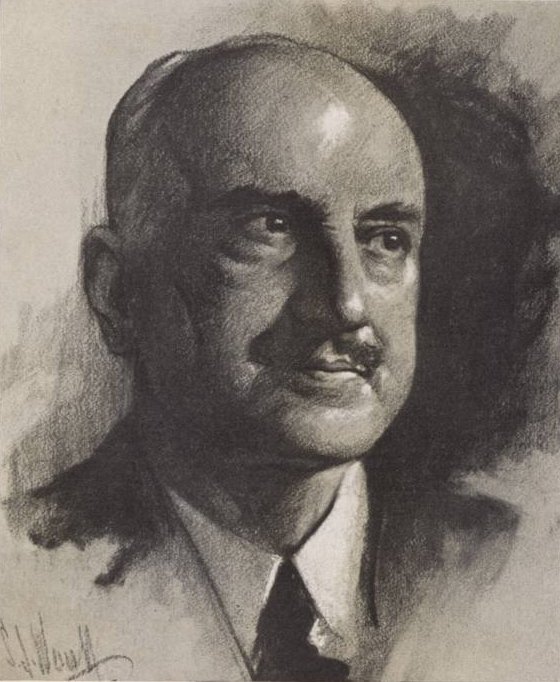
Santayana's masterwork is unlike any other work of philosophy in the English language. Here, reason is not presented as a dry logical faculty but as the living pulse of civilization, the creative force that transforms raw impulse into art, religion, society, and science. Written with a poet's ear and a skeptic's precision, The Life of Reason traces humanity's slow ascent from animal instinct to rational consciousness, showing how each domain of human activity represents both an achievement and a limitation of the rational ideal. The five volumes move from the foundations of common sense through the complexities of social organization, the psychology of religious belief, the aesthetic imagination, and the methods of scientific inquiry. Santayana, the Spanish-born American philosopher who abandoned academia for a life in Rome, writes with the cadences of a man who has seen both the power and the futility of human ambition. His vision is ultimately tragic: reason illuminates the world but cannot save us from it. Yet there is comfort in the illumination, and beauty in the attempt. This is philosophy as high literature, for readers who want to think deeply about what makes us human.
Editions

X-Ray
“Those who cannot remember the past, are condemned to repeat it.””
— George Santayana
“The fact of having been born is a bad augury for immortality.””
— George Santayana
“It would be easy, however, to exaggerate the havoc wrought by such artificial conditions. The monotony we observe in mankind must not be charged to the oppressive influence of circumstances crushing the individual soul. It is not society's fault that most men seem to miss their vocation. Most men have no vocation; and society, in imposing on them some chance language, some chance religion, and some chance career, first plants an ideal in their bosoms and insinuates into them a sort of racial or professional soul. Their only character is composed of the habits they have been led to acquire. Some little propensities betrayed in childhood may very probably survive; one man may prove by his dying words that he was congenitally witty, another tender, another brave.But these native qualities will simply have added an ineffectual tint to some typical existence or other; and the vast majority will remain, as Schopenhauer said, .””
— George Santayana
“The more pleasure a universe can yield, other things being equal, the more beneficent and generous is its general nature; the more pains its constitution involves, the darker and more malign its total temper. To deny this would seem impossible, yet it is done daily; for there is nothing people will not maintain when they are slaves to superstition; and candor and a sense of justice are, in such a case, the first things lost.””
— George Santayana
“faith in the intellect...is the only faith yet sanctioned by its fruits””
— George Santayana
“Ceux qui ne peuvent se souvenir du passé sont condamnés à le répéter.””
— George Santayana
“….ideal goods cannot be assimilated without some training and leisure. Like education and religion they are degraded by popularity, and reduced from what the master intended to what the people are able and willing to receive. So pleasing an idea, then, as this of diffused ideal possessions has little application in a society aristocratically framed; for the greater eminence the few attain the less able are the many to follow them. Great thoughts require a great mind and pure beauties a profound sensibility. To attempt to give such things a wide currency is to be willing to denaturalise them in order to boast that they have been propagated. Culture is on the horns of this dilemma: if profound and noble it must remain rare, if common it must become mean.””
— George Santayana
Link to this book
Add a free, dofollow link to Lex on your blog, forum, syllabus, or reading list.

<a href="https://lex-books.com/book/the-life-of-reason-the-phases-of-human-progress-034e5769-dcfa-472f-a85e-4057eb96f365"><img src="https://lex-books.com/badges/read-on-lex.svg" alt="Read The Life of Reason: The Phases of Human Progress by George Santayana free on Lex" width="160" height="40"></a>[](https://lex-books.com/book/the-life-of-reason-the-phases-of-human-progress-034e5769-dcfa-472f-a85e-4057eb96f365)[url=https://lex-books.com/book/the-life-of-reason-the-phases-of-human-progress-034e5769-dcfa-472f-a85e-4057eb96f365][img]https://lex-books.com/badges/read-on-lex.svg[/img][/url]Read The Life of Reason: The Phases of Human Progress by George Santayana free on Lex: https://lex-books.com/book/the-life-of-reason-the-phases-of-human-progress-034e5769-dcfa-472f-a85e-4057eb96f365Cite this book
Reading this edition for a paper or guide? Copy a citation.
Santayana, George. The Life of Reason: The Phases of Human Progress. Lex, lex-books.com/book/the-life-of-reason-the-phases-of-human-progress-034e5769-dcfa-472f-a85e-4057eb96f365.Santayana, G. (1905). The Life of Reason: The Phases of Human Progress. Lex. https://lex-books.com/book/the-life-of-reason-the-phases-of-human-progress-034e5769-dcfa-472f-a85e-4057eb96f365Santayana, George. The Life of Reason: The Phases of Human Progress. Lex. https://lex-books.com/book/the-life-of-reason-the-phases-of-human-progress-034e5769-dcfa-472f-a85e-4057eb96f365.