The Sense of Beauty: Being the Outlines of Aesthetic Theory
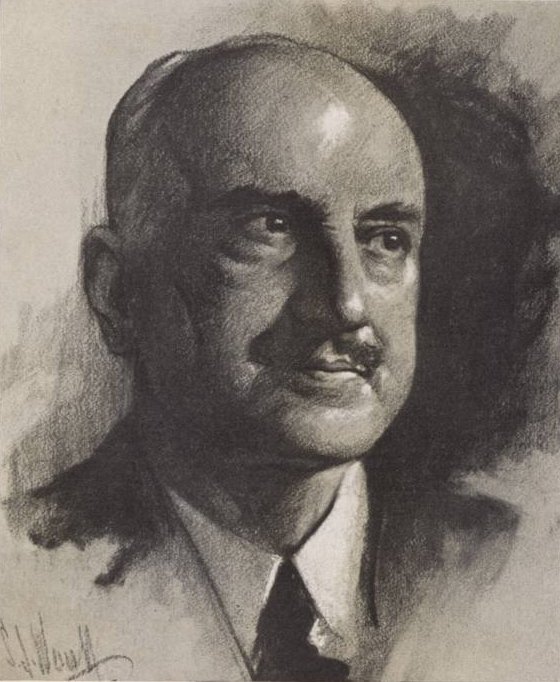
In 1896, a young Spanish philosopher teaching at Harvard delivered a series of lectures that would become the first major work on aesthetics written in English. George Santayana's argument is audacious: beauty is not a judgment of the mind but a quality of things, and it is fundamentally irrational. It is pleasure objectified, a positive value that emerges when our faculties work harmoniously upon material that satisfies them. This is not a dry treatise but a book written by a poet-philosopher whose prose itself demonstrates what it theorizes. Santayana examines how love, social instinct, the senses, and even what we call evil contribute to our capacity for beauty. He interrogates form, expression, humor, religion, and the possibility of perfection in art. The result is a vision of aesthetics grounded not in abstract metaphysics but in the actual stuff of human experience. Over a century later, it remains essential reading for anyone who has ever wondered why a sunset, a poem, or a face can stop us cold.
Editions
X-Ray
“To feel beauty is a better thing than to understand how we come to feel it. To have imagination and taste, to love the best, to be carried by the contemplation of nature to a vivid faith in the ideal, all this is more, a great deal more, than any science can hope to be.””
— George Santayana
“A habitual indulgence in the inarticulate is a sure sign of the philosopher who has not learned to think, the poet who has not learned to write, the painter who has not learned to paint, and the impression that has not learned to express itself--all of which are compatible with an immensity of genius in the inexpressible soul.””
— George Santayana
“Nonsense is so good only because common sense is so limited.””
— George Santayana
“ولكن يندر أن يوجد الرجل أو العصر الذى ينتقى طريقه بمفرده ، بل يقتصر اختيارنا على العموم على واحد من اثنين : فإما أن نسبق غيرنا في الطريق الذي تم اختياره لنا فعلاً ، وإما أن نقف فى الطريق فنسده أمامهم . وما يمكننا أن نقوم به من إصلاح لا يتعدى عادة الإصلاح الداخلي الذي يتم في حدود معينة ، ويكون نتيجة دراسة الأشكال التقليدية دراسة أكثر عمقاً””
— George Santayana
“La belleza, según la sentimos, es algo indescriptible; jamás puede decirse lo que es ni lo que significa.””
— George Santayana
“Familiarity breeds contempt only when it breeds inattention.””
— George Santayana
“The tendency of everything to maintain and propagate its nature is simply the inertia of a stable juxtaposition of elements, which are not enough disturbed by ordinary accidents to lose their equilibrium; while the incident of a too great disturbance causes that disruption we call death , or that variation of type , which , on account of it's incapacity to establish itself permanently, we call abnormal. Nature thus organizes herself into recognizable species ; and the aesthetic eye ,studying her forms ,tends ,as we have already shown , to bring the type within even narrower limits than do the external exigencies of life””
— George Santayana
“There is no tyranny so hateful as a vulgar, anonymous tyranny. It is all-permeating, all-thwarting; it blasts every budding novelty and sprig of genius with its omnipresent and fierce stupidity””
— George Santayana
Link to this book
Add a free, dofollow link to Lex on your blog, forum, syllabus, or reading list.

<a href="https://lex-books.com/book/the-sense-of-beauty-being-the-outlines-of-aesthetic-theory-4856d092-b6d1-4e74-a471-20faa44c1d9b"><img src="https://lex-books.com/badges/read-on-lex.svg" alt="Read The Sense of Beauty: Being the Outlines of Aesthetic Theory by George Santayana free on Lex" width="160" height="40"></a>[](https://lex-books.com/book/the-sense-of-beauty-being-the-outlines-of-aesthetic-theory-4856d092-b6d1-4e74-a471-20faa44c1d9b)[url=https://lex-books.com/book/the-sense-of-beauty-being-the-outlines-of-aesthetic-theory-4856d092-b6d1-4e74-a471-20faa44c1d9b][img]https://lex-books.com/badges/read-on-lex.svg[/img][/url]Read The Sense of Beauty: Being the Outlines of Aesthetic Theory by George Santayana free on Lex: https://lex-books.com/book/the-sense-of-beauty-being-the-outlines-of-aesthetic-theory-4856d092-b6d1-4e74-a471-20faa44c1d9bCite this book
Reading this edition for a paper or guide? Copy a citation.
Santayana, George. The Sense of Beauty: Being the Outlines of Aesthetic Theory. Lex, lex-books.com/book/the-sense-of-beauty-being-the-outlines-of-aesthetic-theory-4856d092-b6d1-4e74-a471-20faa44c1d9b.Santayana, G. (n.d.). The Sense of Beauty: Being the Outlines of Aesthetic Theory. Lex. https://lex-books.com/book/the-sense-of-beauty-being-the-outlines-of-aesthetic-theory-4856d092-b6d1-4e74-a471-20faa44c1d9bSantayana, George. The Sense of Beauty: Being the Outlines of Aesthetic Theory. Lex. https://lex-books.com/book/the-sense-of-beauty-being-the-outlines-of-aesthetic-theory-4856d092-b6d1-4e74-a471-20faa44c1d9b.