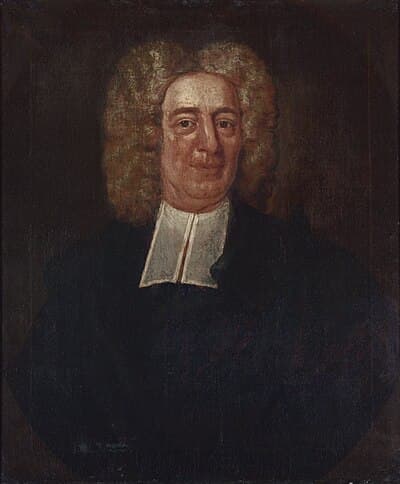
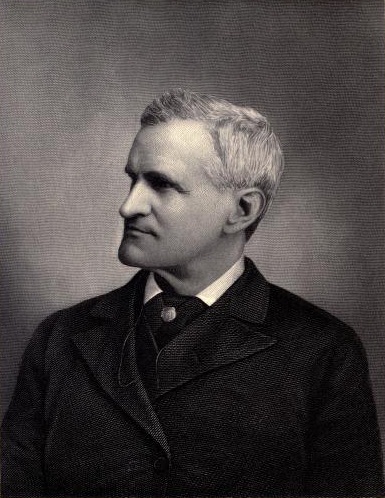
Cotton Mather
Cotton Mather was a prominent Puritan clergyman and prolific author in colonial New England, known for his extensive writings on theological, historical, and scientific subjects. Educated at Harvard College, he served as a minister at the Old North Meeting House in Boston, where he became a significant intellectual figure in the Massachusetts Bay Colony. Mather played a crucial role in the 1689 revolt against Sir Edmund Andros, the royal governor, and is often regarded as the 'first American Evangelical.' His involvement in the Salem witch trials of 1692–1693, particularly through his defense in the book 'Wonders of the Invisible World,' sparked considerable controversy and has tainted his legacy over the centuries. Mather's historical contributions include 'Magnalia Christi Americana,' a comprehensive account of the history of New England's churches and ministers, published in 1702. His commitment to the Puritan cause extended to his advocacy for Yale College as a bastion of Puritan thought. Throughout his life, Mather corresponded with European intellectuals and sought to influence the educational landscape of New England, even attempting to secure the presidency of Harvard College. Despite his significant contributions to colonial society and his efforts to maintain the Puritan ethos, his legacy remains complex, marked by both intellectual achievement and the controversies surrounding his actions during the witch trials.
Famous Quotes
View all 2 quotes“That there is a Devil, is a thing doubted by none but such as are under the influences of the Devil.”
“Wilderness is a temporary condition through which we are passing to the Promised Land.”
Books from the author


Link to this page
Add a free, dofollow link to Lex on your blog, forum, syllabus, or reading list.

<a href="https://lex-books.com/author/cotton-mather"><img src="https://lex-books.com/badges/read-on-lex.svg" alt="Cotton Mather on Lex" width="160" height="40"></a>[](https://lex-books.com/author/cotton-mather)[url=https://lex-books.com/author/cotton-mather][img]https://lex-books.com/badges/read-on-lex.svg[/img][/url]Cotton Mather on Lex: https://lex-books.com/author/cotton-mather