
Carl von Clausewitz
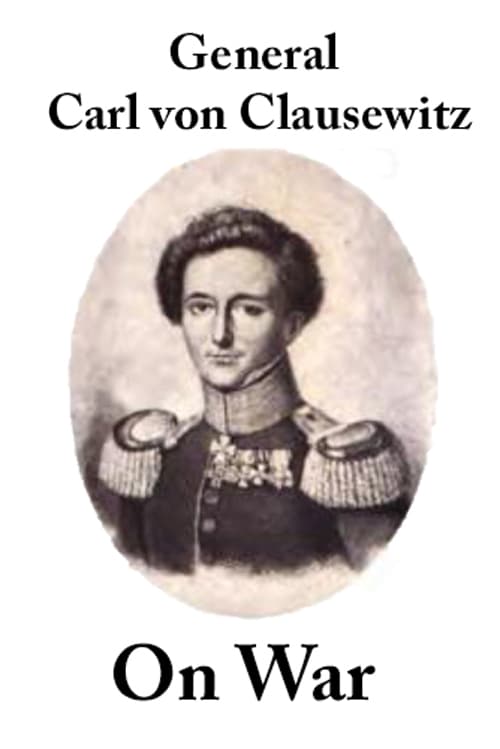
Carl von Clausewitz was a Prussian general and military theorist renowned for his profound insights into the nature of war. His most significant work, 'Vom Kriege' (On War), remains a foundational text in military strategy, despite being unfinished at the time of his death. Clausewitz emphasized the complex interplay of psychological and political factors in warfare, arguing that the unpredictable nature of conflict, often described as the 'fog of war,' necessitated swift and informed decision-making by commanders. He believed that history should inform military theory, cautioning against overly abstract approaches that divorced strategy from real-world experience. In contrast to contemporaries like Antoine-Henri Jomini, who sought to quantify warfare through rigid frameworks, Clausewitz asserted that war is inherently chaotic and cannot be reduced to simple calculations. His famous aphorism, 'War is the continuation of policy with other means,' encapsulates his view that military action is deeply intertwined with political objectives. Clausewitz's ideas have had a lasting impact on both military theory and broader strategic thinking, influencing generations of military leaders and scholars, and his work continues to be studied for its relevance to both historical and modern conflicts.
Famous Quotes
View all 3 quotes“The enemy of a good plan is the dream of a perfect plan.”
“If the mind is to emerge unscathed from this relentless struggle with the unforeseen, two qualities are indispensable: first, an intellect that, even in the darkest hour, retains some glimmerings of the inner light which leads to truth; and second, the courage to follow this faint light wherever it may lead.”
“War is nothing but a continuation of politics with the admixture of other means.”
Books from the author










Link to this page
Add a free, dofollow link to Lex on your blog, forum, syllabus, or reading list.

<a href="https://lex-books.com/author/carl-von-clausewitz"><img src="https://lex-books.com/badges/read-on-lex.svg" alt="Carl von Clausewitz on Lex" width="160" height="40"></a>[](https://lex-books.com/author/carl-von-clausewitz)[url=https://lex-books.com/author/carl-von-clausewitz][img]https://lex-books.com/badges/read-on-lex.svg[/img][/url]Carl von Clausewitz on Lex: https://lex-books.com/author/carl-von-clausewitz