
Richard Cannon
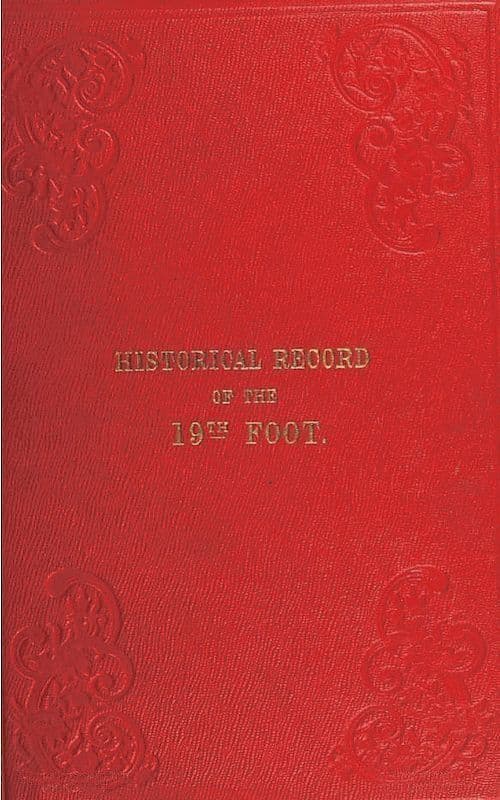
Richard Cannon was a notable compiler of regimental records for the British Army, whose work significantly contributed to the preservation of military history in the United Kingdom. His most recognized publication, 'Historical Record of the British Army,' provided detailed accounts of various regiments, documenting their formations, battles, and notable figures. This comprehensive approach not only served as a vital resource for historians but also fostered a sense of identity and pride within the military community. Cannon's meticulous attention to detail and dedication to accuracy made his records invaluable for future generations. His efforts in compiling these histories reflected a broader interest in the military's role in shaping national identity during the 19th century. By documenting the legacy of the British Army, Cannon played a crucial role in the understanding of military heritage, influencing both historical scholarship and public perception of the armed forces. His work remains a significant reference point in military history, underscoring the importance of preserving the narratives of those who served.
Famous Quotes
View all 9 quotes“Never had I understood that I command, with absolute authority, the ship of my life! I decide its mission and rules and discipline, at my word waits every tool and sail, every cannon, the strength of every soul on board. I’m master of a team of passionate skills to sail me through hell’s own jaws the second I nod the direction to steer.””
“The sound of a kiss is not as strong as that of a cannon, but its echo endures much longer.””
“The interpenetration of chance and determination bears on the problem of how there can be a scientific approach to society when individual human behavior and consciousness seem unpredictable. Those who despair to point out that people are not machines, that there are subjective processes in the making of decisions, that it is not 'classes' but individuals who make choices. Terms such as "the human factor" or "subjective factors" with their implication of chance and unpredictability are invoked as the negation of regularity and lawfulness. And indeed it is true that individual behavior and consciousness are the consequences of intersection of a large number of weakly determining factors. But it does not follow that where there is choice, subjectivity, and individuality there cannon also be predictability. The error to take the individual as causally prior to the whole and not to appreciate that the social has causal properties within which individual consciousness and action are formed. While the consciousness of an individual is not determined by his/her class position but is influenced by idiosyncratic factors that appear as random, those random factors operate within a domain and with probabilities that are constrained and directed by social forces.””
Books from the author



























Link to this page
Add a free, dofollow link to Lex on your blog, forum, syllabus, or reading list.

<a href="https://lex-books.com/author/richard-cannon"><img src="https://lex-books.com/badges/read-on-lex.svg" alt="Richard Cannon on Lex" width="160" height="40"></a>[](https://lex-books.com/author/richard-cannon)[url=https://lex-books.com/author/richard-cannon][img]https://lex-books.com/badges/read-on-lex.svg[/img][/url]Richard Cannon on Lex: https://lex-books.com/author/richard-cannon