Grundgedanken Über Krieg Und Kriegführung
1832

Grundgedanken Über Krieg Und Kriegführung
1832
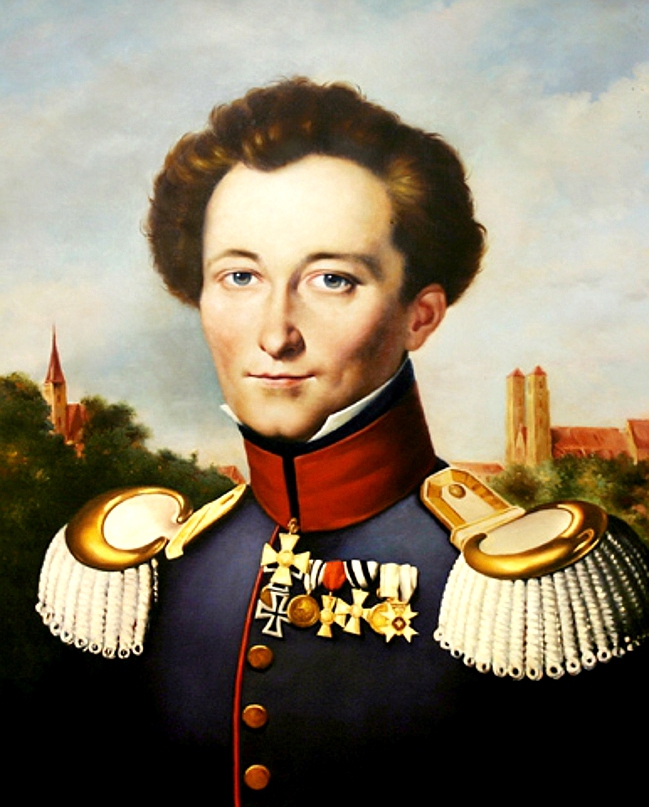
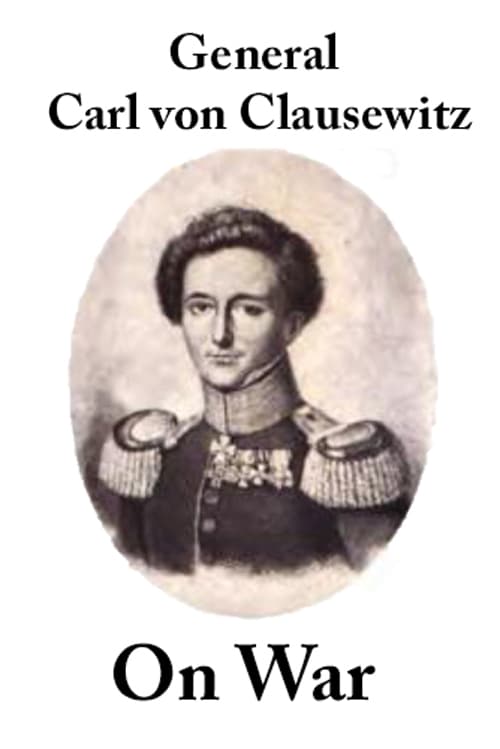
Carl von Clausewitz's monumental work asks a question that has haunted rulers and soldiers for centuries: what is war, really? The answer that emerged from the Napoleonic Wars reshaped how civilizations understand conflict. War, Clausewitz argued, is not merely a technical exercise of armies colliding but the continuation of politics by other means, a violent expression of state will pursued when diplomacy fails. This insight, now so fundamental it borders on cliché, was revolutionary in its time. Clausewitz understood that war lives inside a trinity of passion, chance, and rationality; it is shaped by popular fervor, entangled in chaos and friction, and directed by political purpose. He rejected tidy formulas because war itself resists them: it is 'the realm of uncertainty,' where plans collapse and fortunes hinge on moments no strategist can fully control. Though unfinished at his death in 1831, On War became the foundation upon which every subsequent military thinker built. Today it remains essential reading not only for generals and statesmen but for anyone seeking to understand how power, violence, and strategy intertwine in human affairs.
Editions

X-Ray
“War is nothing but a continuation of politics with the admixture of other means.””
— Carl von Clausewitz
“The conqueror is always a lover of peace; he would prefer to take over our country unopposed.””
— Carl von Clausewitz
“There are cases in which the greatest daring is the greatest wisdom.””
— Carl von Clausewitz
“Anyone who falls into the habit of thinking and expecting the best of his subordinates at all times is, for that reason alone, unsuited to command an army””
— Carl von Clausewitz
“If we read history with an open mind, we cannot fail to conclude that, among all the military virtues, the energetic conduct of war has always contributed most to glory and success.””
— Carl von Clausewitz
“... a strong character is one that will not be unbalanced by the most powerful emotions””
— Carl von Clausewitz
“The aggressor is always peace-loving (as Bonaparte always claimed to be); he would prefer to take over our country unopposed.””
— Carl von Clausewitz
“history had no lessons or rules to offer the student, it could only broaden his understanding and strengthen his critical judgment.””
— Carl von Clausewitz
“Great things alone can make a great mind, and petty things will make a petty mind unless a man rejects them as completely alien.””
— Carl von Clausewitz
Link to this book
Add a free, dofollow link to Lex on your blog, forum, syllabus, or reading list.

<a href="https://lex-books.com/book/grundgedanken-ber-krieg-und-kriegf-hrung-1526fe68-bd70-4d05-a8fd-dcd20cc7701b"><img src="https://lex-books.com/badges/read-on-lex.svg" alt="Read Grundgedanken Über Krieg Und Kriegführung by Carl von Clausewitz free on Lex" width="160" height="40"></a>[](https://lex-books.com/book/grundgedanken-ber-krieg-und-kriegf-hrung-1526fe68-bd70-4d05-a8fd-dcd20cc7701b)[url=https://lex-books.com/book/grundgedanken-ber-krieg-und-kriegf-hrung-1526fe68-bd70-4d05-a8fd-dcd20cc7701b][img]https://lex-books.com/badges/read-on-lex.svg[/img][/url]Read Grundgedanken Über Krieg Und Kriegführung by Carl von Clausewitz free on Lex: https://lex-books.com/book/grundgedanken-ber-krieg-und-kriegf-hrung-1526fe68-bd70-4d05-a8fd-dcd20cc7701bCite this book
Reading this edition for a paper or guide? Copy a citation.
Clausewitz, Carl von. Grundgedanken Über Krieg Und Kriegführung. Lex, lex-books.com/book/grundgedanken-ber-krieg-und-kriegf-hrung-1526fe68-bd70-4d05-a8fd-dcd20cc7701b.Clausewitz, C. V. (1832). Grundgedanken Über Krieg Und Kriegführung. Lex. https://lex-books.com/book/grundgedanken-ber-krieg-und-kriegf-hrung-1526fe68-bd70-4d05-a8fd-dcd20cc7701bClausewitz, Carl von. Grundgedanken Über Krieg Und Kriegführung. Lex. https://lex-books.com/book/grundgedanken-ber-krieg-und-kriegf-hrung-1526fe68-bd70-4d05-a8fd-dcd20cc7701b.