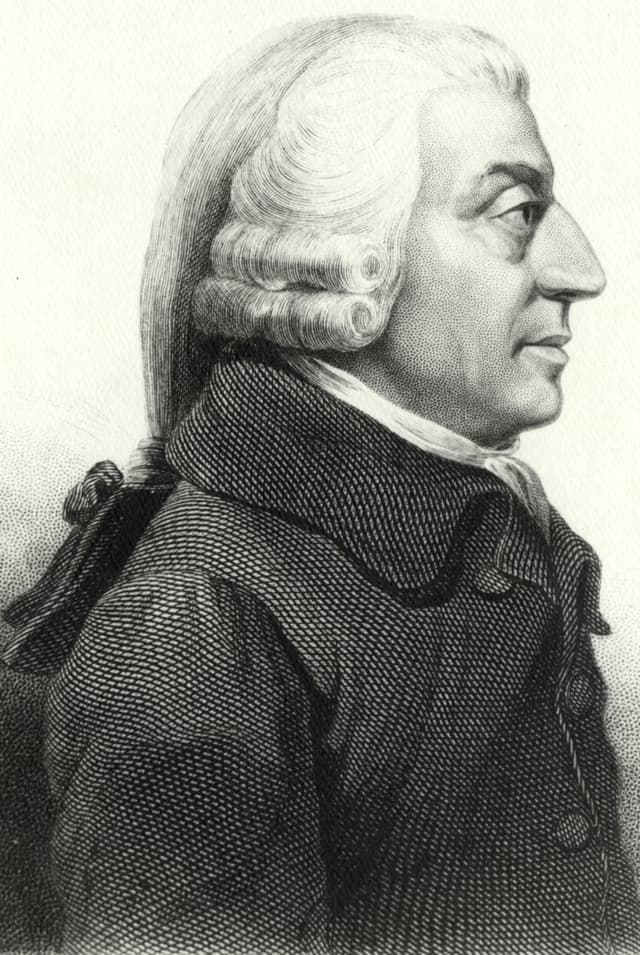
Adam Smith
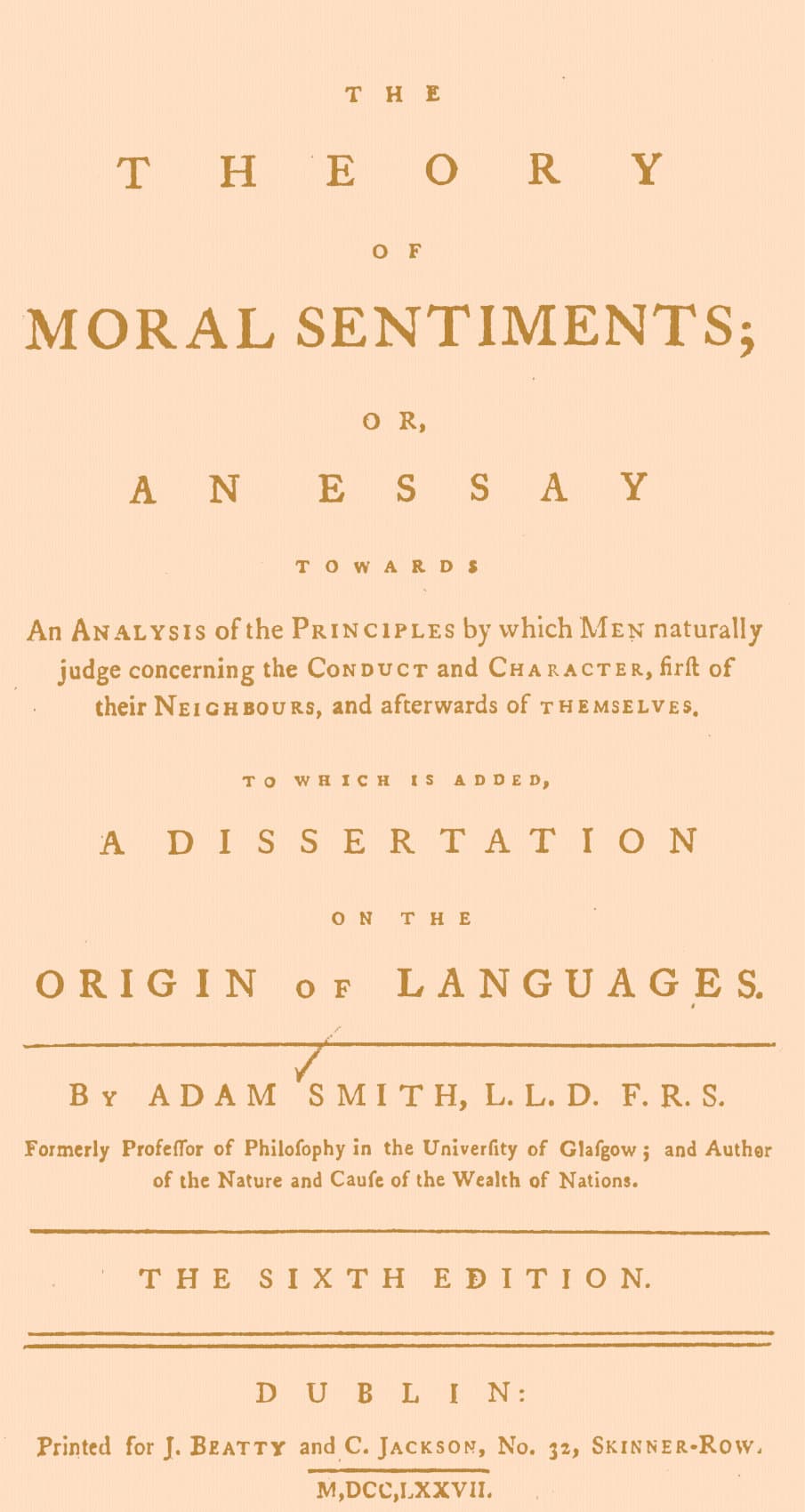
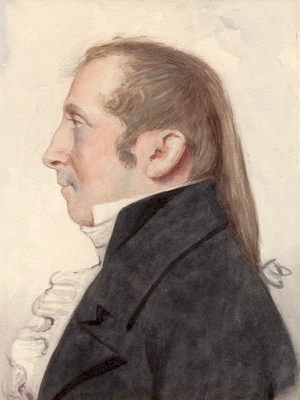
Adam Smith was a Scottish economist and philosopher, widely recognized as a foundational figure in political economy and a key proponent of the Scottish Enlightenment. Born in Kirkcaldy, Fife, he pursued studies in social philosophy at the University of Glasgow and Balliol College, Oxford, where he was among the first beneficiaries of scholarships established by John Snell. Smith's academic career flourished as he delivered acclaimed public lectures at the University of Edinburgh, leading to a professorship at Glasgow where he taught moral philosophy. It was during this period that he authored his seminal works, including The Theory of Moral Sentiments in 1759. Smith's magnum opus, An Inquiry into the Nature and Causes of the Wealth of Nations, published in 1776, marked a pivotal moment in economic thought. This work laid the groundwork for modern economics, challenging the mercantilist policies of his time by advocating for free-market principles and the idea of division of labor. He argued that rational self-interest and competition could drive economic prosperity, fundamentally reshaping how wealth and power were understood. His ideas were often controversial, provoking criticism and satire from contemporaries like Horace Walpole. Smith's legacy endures as he is celebrated as the 'father of economics' and 'father of capitalism,' influencing generations of economists and thinkers who followed him.
Famous Quotes
View all 18 quotes“Civil government, so far as it is instituted for the security of property, is in reality instituted for the defense of the rich against the poor, or of those who have some property against those who have none at all.””
“The great source of both the misery and disorders of human life, seems to arise from over-rating the difference between one permanent situation and another. Avarice over-rates the difference between poverty and riches: ambition, that between a private and a public station: vain-glory, that between obscurity and extensive reputation. The person under the influence of any of those extravagant passions, is not only miserable in his actual situation, but is often disposed to disturb the peace of society, in order to arrive at that which he so foolishly admires. The slightest observation, however, might satisfy him, that, in all the ordinary situations of human life, a well-disposed mind may be equally calm, equally cheerful, and equally contented. Some of those situations may, no doubt, deserve to be preferred to others: but none of them can deserve to be pursued with that passionate ardour which drives us to violate the rules either of prudence or of justice; or to corrupt the future tranquillity of our minds, either by shame from the remembrance of our own folly, or by remorse from the horror of our own injustice.””
“Science is the great antidote to the poison of enthusiasm and superstition.””
Books from the author


Link to this page
Add a free, dofollow link to Lex on your blog, forum, syllabus, or reading list.

<a href="https://lex-books.com/author/adam-smith"><img src="https://lex-books.com/badges/read-on-lex.svg" alt="Adam Smith on Lex" width="160" height="40"></a>[](https://lex-books.com/author/adam-smith)[url=https://lex-books.com/author/adam-smith][img]https://lex-books.com/badges/read-on-lex.svg[/img][/url]Adam Smith on Lex: https://lex-books.com/author/adam-smith