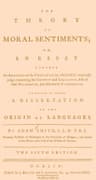
The Theory of Moral Sentimentsor, an Essay Towards an Analysis of the Principles by Which Men Naturally Judge Concerning the Conduct and Character, First of Their Neighbours, and Afterwards of Themselves. to Which Is Added, a Dissertation on the Origin of Languages.
1759

The Theory of Moral Sentimentsor, an Essay Towards an Analysis of the Principles by Which Men Naturally Judge Concerning the Conduct and Character, First of Their Neighbours, and Afterwards of Themselves. to Which Is Added, a Dissertation on the Origin of Languages.
1759
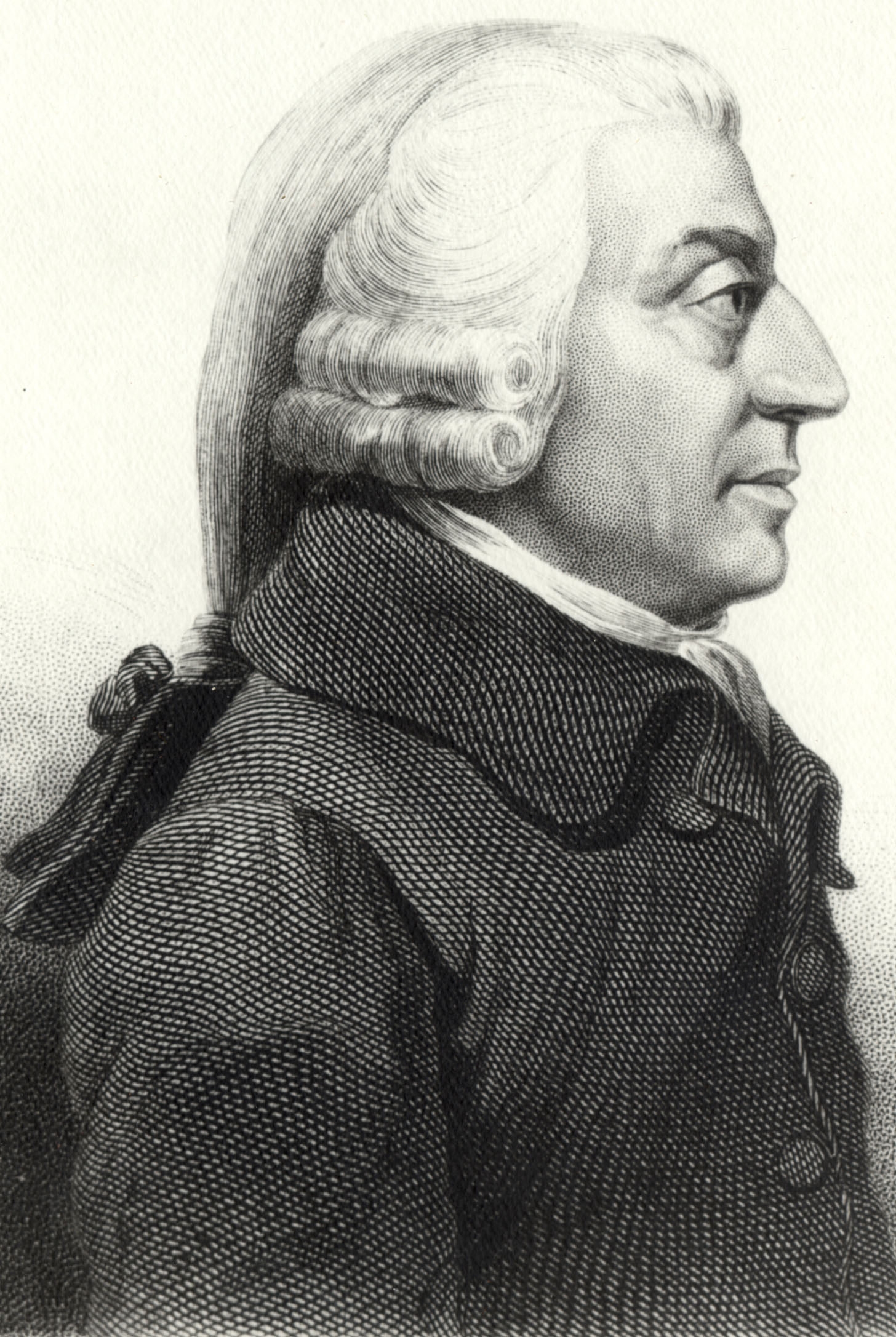
Long before he became the patron saint of free markets, Adam Smith wrote something far more radical: a book about how humans actually care about each other. Published in 1759, seventeen years before The Wealth of Nations, The Theory of Moral Sentiments reveals a philosopher obsessed not with profit but with the mysterious mechanics of sympathy, conscience, and moral judgment. Smith argues that we do not merely observe others' emotions from the outside, we imaginatively transpose ourselves into their situation, feeling their joy and grief as if it were our own. This faculty of imaginative identification, which he calls sympathy, becomes the foundation for all moral judgment: we approve or condemn actions by asking whether a neutral observer could sympathetically inhabit them. The result is a surprising, humane work that portrays humans as creatures built for connection, not competition. Smith believed the highest human achievement was not wealth but virtue, cultivated through the internal 'impartial spectator' who judges our actions as a thoughtful bystander would. Readers who know only his economic writing will find this a revelation: the same mind that gave us the invisible hand also gave us one of the most sophisticated accounts of human empathy ever written.
Editions
X-Ray
“The great source of both the misery and disorders of human life, seems to arise from over-rating the difference between one permanent situation and another. Avarice over-rates the difference between poverty and riches: ambition, that between a private and a public station: vain-glory, that between obscurity and extensive reputation. The person under the influence of any of those extravagant passions, is not only miserable in his actual situation, but is often disposed to disturb the peace of society, in order to arrive at that which he so foolishly admires. The slightest observation, however, might satisfy him, that, in all the ordinary situations of human life, a well-disposed mind may be equally calm, equally cheerful, and equally contented. Some of those situations may, no doubt, deserve to be preferred to others: but none of them can deserve to be pursued with that passionate ardour which drives us to violate the rules either of prudence or of justice; or to corrupt the future tranquillity of our minds, either by shame from the remembrance of our own folly, or by remorse from the horror of our own injustice.””
— Adam Smith
“Never complain of that of which it is at all times in your power to rid yourself.””
— Adam Smith
“Though our brother is upon the rack, as long as we ourselves are at ease, our senses will never inform us of what he suffers. They never did and never can carry us beyond our own persons, and it is by the imagination only that we form any conception of what are his sensations...His agonies, when they are thus brought home to ourselves, when we have this adopted and made them our own, begin at last to affect us, and we then tremble and shudder at the thought of what he feels.””
— Adam Smith
“Man naturally desires, not only to be loved, but to be lovely.””
— Adam Smith
“The prudent man always studies seriously and earnestly to understand whatever he professes to understand, and not merely to persuade other people that he understands it; and though his talents may not always be very brilliant, they are always perfectly genuine. He neither endeavours to impose upon you by the cunning devices of an artful impostor, nor by the arrogant airs of an assuming pedant, nor by the confident assertions of a superficial and imprudent pretender. He is not ostentatious even of the abilities which he really possesses. His conversation is simple and modest, and he is averse to all the quackish arts by which other people so frequently thrust themselves into public notice and reputation.””
— Adam Smith
“How selfish soever man may be supposed, there are evidently some principles in his nature, which interest him in the fortune of others, and render their happiness necessary to him, though he derives nothing from it except the pleasure of seeing it.””
— Adam Smith
“How many people ruin themselves by laying out money on trinkets of frivolous utility? What pleases these lovers of toys is not so much the utility, as the aptness of the machines which are fitted to promote it. All their pockets are stuffed with little conveniences. They contrive new pockets, unknown in the clothes of other people, in order to carry a greater number. They walk about loaded with a multitude of baubles, in weight and sometimes in value not inferior to an ordinary Jew's-box, some of which may sometimes be of some little use, but all of which might at all times be very well spared, and of which the whole utility is certainly not worth the fatigue of bearing the burden.””
— Adam Smith
“This disposition to admire, and almost to worship, the rich and the powerful, and to despise, or, at least, to neglect persons of poor and mean condition, though necessary both to establish and to maintain the distinction of ranks and the order of society, is, at the same time, the great and most universal cause of the corruption of our moral sentiments.””
— Adam Smith
“We are but one of the multitude, in no respect better than any other in it.””
— Adam Smith
Link to this book
Add a free, dofollow link to Lex on your blog, forum, syllabus, or reading list.

<a href="https://lex-books.com/book/the-theory-of-moral-sentimentsor-an-essay-towards-an-analysis-of-the-principles--c55614dc-6267-4271-a90c-9bb1576df9be"><img src="https://lex-books.com/badges/read-on-lex.svg" alt="Read The Theory of Moral Sentimentsor, an Essay Towards an Analysis of the Principles by Which Men Naturally Judge Concerning the Conduct and Character, First of Their Neighbours, and Afterwards of Themselves. to Which Is Added, a Dissertation on the Origin of Languages. by Adam Smith free on Lex" width="160" height="40"></a>[](https://lex-books.com/book/the-theory-of-moral-sentimentsor-an-essay-towards-an-analysis-of-the-principles--c55614dc-6267-4271-a90c-9bb1576df9be)[url=https://lex-books.com/book/the-theory-of-moral-sentimentsor-an-essay-towards-an-analysis-of-the-principles--c55614dc-6267-4271-a90c-9bb1576df9be][img]https://lex-books.com/badges/read-on-lex.svg[/img][/url]Read The Theory of Moral Sentimentsor, an Essay Towards an Analysis of the Principles by Which Men Naturally Judge Concerning the Conduct and Character, First of Their Neighbours, and Afterwards of Themselves. to Which Is Added, a Dissertation on the Origin of Languages. by Adam Smith free on Lex: https://lex-books.com/book/the-theory-of-moral-sentimentsor-an-essay-towards-an-analysis-of-the-principles--c55614dc-6267-4271-a90c-9bb1576df9beCite this book
Reading this edition for a paper or guide? Copy a citation.
Smith, Adam. The Theory of Moral Sentimentsor, an Essay Towards an Analysis of the Principles by Which Men Naturally Judge Concerning the Conduct and Character, First of Their Neighbours, and Afterwards of Themselves. to Which Is Added, a Dissertation on the Origin of Languages.. Lex, lex-books.com/book/the-theory-of-moral-sentimentsor-an-essay-towards-an-analysis-of-the-principles--c55614dc-6267-4271-a90c-9bb1576df9be.Smith, A. (1759). The Theory of Moral Sentimentsor, an Essay Towards an Analysis of the Principles by Which Men Naturally Judge Concerning the Conduct and Character, First of Their Neighbours, and Afterwards of Themselves. to Which Is Added, a Dissertation on the Origin of Languages.. Lex. https://lex-books.com/book/the-theory-of-moral-sentimentsor-an-essay-towards-an-analysis-of-the-principles--c55614dc-6267-4271-a90c-9bb1576df9beSmith, Adam. The Theory of Moral Sentimentsor, an Essay Towards an Analysis of the Principles by Which Men Naturally Judge Concerning the Conduct and Character, First of Their Neighbours, and Afterwards of Themselves. to Which Is Added, a Dissertation on the Origin of Languages.. Lex. https://lex-books.com/book/the-theory-of-moral-sentimentsor-an-essay-towards-an-analysis-of-the-principles--c55614dc-6267-4271-a90c-9bb1576df9be.