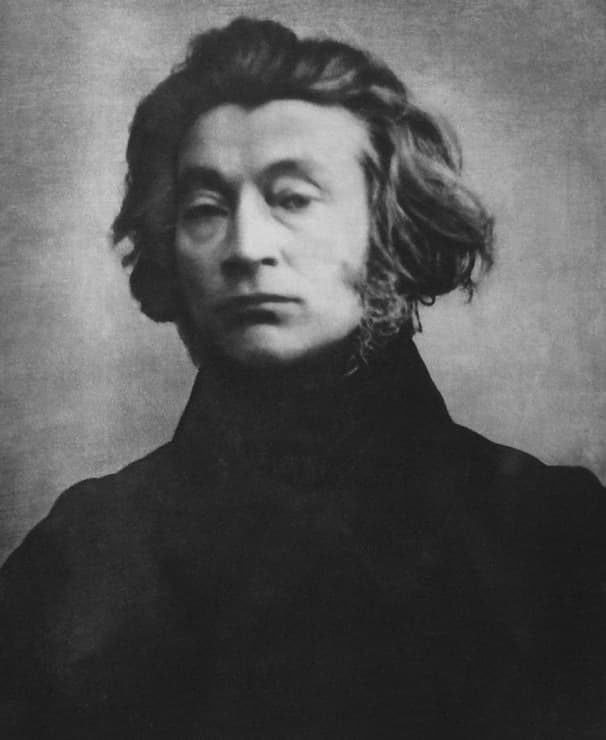
Adam Mickiewicz
Adam Mickiewicz was a prominent Polish poet, dramatist, and political activist, often hailed as the national poet of Poland, Lithuania, and Belarus. Born in the Russian-partitioned territories of the former Grand Duchy of Lithuania, he became a leading figure in Polish Romanticism and is celebrated as one of the greatest Slavic poets. His major works, including the poetic drama 'Dziady' (Forefathers' Eve) and the national epic 'Pan Tadeusz,' not only showcased his literary genius but also served as powerful symbols of resistance against the partitions that fragmented the Polish-Lithuanian Commonwealth. Mickiewicz's writings inspired uprisings and fostered a sense of national identity among his compatriots, making him a pivotal figure in the cultural and political landscape of 19th-century Poland. After spending five years in exile in central Russia due to his political activities, Mickiewicz eventually settled in Rome and later in Paris, where he lectured on Slavic literature at the Collège de France. His influence extended beyond Poland, impacting Ukrainian and Russian literature as well. Mickiewicz's legacy as a 'Slavic bard' and his role in the Romantic movement positioned him alongside literary giants like Byron and Goethe. He died in Istanbul while attempting to organize Polish forces for the Crimean War, leaving behind a rich literary heritage that continues to resonate in Slavic literature today.
Famous Quotes
View all 3 quotes“I and motherland are one. My name is Million, because for millions do I love and suffer agonies.”
“Ty mnie zabiłeś! - ty mnie nauczyłeś czytać! W pięknych księgach i pięknym przyrodzeniu czytać! Ty dla mnie ziemię piekłem zrobiłeś (z żalem i uśmiechem) i rajem! (mocniej i ze wzgardą) A to jest tylko ziemia!”
“Kto miłości nie zna, ten żyje szczęśliwy, I noc ma spokojną, i dzień nietęskliwy.”
Books from the author




Link to this page
Add a free, dofollow link to Lex on your blog, forum, syllabus, or reading list.

<a href="https://lex-books.com/author/adam-mickiewicz"><img src="https://lex-books.com/badges/read-on-lex.svg" alt="Adam Mickiewicz on Lex" width="160" height="40"></a>[](https://lex-books.com/author/adam-mickiewicz)[url=https://lex-books.com/author/adam-mickiewicz][img]https://lex-books.com/badges/read-on-lex.svg[/img][/url]Adam Mickiewicz on Lex: https://lex-books.com/author/adam-mickiewicz