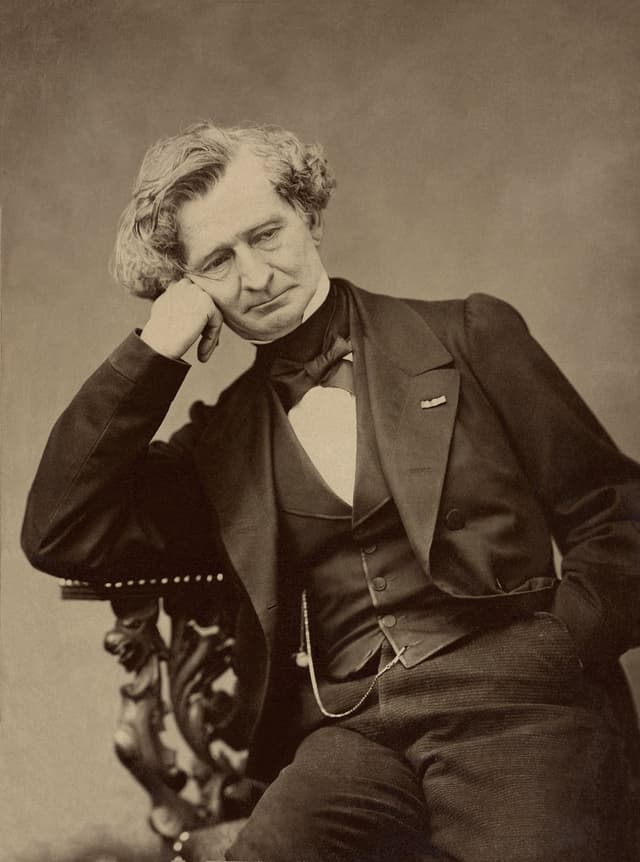
Hector Berlioz
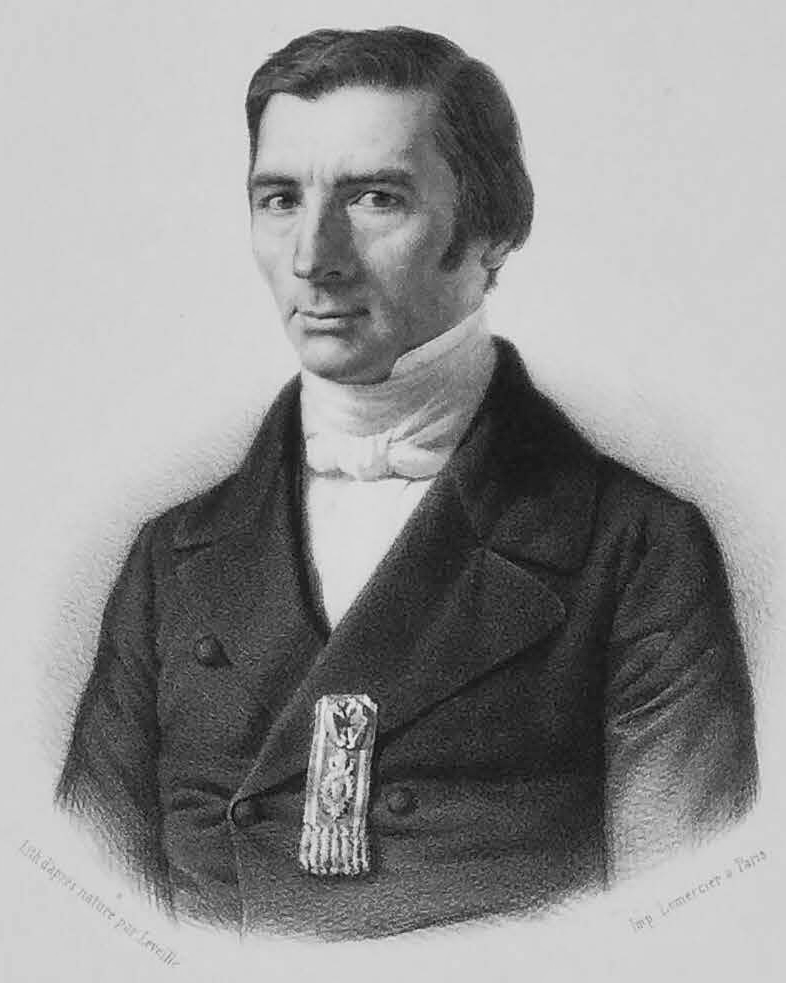
Hector Berlioz was a pioneering French composer and conductor of the Romantic era, renowned for his innovative orchestral works and dramatic compositions. Born into a family of physicians, he initially pursued medicine before succumbing to his passion for music, a decision that set him on a tumultuous path in the conservative musical landscape of Paris. His most celebrated work, the 'Symphonie fantastique,' reflects his tumultuous love for the actress Harriet Smithson, showcasing his ability to blend personal narrative with musical innovation. Other notable compositions include 'Harold in Italy,' the choral 'Requiem,' and operas such as 'Benvenuto Cellini' and 'Les Troyens.' Berlioz's music was characterized by its bold orchestration and emotional depth, challenging traditional forms and conventions. His unique style garnered both admiration and criticism, leading to a divided reception among contemporaries who either hailed him as a genius or dismissed his work as lacking coherence. Despite the controversies, Berlioz's contributions significantly influenced the development of orchestral music and opera, paving the way for future composers. His legacy endures through his innovative approach to composition and his role in shaping the Romantic musical landscape.
Famous Quotes
View all 3 quotes“Time is a great teacher, but unfortunately it kills all its students." [ Letter, November 1856 ]”
“Life when one first arrives is a continual mortification as one's romantic illusions are successively shattered and the musical treasure-house of one's imagination crumbles before the hopelessness of the reality. Every day fresh experiences bring fresh disappointments.”
“time is an excellent teacher - unfortunately it kills all its pupils”
Books from the author






Link to this page
Add a free, dofollow link to Lex on your blog, forum, syllabus, or reading list.

<a href="https://lex-books.com/author/hector-berlioz"><img src="https://lex-books.com/badges/read-on-lex.svg" alt="Hector Berlioz on Lex" width="160" height="40"></a>[](https://lex-books.com/author/hector-berlioz)[url=https://lex-books.com/author/hector-berlioz][img]https://lex-books.com/badges/read-on-lex.svg[/img][/url]Hector Berlioz on Lex: https://lex-books.com/author/hector-berlioz