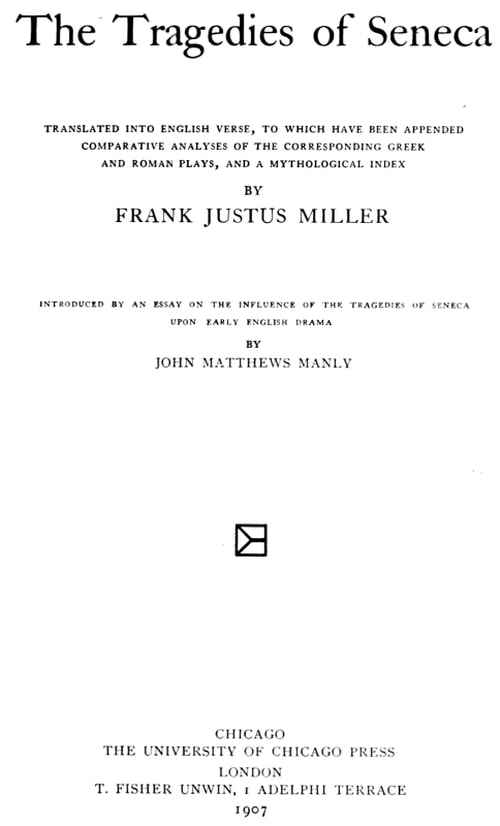
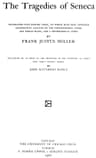
The Tragedies of Seneca: Translated into English Verse, to Which Have Been Appended Comparative Analyses of the Corresponding Greek and Roman Plays, and a Mythological Index
1907
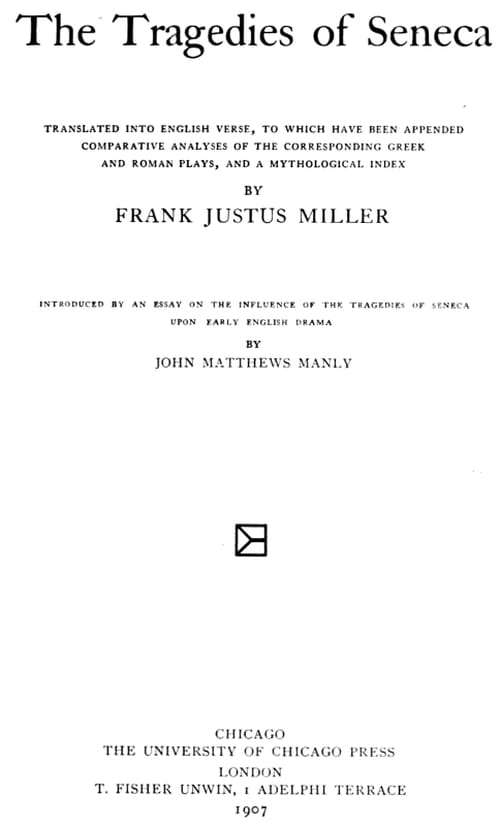
The Tragedies of Seneca: Translated into English Verse, to Which Have Been Appended Comparative Analyses of the Corresponding Greek and Roman Plays, and a Mythological Index
1907
Translated by Frank Justus Miller
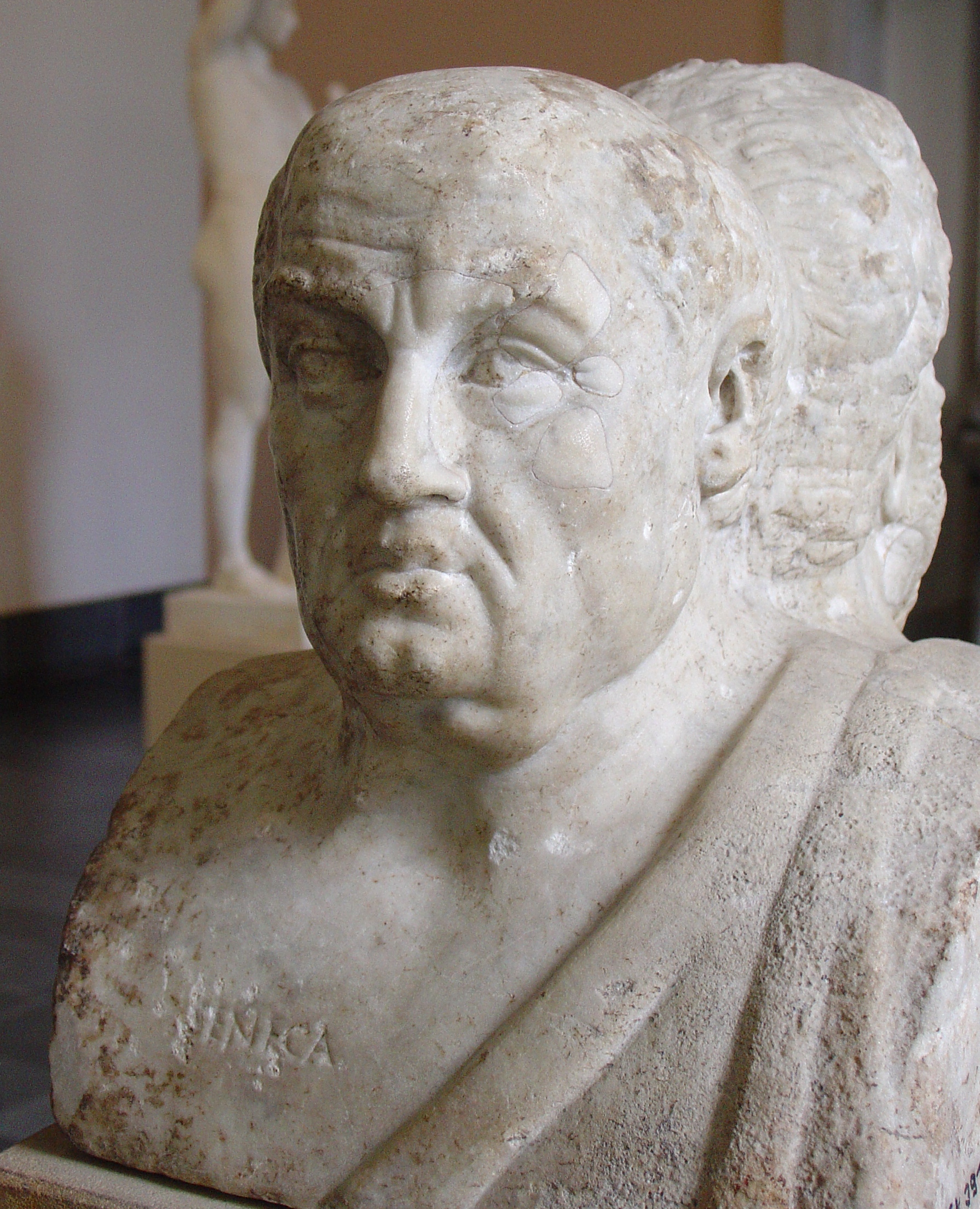
Two thousand years before Shakespeare reinvented tragedy, a Roman philosopher-politician wrote plays that would shape Western drama forever. Seneca's collection contains nine surviving tragedies, Medea's murderous rage, Oedipus's descent into prophetic horror, Thyestes's cannibalistic feast, each one a furnace of psychological intensity and rhetorical brilliance. Unlike the Greeks, Seneca never shows action on stage; everything happens in speech, in the terrible spaces between words, creating a chilling dramatic tension that simmers just offscreen. He adapted Greek myths but transformed them into something distinctly Roman: darker, more violent, steeped in Stoic philosophy and the corrupting poison of power. This translation includes comparative analyses showing how Seneca's versions diverge from Sophocles and Euripides, plus a mythological index. The Elizabethans found his blood-soaked revenge tales irresistible, Titus Andronicus and Hamlet owe their ghost-haunted climaxes directly to these Roman models. For readers who want classical tragedy with a pulse, this is the ancient world at its most visceral and psychologically devastating.
Editions
Link to this book
Add a free, dofollow link to Lex on your blog, forum, syllabus, or reading list.

<a href="https://lex-books.com/book/the-tragedies-of-seneca-translated-into-english-verse-to-which-have-been-appende-4ab2e2a3-1979-4d4f-a539-7e577a1daef4"><img src="https://lex-books.com/badges/read-on-lex.svg" alt="Read The Tragedies of Seneca: Translated into English Verse, to Which Have Been Appended Comparative Analyses of the Corresponding Greek and Roman Plays, and a Mythological Index by Lucius Annaeus Seneca free on Lex" width="160" height="40"></a>[](https://lex-books.com/book/the-tragedies-of-seneca-translated-into-english-verse-to-which-have-been-appende-4ab2e2a3-1979-4d4f-a539-7e577a1daef4)[url=https://lex-books.com/book/the-tragedies-of-seneca-translated-into-english-verse-to-which-have-been-appende-4ab2e2a3-1979-4d4f-a539-7e577a1daef4][img]https://lex-books.com/badges/read-on-lex.svg[/img][/url]Read The Tragedies of Seneca: Translated into English Verse, to Which Have Been Appended Comparative Analyses of the Corresponding Greek and Roman Plays, and a Mythological Index by Lucius Annaeus Seneca free on Lex: https://lex-books.com/book/the-tragedies-of-seneca-translated-into-english-verse-to-which-have-been-appende-4ab2e2a3-1979-4d4f-a539-7e577a1daef4Cite this book
Reading this edition for a paper or guide? Copy a citation.
Seneca, Lucius Annaeus. The Tragedies of Seneca: Translated into English Verse, to Which Have Been Appended Comparative Analyses of the Corresponding Greek and Roman Plays, and a Mythological Index. Lex, lex-books.com/book/the-tragedies-of-seneca-translated-into-english-verse-to-which-have-been-appende-4ab2e2a3-1979-4d4f-a539-7e577a1daef4.Seneca, L. A. (1907). The Tragedies of Seneca: Translated into English Verse, to Which Have Been Appended Comparative Analyses of the Corresponding Greek and Roman Plays, and a Mythological Index. Lex. https://lex-books.com/book/the-tragedies-of-seneca-translated-into-english-verse-to-which-have-been-appende-4ab2e2a3-1979-4d4f-a539-7e577a1daef4Seneca, Lucius Annaeus. The Tragedies of Seneca: Translated into English Verse, to Which Have Been Appended Comparative Analyses of the Corresponding Greek and Roman Plays, and a Mythological Index. Lex. https://lex-books.com/book/the-tragedies-of-seneca-translated-into-english-verse-to-which-have-been-appende-4ab2e2a3-1979-4d4f-a539-7e577a1daef4.