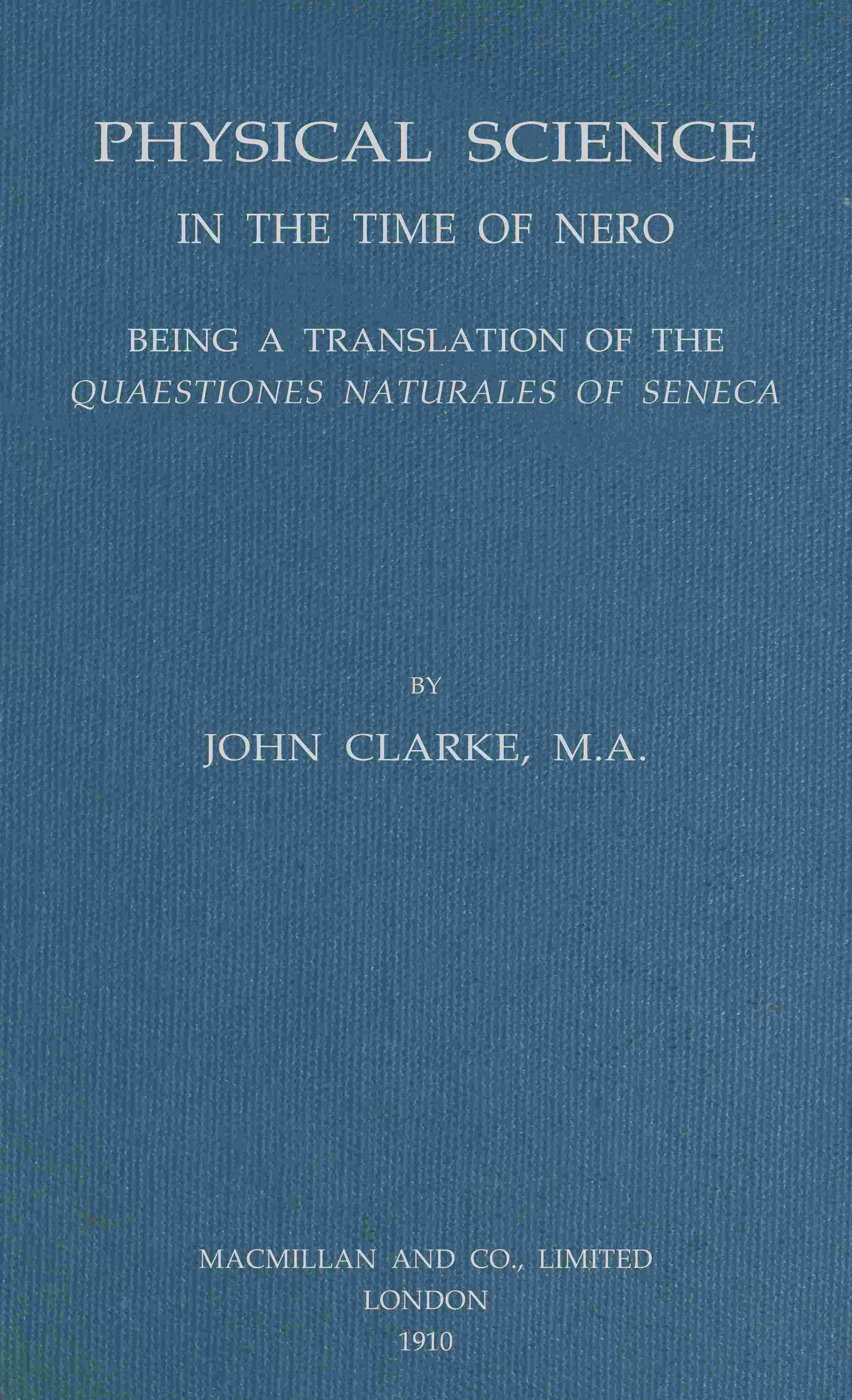
Physical Science in the Time of Nero: Being a Translation of the Quaestiones Naturales of Seneca
1910
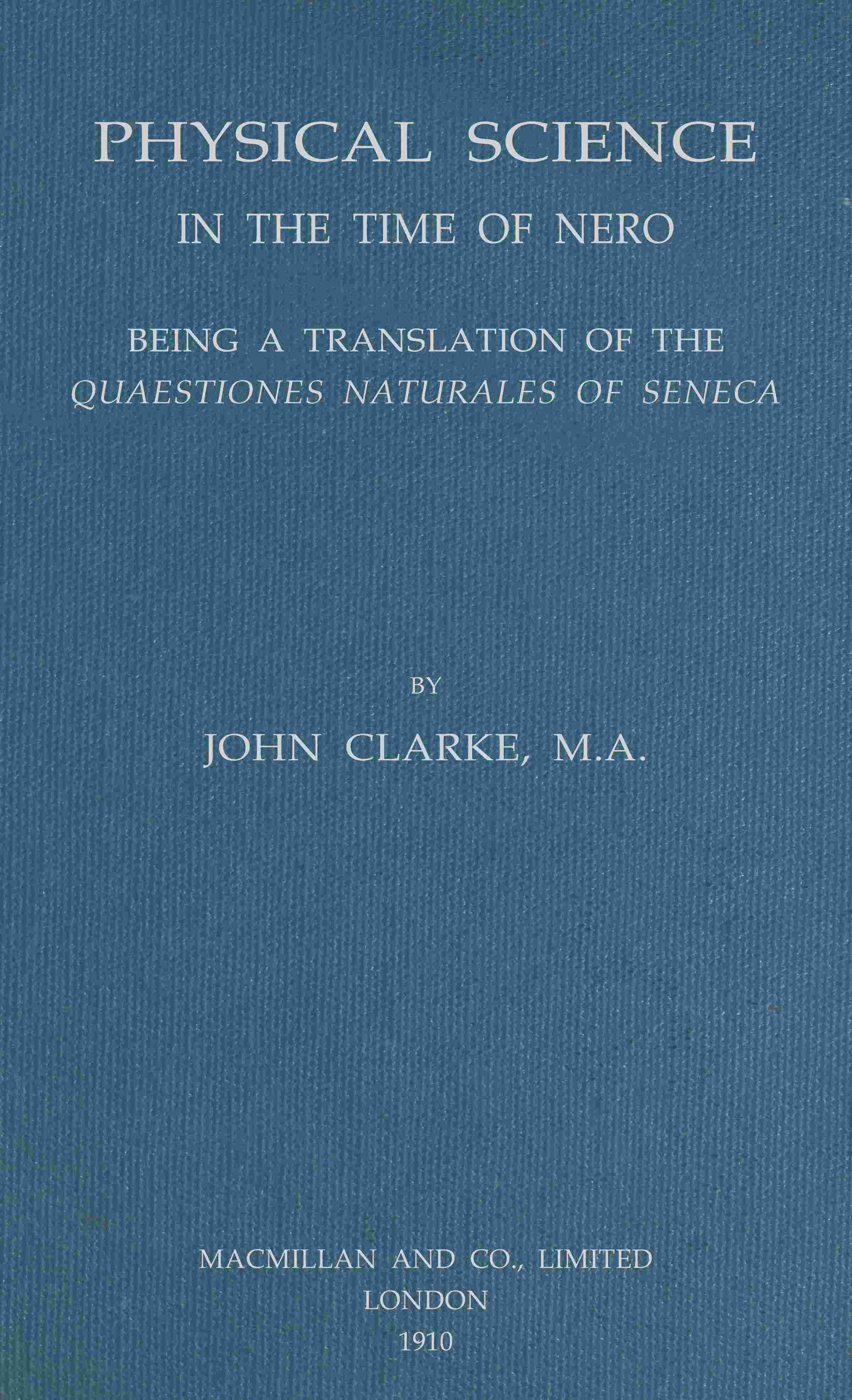
Physical Science in the Time of Nero: Being a Translation of the Quaestiones Naturales of Seneca
1910
Translated by John, 1858- Clarke
A translation with scholarly commentary written in the early 20th century. It presents an English rendering of Seneca’s ancient treatise on natural philosophy, with an interpretive introduction and scientific notes, explaining Roman-era ideas about meteorology, astronomy, geology, and their long influence on medieval thought. The opening of the book sets out Clarke’s aim to provide English readers with a fresh, accessible translation, noting that earlier English renderings were outdated, and arguing that Seneca’s treatise was the classical world’s final major statement on physical speculation and a key scientific authority through the Middle Ages. It acknowledges help from several contemporaries, especially Sir Archibald Geikie, whose notes relate Seneca’s topics to modern science, and it outlines the seven-book contents on meteors and halos, thunder and lightning, waters and the Nile, snow and hail, winds, earthquakes, and comets. The introduction then sketches Seneca’s life—his education, exile, rise as Nero’s tutor and statesman, moral struggles at court, and Stoic death—followed by a survey of his writings and the place, date, and aims of the Quaestiones Naturales. It discusses the work’s composite state, probable chronology, and uneven arrangement, explains Seneca’s method of blending ethical lessons with physical inquiry, and briefly reviews key sources and predecessors such as Aristotle, Theophrastus, and Plutarch.
Editions
X-Ray
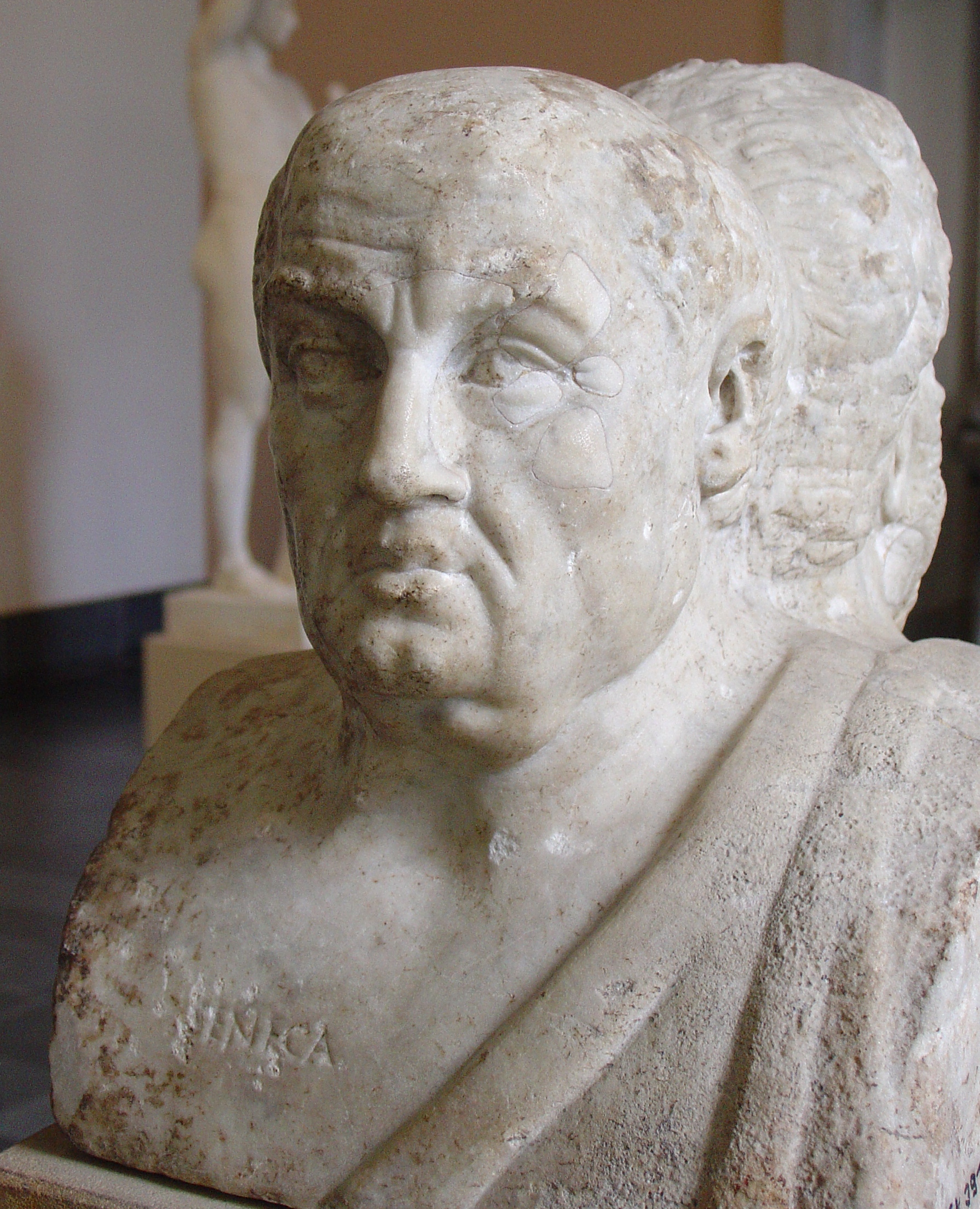
Roman philosopher, statesman, and natural scientist writing in his old age. He serves as the primary voice exploring natural phenomena through a Stoic philosophical lens.
Procurator of Sicily and Seneca's dear friend. He serves as the addressee of this scientific treatise and represents an educated Roman interested in natural philosophy.
Ancient Greek philosopher frequently cited as an authority on natural phenomena. His theories on meteorology, earthquakes, and other natural events are extensively discussed and sometimes challenged.
Student of Aristotle and important source for natural philosophy. His observations and theories are regularly cited throughout the work.
About Physical Science in the Time of Nero: Being a Translation of the Quaestiones Naturales of Seneca
Chapter Summaries
- Book I Preface
- Seneca distinguishes between moral and natural philosophy, arguing that studying the heavens and natural phenomena elevates the human soul to divine contemplation. He contrasts the pettiness of human affairs with the grandeur of cosmic understanding.
- Book I, Chapter 1
- Discussion of various atmospheric fires including shooting stars, she-goats, and kids. Seneca explains their formation through atmospheric friction and connects them to historical portents and omens.
- Book I, Chapter 2
- Explanation of halos around celestial bodies as circular impressions made by light striking dense atmosphere. Seneca uses the analogy of stones thrown in water to explain their formation.
Key Themes
- Natural Philosophy vs. Moral Philosophy
- Seneca argues that studying the physical universe elevates the soul and provides moral instruction, connecting scientific inquiry to ethical development.
- Divine Providence in Nature
- Throughout the work, Seneca sees God's hand in natural phenomena, viewing the universe as rationally ordered rather than chaotic or random.
- Human Mortality and Cosmic Perspective
- Natural disasters like earthquakes and lightning serve as reminders of human fragility and the need to accept death with philosophical equanimity.
Characters
- Lucius Annaeus Seneca(protagonist)
- Roman philosopher, statesman, and natural scientist writing in his old age. He serves as the primary voice exploring natural phenomena through a Stoic philosophical lens.
- Lucilius Junior(major)
- Procurator of Sicily and Seneca's dear friend. He serves as the addressee of this scientific treatise and represents an educated Roman interested in natural philosophy.
- Aristotle(major)
- Ancient Greek philosopher frequently cited as an authority on natural phenomena. His theories on meteorology, earthquakes, and other natural events are extensively discussed and sometimes challenged.
- Theophrastus(major)
- Student of Aristotle and important source for natural philosophy. His observations and theories are regularly cited throughout the work.
- Posidonius(major)
- Stoic philosopher whose scientific theories are frequently referenced, particularly regarding atmospheric phenomena and natural causes.
- Thales(minor)
- Early Greek philosopher cited for his theories about water as the fundamental element and his explanation of earthquakes.
Link to this book
Add a free, dofollow link to Lex on your blog, forum, syllabus, or reading list.

<a href="https://lex-books.com/book/physical-science-in-the-time-of-nero-being-a-translation-of-the-quaestiones-natu-3a83c061-0c35-4642-90b0-28b035f7e1bd"><img src="https://lex-books.com/badges/read-on-lex.svg" alt="Read Physical Science in the Time of Nero: Being a Translation of the Quaestiones Naturales of Seneca by Lucius Annaeus Seneca free on Lex" width="160" height="40"></a>[](https://lex-books.com/book/physical-science-in-the-time-of-nero-being-a-translation-of-the-quaestiones-natu-3a83c061-0c35-4642-90b0-28b035f7e1bd)[url=https://lex-books.com/book/physical-science-in-the-time-of-nero-being-a-translation-of-the-quaestiones-natu-3a83c061-0c35-4642-90b0-28b035f7e1bd][img]https://lex-books.com/badges/read-on-lex.svg[/img][/url]Read Physical Science in the Time of Nero: Being a Translation of the Quaestiones Naturales of Seneca by Lucius Annaeus Seneca free on Lex: https://lex-books.com/book/physical-science-in-the-time-of-nero-being-a-translation-of-the-quaestiones-natu-3a83c061-0c35-4642-90b0-28b035f7e1bdCite this book
Reading this edition for a paper or guide? Copy a citation.
Seneca, Lucius Annaeus. Physical Science in the Time of Nero: Being a Translation of the Quaestiones Naturales of Seneca. Lex, lex-books.com/book/physical-science-in-the-time-of-nero-being-a-translation-of-the-quaestiones-natu-3a83c061-0c35-4642-90b0-28b035f7e1bd.Seneca, L. A. (1910). Physical Science in the Time of Nero: Being a Translation of the Quaestiones Naturales of Seneca. Lex. https://lex-books.com/book/physical-science-in-the-time-of-nero-being-a-translation-of-the-quaestiones-natu-3a83c061-0c35-4642-90b0-28b035f7e1bdSeneca, Lucius Annaeus. Physical Science in the Time of Nero: Being a Translation of the Quaestiones Naturales of Seneca. Lex. https://lex-books.com/book/physical-science-in-the-time-of-nero-being-a-translation-of-the-quaestiones-natu-3a83c061-0c35-4642-90b0-28b035f7e1bd.