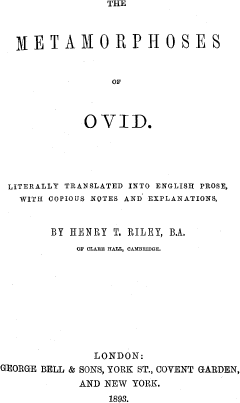
The Metamorphoses of Ovid, Books Viii-Xv
1735
The Metamorphoses of Ovid, Books Viii-Xv
1735
Translated by Henry T. (Henry Thomas) Riley
Ovid's later books of the Metamorphoses contain some of the most haunting transformations in Western literature. Here, desire becomes destruction: a princess betrays her father and nation for love, only to be discarded by the man she worshipped. Orpheus descends into the underworld for his dead wife and fails, and his grief will echo through centuries of art. Theseus abandons Ariadne on an island. The Calydonian boar tears apart families. These are not gentle fables. They are violent, sexually charged, often brutal tales about what happens when human passion collides with divine caprice. The transformations are both literal and psychological: people become animals, plants, stars as punishment, reward, or consequence. The gods are petty, vindictive, and beautiful. Mortals are foolish and brave and destroyed. This is the mythological DNA that Shakespeare, Dante, and Freud would later inherit. It endures because it captures something true about desire, loss, and the terror of being changed beyond recognition.
Editions
Link to this book
Add a free, dofollow link to Lex on your blog, forum, syllabus, or reading list.

<a href="https://lex-books.com/book/the-metamorphoses-of-ovid-books-viii-xv-b130efb6-f25a-4200-b19f-8bf45d039dba"><img src="https://lex-books.com/badges/read-on-lex.svg" alt="Read The Metamorphoses of Ovid, Books Viii-Xv by Ovid free on Lex" width="160" height="40"></a>[](https://lex-books.com/book/the-metamorphoses-of-ovid-books-viii-xv-b130efb6-f25a-4200-b19f-8bf45d039dba)[url=https://lex-books.com/book/the-metamorphoses-of-ovid-books-viii-xv-b130efb6-f25a-4200-b19f-8bf45d039dba][img]https://lex-books.com/badges/read-on-lex.svg[/img][/url]Read The Metamorphoses of Ovid, Books Viii-Xv by Ovid free on Lex: https://lex-books.com/book/the-metamorphoses-of-ovid-books-viii-xv-b130efb6-f25a-4200-b19f-8bf45d039dbaCite this book
Reading this edition for a paper or guide? Copy a citation.
Ovid. The Metamorphoses of Ovid, Books Viii-Xv. Lex, lex-books.com/book/the-metamorphoses-of-ovid-books-viii-xv-b130efb6-f25a-4200-b19f-8bf45d039dba.Ovid (1735). The Metamorphoses of Ovid, Books Viii-Xv. Lex. https://lex-books.com/book/the-metamorphoses-of-ovid-books-viii-xv-b130efb6-f25a-4200-b19f-8bf45d039dbaOvid. The Metamorphoses of Ovid, Books Viii-Xv. Lex. https://lex-books.com/book/the-metamorphoses-of-ovid-books-viii-xv-b130efb6-f25a-4200-b19f-8bf45d039dba.