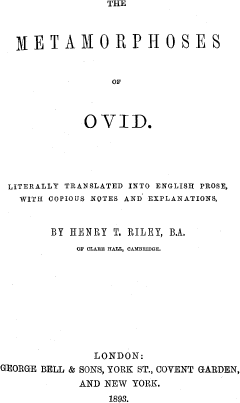
The Amores; Or, Amoursliterally Translated into English Prose, with Copious Notes
1914
The Amores; Or, Amoursliterally Translated into English Prose, with Copious Notes
1914
Translated by Henry T. (Henry Thomas) Riley
Ovid wrote these poems in his early twenties, and you can feel it: the urgency, the giddiness, the desperate certainty that love is both the best and worst thing that could happen to a person. The Amores is ancient Rome's most seductive take on romance, a collection of elegies addressed to a woman called Corinna who may or may not have existed. What matters is not her reality but her effect on the poet, who swings wildly between triumph and despair, between boasting of his conquests and begging for another meeting. The opening epigram sets the tone perfectly: Ovid claims he meant to write about war and heroes, but Cupid stole his subject matter and left him with only love to sing about. The joke is that he's delighted by the theft. These poems are witty, sexually frank, and surprisingly tender. They established a tradition of love poetry that would influence everything from medieval courtly romance to the Renaissance to the modern novel. The passion feels timeless; the specific Roman details make it vividly historical.
Editions
X-Ray
“Every lover is a soldier.””
— Ovid
“I can live neither with you, nor without you.””
— Ovid
“While I speak, time flies.””
— Ovid
“Siqua metu dempto casta est, ea denique casta est; quae, quia non liceat, non facit, illa facit””
— Ovid
“Gustavo Solivellas dice: "Omnia mutantur, nihil interit" (Todo cambia, nada perece) (Ovidio)””
— Ovid
“Nitimur in vetitum semper cupimusque negata.””
— Ovid
Link to this book
Add a free, dofollow link to Lex on your blog, forum, syllabus, or reading list.

<a href="https://lex-books.com/book/the-amores-or-amoursliterally-translated-into-english-prose-with-copious-notes-64ad5f9d-317e-4512-9af8-fe54c476e4bb"><img src="https://lex-books.com/badges/read-on-lex.svg" alt="Read The Amores; Or, Amoursliterally Translated into English Prose, with Copious Notes by Ovid free on Lex" width="160" height="40"></a>[](https://lex-books.com/book/the-amores-or-amoursliterally-translated-into-english-prose-with-copious-notes-64ad5f9d-317e-4512-9af8-fe54c476e4bb)[url=https://lex-books.com/book/the-amores-or-amoursliterally-translated-into-english-prose-with-copious-notes-64ad5f9d-317e-4512-9af8-fe54c476e4bb][img]https://lex-books.com/badges/read-on-lex.svg[/img][/url]Read The Amores; Or, Amoursliterally Translated into English Prose, with Copious Notes by Ovid free on Lex: https://lex-books.com/book/the-amores-or-amoursliterally-translated-into-english-prose-with-copious-notes-64ad5f9d-317e-4512-9af8-fe54c476e4bbCite this book
Reading this edition for a paper or guide? Copy a citation.
Ovid. The Amores; Or, Amoursliterally Translated into English Prose, with Copious Notes. Lex, lex-books.com/book/the-amores-or-amoursliterally-translated-into-english-prose-with-copious-notes-64ad5f9d-317e-4512-9af8-fe54c476e4bb.Ovid (1914). The Amores; Or, Amoursliterally Translated into English Prose, with Copious Notes. Lex. https://lex-books.com/book/the-amores-or-amoursliterally-translated-into-english-prose-with-copious-notes-64ad5f9d-317e-4512-9af8-fe54c476e4bbOvid. The Amores; Or, Amoursliterally Translated into English Prose, with Copious Notes. Lex. https://lex-books.com/book/the-amores-or-amoursliterally-translated-into-english-prose-with-copious-notes-64ad5f9d-317e-4512-9af8-fe54c476e4bb.