Second Home
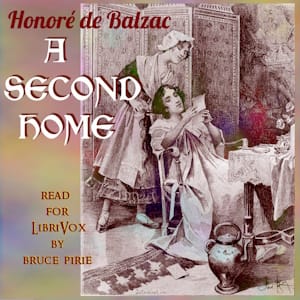
In Restoration Paris, a young lawyer marries his childhood sweetheart, expecting the comfortable life his position demands. Instead, he finds his wife consumed by a religiosity that has rendered her cold, unreachable, and morally rigid. To escape the chill of his own household, he establishes a second home with a destitute seamstress, creating what Balzac explicitly titles 'a double family.' The novella operates as a precise anatomical dissection of bourgeois marriage: its economic dependencies, its emotional hypocrisies, and the different cages it builds for men and women. The lawyer discovers that he can architect his escape, can fund another life, can move between households at will. His wife has no such mobility. She is trapped in her piety; the seamstress is trapped in her poverty. Balzac wrote this in 1830 as 'La femme vertueuse' (The Virtuous Woman), a title dripping with irony, and later retitled it to emphasize the dual existence his protagonist constructs. The result is a compact, merciless study of how respectable society manufactures misery and calls it matrimony.
Editions

Link to this book
Add a free, dofollow link to Lex on your blog, forum, syllabus, or reading list.

<a href="https://lex-books.com/book/second-home-5888189d-3c87-41fe-a64a-069ef54383d8"><img src="https://lex-books.com/badges/read-on-lex.svg" alt="Read Second Home by Honoré de Balzac free on Lex" width="160" height="40"></a>[](https://lex-books.com/book/second-home-5888189d-3c87-41fe-a64a-069ef54383d8)[url=https://lex-books.com/book/second-home-5888189d-3c87-41fe-a64a-069ef54383d8][img]https://lex-books.com/badges/read-on-lex.svg[/img][/url]Read Second Home by Honoré de Balzac free on Lex: https://lex-books.com/book/second-home-5888189d-3c87-41fe-a64a-069ef54383d8Cite this book
Reading this edition for a paper or guide? Copy a citation.
Balzac, Honoré de. Second Home. Lex, lex-books.com/book/second-home-5888189d-3c87-41fe-a64a-069ef54383d8.Balzac, H. D. (n.d.). Second Home. Lex. https://lex-books.com/book/second-home-5888189d-3c87-41fe-a64a-069ef54383d8Balzac, Honoré de. Second Home. Lex. https://lex-books.com/book/second-home-5888189d-3c87-41fe-a64a-069ef54383d8.