Study of a Woman
1830
In this sharp early work, Balzac turns his analytical gaze on the Marquise de Listomere, a young woman of the Restoration era who has mastered the delicate art of seeming: devout yet fashionable, virtuous yet ambitious, pious yet worldly. Married to a deputy chasing a peerage, she represents a generation trained to perform goodness as strategically as any political maneuver. When the ambitious young Eugène de Rastignac begins his ascent through Parisian society, his attentions to the Marquise become a mirror revealing the gap between her polished exterior and the desires she has carefully contained. Balzac, writing with the precision of an anatomist, dissects the mechanics of feminine virtue in an age that has made morality itself a calculation. The novel's devastating coda imagines the Marquise at thirty-six, finally awakening to the possibility that her entire life has been a performance, and that she may be among the many women who discover too late they have been 'the dupes of social laws.' A perfectly constructed portrait of the distance between what we practice and what we feel.
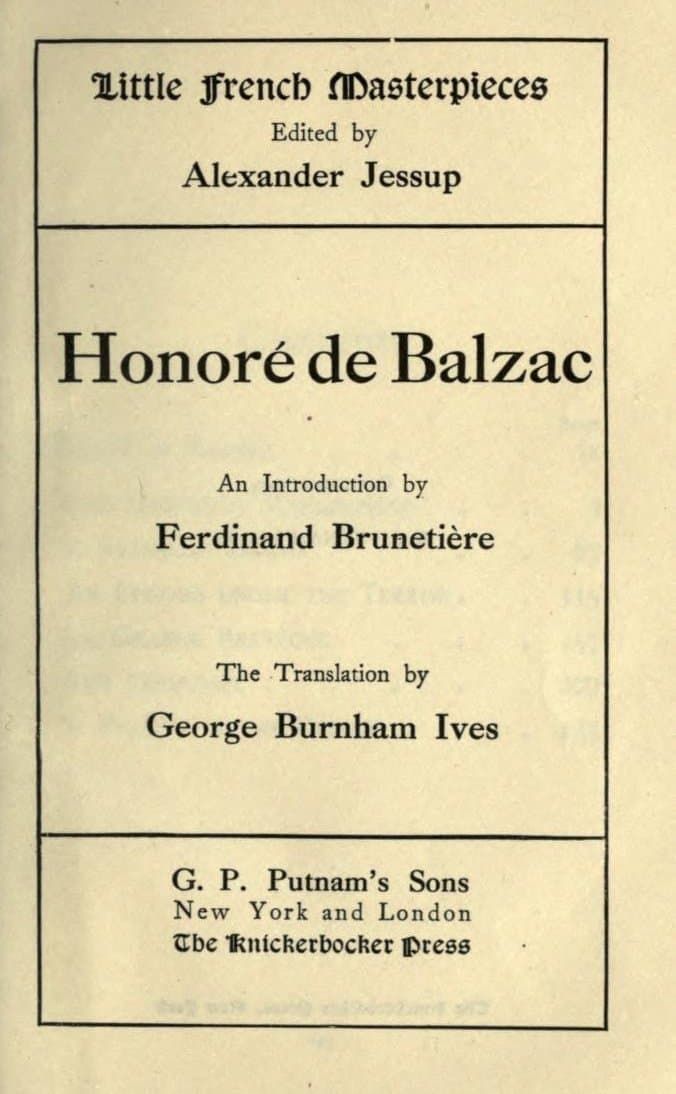
Editions
X-Ray
“chooses with the men who seem to her agreeable, without being entered on the tablets of gossip. Certain coquettish women are capable of following a plan of this kind for seven years in order to gratify their fancies””
— Honoré de Balzac
Link to this book
Add a free, dofollow link to Lex on your blog, forum, syllabus, or reading list.

<a href="https://lex-books.com/book/study-of-a-woman-56e2893f-75fb-4b1a-9dc3-8890a143ebea"><img src="https://lex-books.com/badges/read-on-lex.svg" alt="Read Study of a Woman by Honoré de Balzac free on Lex" width="160" height="40"></a>[](https://lex-books.com/book/study-of-a-woman-56e2893f-75fb-4b1a-9dc3-8890a143ebea)[url=https://lex-books.com/book/study-of-a-woman-56e2893f-75fb-4b1a-9dc3-8890a143ebea][img]https://lex-books.com/badges/read-on-lex.svg[/img][/url]Read Study of a Woman by Honoré de Balzac free on Lex: https://lex-books.com/book/study-of-a-woman-56e2893f-75fb-4b1a-9dc3-8890a143ebeaCite this book
Reading this edition for a paper or guide? Copy a citation.
Balzac, Honoré de. Study of a Woman. Lex, lex-books.com/book/study-of-a-woman-56e2893f-75fb-4b1a-9dc3-8890a143ebea.Balzac, H. D. (1830). Study of a Woman. Lex. https://lex-books.com/book/study-of-a-woman-56e2893f-75fb-4b1a-9dc3-8890a143ebeaBalzac, Honoré de. Study of a Woman. Lex. https://lex-books.com/book/study-of-a-woman-56e2893f-75fb-4b1a-9dc3-8890a143ebea.