The Duchesse of Langeais
1834
A general arrives at a sun-baked Mediterranean convent, drawn by rumor and desperation. He has come for the Duchesse de Langeais, the woman who vanished from Parisian society years ago. What he finds is Sister Theresa, a nun at the organ, her hands seemingly made for something other than prayer. This is the crucible of Balzac's novella: a man confronting the object of his desire behind walls she built against him, and against herself. The Duchesse is no simple fugitive. She fled the world's empty intrigues for something more honest: surrender to the divine. Yet Balzac asks whether her vocation is faith or something closer to despair, a final refusal of a passion that both terrified and defined her. Montriveau's search becomes an interrogation of what we owe our desires and what we owe ourselves. It is one of Balzac's most haunting studies of love as destruction, of the masks we wear until we forget which face is real.
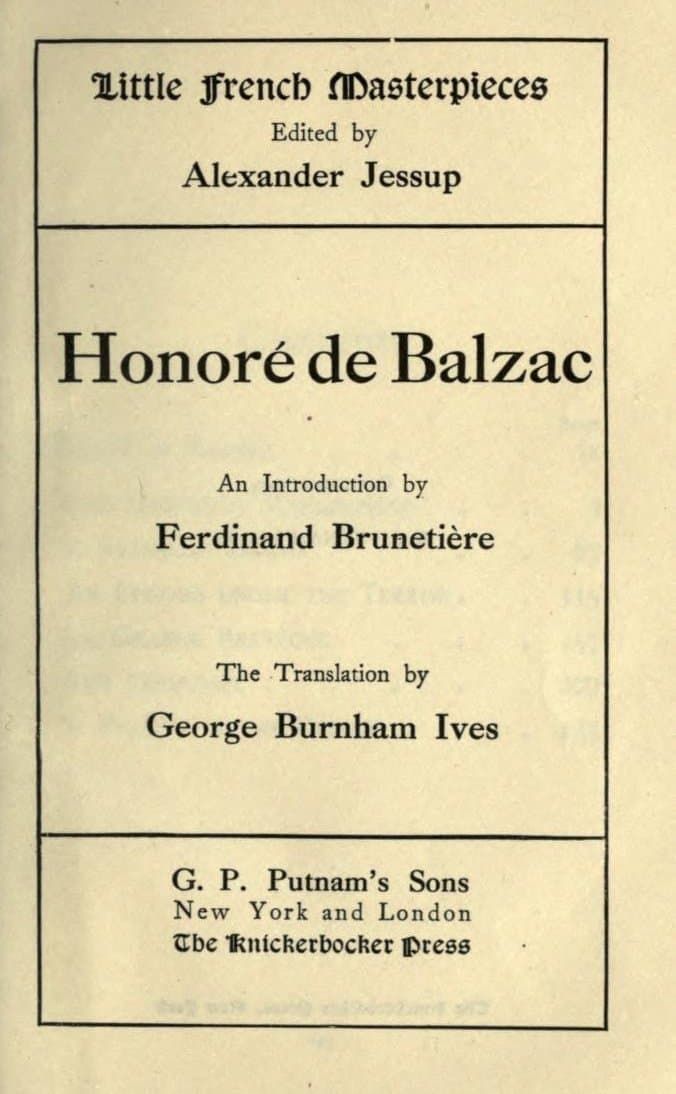
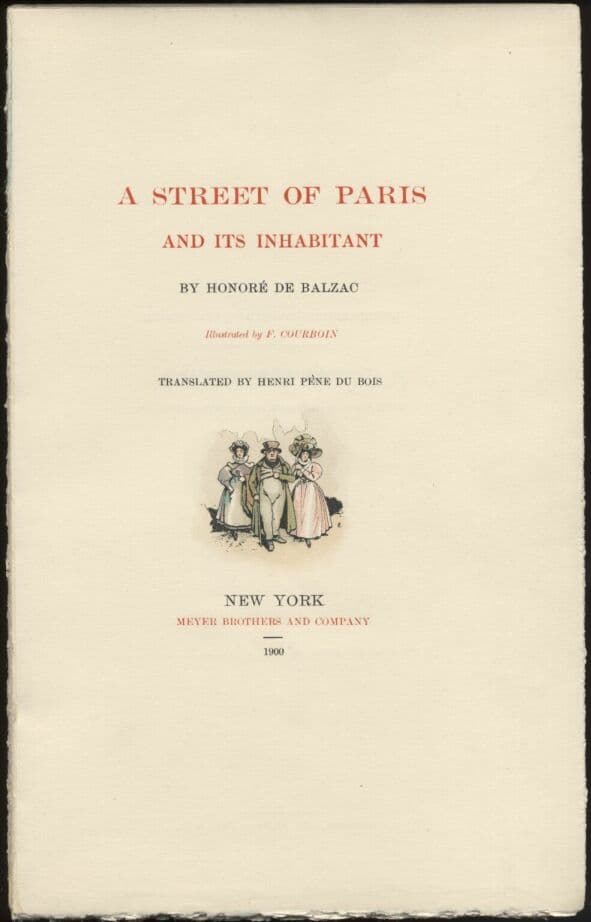
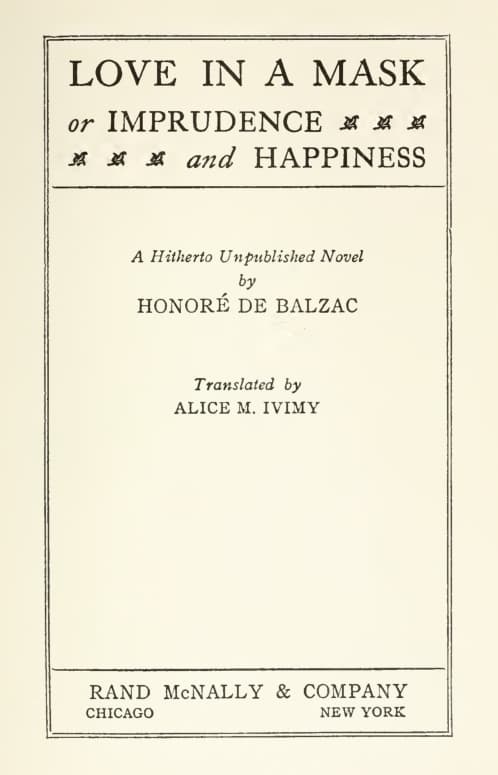
Editions
X-Ray
“Yes,' Montriveau went on in an unsteady voice, 'this Catholic faith to which you wish to convert me is a lie that men make for themselves; hope is a lie at the expense of the future; pride, a lie between us and our fellows; and pity, and prudence, and terror are cunning lies. And now my happiness is to be one more lying delusion; I am expected to delude myself, to be willing to give gold coin for silver to the end. If you can so easily dispense with my visits; if you confess me neither as your friend nor your love, you do not care for me! And I, poor fool that I am, tell myself this, and know it, and love you!””
— Honoré de Balzac
Link to this book
Add a free, dofollow link to Lex on your blog, forum, syllabus, or reading list.

<a href="https://lex-books.com/book/the-duchesse-of-langeais-d401ebec-5899-413d-92d6-d578677ef218"><img src="https://lex-books.com/badges/read-on-lex.svg" alt="Read The Duchesse of Langeais by Honoré de Balzac free on Lex" width="160" height="40"></a>[](https://lex-books.com/book/the-duchesse-of-langeais-d401ebec-5899-413d-92d6-d578677ef218)[url=https://lex-books.com/book/the-duchesse-of-langeais-d401ebec-5899-413d-92d6-d578677ef218][img]https://lex-books.com/badges/read-on-lex.svg[/img][/url]Read The Duchesse of Langeais by Honoré de Balzac free on Lex: https://lex-books.com/book/the-duchesse-of-langeais-d401ebec-5899-413d-92d6-d578677ef218Cite this book
Reading this edition for a paper or guide? Copy a citation.
Balzac, Honoré de. The Duchesse of Langeais. Lex, lex-books.com/book/the-duchesse-of-langeais-d401ebec-5899-413d-92d6-d578677ef218.Balzac, H. D. (1834). The Duchesse of Langeais. Lex. https://lex-books.com/book/the-duchesse-of-langeais-d401ebec-5899-413d-92d6-d578677ef218Balzac, Honoré de. The Duchesse of Langeais. Lex. https://lex-books.com/book/the-duchesse-of-langeais-d401ebec-5899-413d-92d6-d578677ef218.