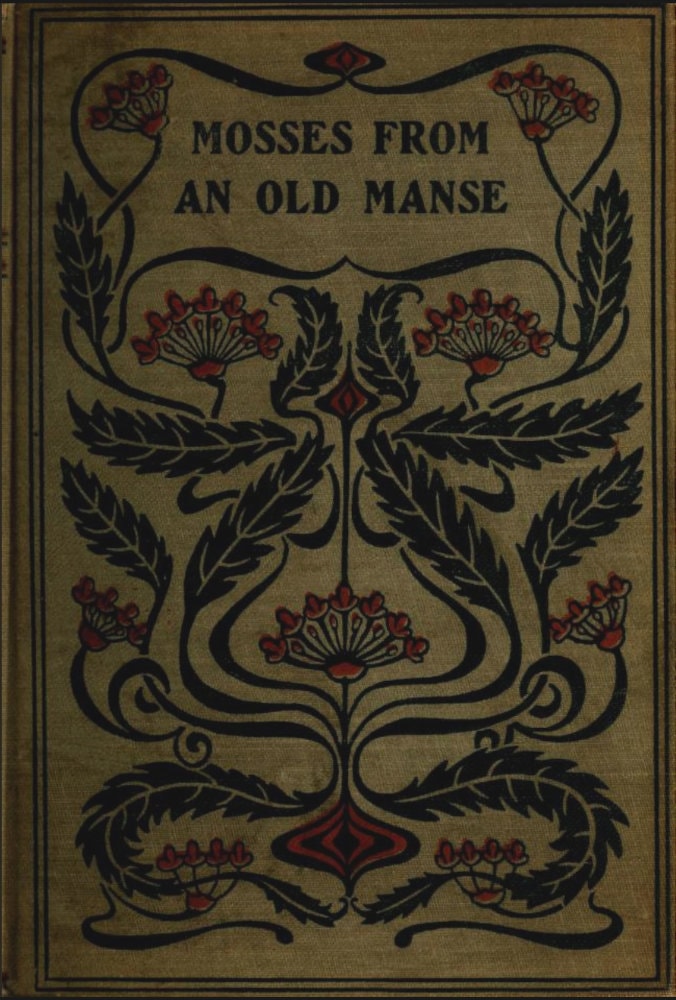
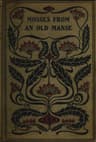
Mosses from an Old Manse
1846
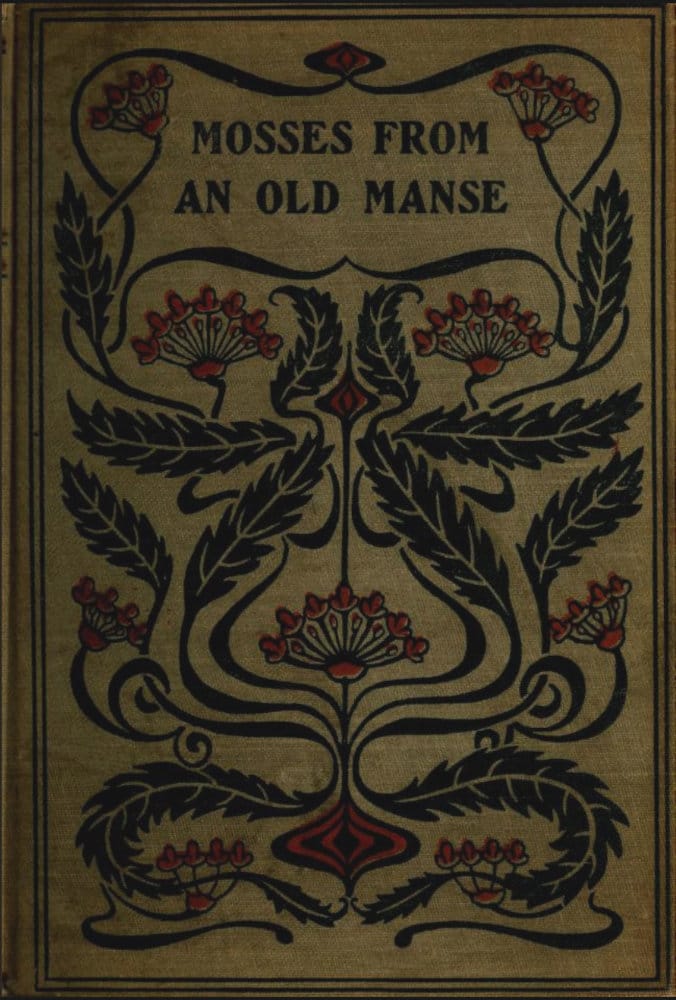
Mosses from an Old Manse is Nathaniel Hawthorne at his most intimate and haunted. Written during his brief residence in the legendary Concord parsonage where Emerson once lived, this collection weaves together essays and short stories into something less like a book and more like a prolonged act of excavation. Hawthorne wanders through the rooms and grounds of the Old Manse, peeling back layers of history, and finds there not peace but ghosts: the weight of Puritan sermons, the shadow of the Revolutionary War fought nearby, and his own anxieties about whether he can deserve such a place. The stories that follow are uniformly strange and beautiful, exploring the collision between scientific ambition and moral consequence ('The Birth-Mark'), the costs of artistic purity ('The Artist of the Beautiful'), and the terrifying slipperiness of faith ('Young Goodman Brown'). This is Hawthorne in his laboratory, testing the boundaries between the rational and the uncanny, between what we see and what we imagine. For readers who want American literature that rewards slow, careful attention, these mosses have been growing for nearly two centuries and they still retain their strange moisture.
Editions
X-Ray
“Singular as it may appear, the sufferer had now contracted a sort of affection for his tormentor, mingled, however, with the intensest loathing and horror. Nor were such discordant emotions incompatible. Each, on the contrary, imparted strength and poignancy to its opposite. Horrible love”
— Nathaniel Hawthorne
“How often is it the case that, when impossibilities have come to pass and dreams have condensed their misty substance into tangible realities, we find ourselves calm, and even coldly self-possessed, amid circumstances which it would have been a delirium of joy or agony to anticipate! Fate delights to thwart us thus. Passion will choose his own time to rush upon the scene, and lingers sluggishly behind when an appropriate adjustment of events would seem to summon his appearance.””
— Nathaniel Hawthorne
“Being naturally of a serious turn, my attention was directed to the solid advantages derivable from a residence here, rather than to the effervescent pleasures which are the grand object with too many visitants. The Christian reader, if he have had no accounts of the city later than Bunyan's time, will be surprised to hear that almost every street has its church, and that the reverend clergy are nowhere held in higher respect than at Vanity Fair. And well do they deserve such honorable estimation; for the maxims of wisdom and virtue which fall from their lips come from as deep a spiritual source, and tend to as lofty a religious aim, as those of the sagest philosophers of old. In justification of this high praise I need only mention the names of the Rev. Mr. Shallow-deep, the Rev. Mr. Stumble-at-truth, that fine old clerical character the Rev. Mr. This-today, who expects shortly to resign his pulpit to the Rev. Mr. That-tomorrow; together with the Rev. Mr. Bewilderment, the Rev. Mr. Clog-the-spirit, and, last and greatest, the Rev. Dr. Wind-of-doctrine. The labors of these eminent divines are aided by those of innumerable lecturers, who diffuse such a various profundity, in all subjects of human or celestial science, that any man may acquire an omnigenous erudition without the trouble of even learning to read.””
— Nathaniel Hawthorne
“Thus pleasantly conversing on the favorable circumstances of our position as compared with those of past pilgrims and of narrow-minded ones at the present day, we soon found ourselves at the foot of the Hill Difficulty. Through the very heart of this rocky mountain a tunnel has been constructed of most admirable architecture, with a lofty arch and a spacious double track; so that, unless the earth and rocks should chance to crumble down, it will remain an eternal monument of the builder's skill and enterprise. It is a great though incidental advantage that the materials from the heart of the Hill Difficulty have been employed in filling up the Valley of Humiliation, thus obviating the necessity of descending into that disagreeable and unwholesome hollow.””
— Nathaniel Hawthorne
“The preposterous obstinacy of these honest people in persisting to groan and stumble along the difficult pathway rather than take advantage of modern improvements, excited great mirth among our wiser brotherhood.””
— Nathaniel Hawthorne
Link to this book
Add a free, dofollow link to Lex on your blog, forum, syllabus, or reading list.

<a href="https://lex-books.com/book/mosses-from-an-old-manse-554ccc86-2586-42f3-a57c-6d32bc678912"><img src="https://lex-books.com/badges/read-on-lex.svg" alt="Read Mosses from an Old Manse by Nathaniel Hawthorne free on Lex" width="160" height="40"></a>[](https://lex-books.com/book/mosses-from-an-old-manse-554ccc86-2586-42f3-a57c-6d32bc678912)[url=https://lex-books.com/book/mosses-from-an-old-manse-554ccc86-2586-42f3-a57c-6d32bc678912][img]https://lex-books.com/badges/read-on-lex.svg[/img][/url]Read Mosses from an Old Manse by Nathaniel Hawthorne free on Lex: https://lex-books.com/book/mosses-from-an-old-manse-554ccc86-2586-42f3-a57c-6d32bc678912Cite this book
Reading this edition for a paper or guide? Copy a citation.
Hawthorne, Nathaniel. Mosses from an Old Manse. Lex, lex-books.com/book/mosses-from-an-old-manse-554ccc86-2586-42f3-a57c-6d32bc678912.Hawthorne, N. (1846). Mosses from an Old Manse. Lex. https://lex-books.com/book/mosses-from-an-old-manse-554ccc86-2586-42f3-a57c-6d32bc678912Hawthorne, Nathaniel. Mosses from an Old Manse. Lex. https://lex-books.com/book/mosses-from-an-old-manse-554ccc86-2586-42f3-a57c-6d32bc678912.