King Richard II
1597
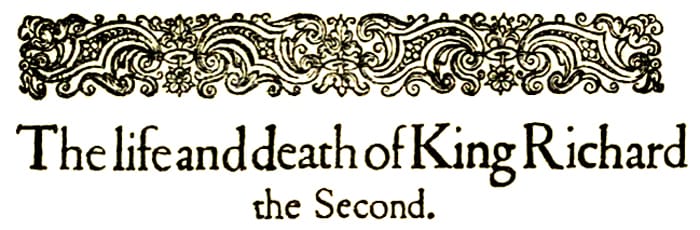
King Richard II
1597
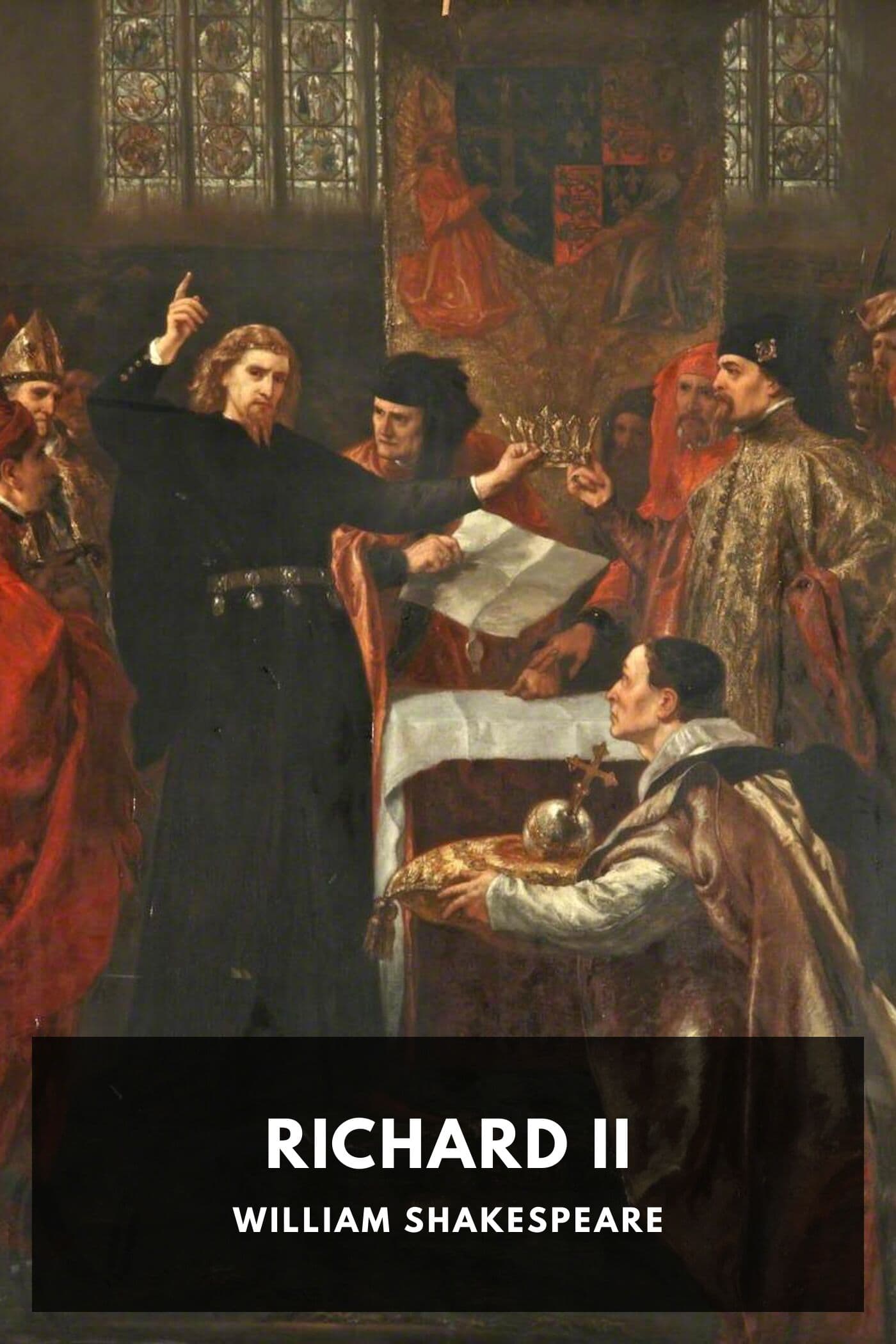
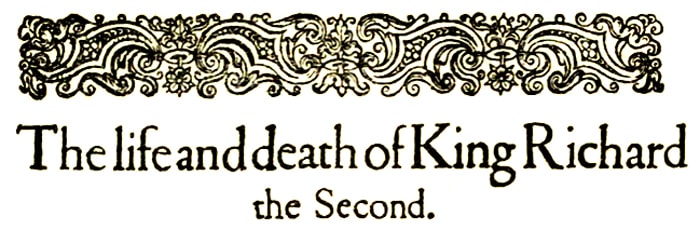
King Richard II is Shakespeare's meditation on what makes a king: divine birthright, or the will to hold power? Richard is a monarch of extraordinary poetic sensibility and staggering self-delusion, a man who believes his crown is his by nature rather than by necessity. When he banishes his cousin Henry Bolingbroke and then seals his own fate by seizing the lands of the exiled Duke of Gaunt upon his father's death, he discovers that crownless heads find no cushion in heaven. The play builds to its devastating conclusion: Richard surrendering his crown in deposition, then murdered in a castle dungeon, his hollow crown finally meaning nothing at all. Written around 1595, this is the first of Shakespeare's great English history plays, and arguably his most lyric tragedy. The language burns with imagery of crowns, mirrors, and mortality; Richard's speeches on the spiritual desolation of a deposed king are among Shakespeare's most haunting. It is a play about the violence inherent in the transfer of power, and the terrible price paid when a ruler mistakes the ceremony of office for the substance of rule.
Editions

X-Ray
“I wasted time, and now doth time waste me; For now hath time made me his numbering clock: My thoughts are minutes; and with sighs they jar Their watches on unto mine eyes, the outward watch, Whereto my finger, like a dial's point, Is pointing still, in cleansing them from tears. Now sir, the sound that tells what hour it is Are clamorous groans, which strike upon my heart, Which is the bell: so sighs and tears and groans Show minutes, times, and hours.””
— William Shakespeare
“This royal throne of kings, this scepter’d isle,This earth of majesty, this seat of Mars,This other Eden, demi-paradise,This fortress built by Nature for herselfAgainst infection and the hand of war,This happy breed of men, this little world,This precious stone set in the silver sea,Which serves it in the office of a wallOr as a moat defensive to a house,Against the envy of less happier lands,This blessed plot, this earth, this realm, this England,This nurse, this teeming womb of royal kings,Fear’d by their breed and famous by their birth,Renowned for their deeds as far from home,For Christian service and true chivalry,As is the sepulchre in stubborn JewryOf the world’s ransom, blessed Mary’s Son,This land of such dear souls, this dear dear land,Dear for her reputation through the world,Is now leased out, I die pronouncing it,Like to a tenement or pelting farm:England, bound in with the triumphant sea,Whose rocky shore beats back the envious siegeOf watery Neptune, is now bound in with shame,With inky blots and rotten parchment bonds:That England, that was wont to conquer others,Hath made a shameful conquest of itself.Ah, would the scandal vanish with my life,How happy then were my ensuing death!””
— William Shakespeare
“For God's sake, let us sit upon the groundAnd tell sad stories of the death of kings;How some have been deposed; some slain in war,Some haunted by the ghosts they have deposed;Some poison'd by their wives: some sleeping kill'd;All murder'd: for within the hollow crownThat rounds the mortal temples of a kingKeeps Death his court and there the antic sits,Scoffing his state and grinning at his pomp,Allowing him a breath, a little scene,To monarchize, be fear'd and kill with looks,Infusing him with self and vain conceit,As if this flesh which walls about our life,Were brass impregnable, and humour'd thusComes at the last and with a little pinBores through his castle wall, and farewell king!””
— William Shakespeare
“You may my glories and my state depose,But not my griefs; still am I king of those.””
— William Shakespeare
“Woe, destruction, ruin, and decay; the worst is death and death will have his day.””
— William Shakespeare
“Let's talk of graves, of worms, and epitaphs;Make dust our paper and with rainy eyesWrite sorrow on the bosom of the earth,Let's choose executors and talk of wills””
— William Shakespeare
“My dear dear lord,The purest treasure mortal times affordIs spotless reputation: that away,Men are but gilded loam or painted clay.A jewel in a ten-times-barr'd-up chestIs a bold spirit in a loyal breast.Mine honour is my life; both grow in one:Take honour from me, and my life is done:Then, dear my liege, mine honour let me try;In that I live and for that will I die.””
— William Shakespeare
“No matter where; of comfort no man speak:Let's talk of graves, of worms, and epitaphs;Make dust our paper and with rainy eyesWrite sorrow on the bosom of the earth,Let's choose executors and talk of wills:And yet not so, for what can we bequeathSave our deposed bodies to the ground?Our lands, our lives and all are Bolingbroke's,And nothing can we call our own but deathAnd that small model of the barren earthWhich serves as paste and cover to our bones.For God's sake, let us sit upon the groundAnd tell sad stories of the death of kings;How some have been deposed; some slain in war,Some haunted by the ghosts they have deposed;Some poison'd by their wives: some sleeping kill'd;All murder'd: for within the hollow crownThat rounds the mortal temples of a kingKeeps Death his court and there the antic sits,Scoffing his state and grinning at his pomp,Allowing him a breath, a little scene,To monarchize, be fear'd and kill with looks,Infusing him with self and vain conceit,As if this flesh which walls about our life,Were brass impregnable, and humour'd thusComes at the last and with a little pinBores through his castle wall, and farewell king!Cover your heads and mock not flesh and bloodWith solemn reverence: throw away respect,Tradition, form and ceremonious duty,For you have but mistook me all this while:I live with bread like you, feel want,Taste grief, need friends: subjected thus,How can you say to me, I am a king?””
— William Shakespeare
“Thus play I in one person many people, And none contented: sometimes am I king; Then treasons make me wish myself a beggar, And so I am: then crushing penury Persuades me I was better when a king; Then am I king'd again: and by and by Think that I am unking'd by Bolingbroke, And straight am nothing: but whate'er I be, Nor I nor any man that but man is With nothing shall be pleased, till he be eased With being nothing.””
— William Shakespeare
Link to this book
Add a free, dofollow link to Lex on your blog, forum, syllabus, or reading list.

<a href="https://lex-books.com/book/king-richard-ii-e486a6ba-8f3b-4695-ae37-49212a0f9571"><img src="https://lex-books.com/badges/read-on-lex.svg" alt="Read King Richard II by William Shakespeare free on Lex" width="160" height="40"></a>[](https://lex-books.com/book/king-richard-ii-e486a6ba-8f3b-4695-ae37-49212a0f9571)[url=https://lex-books.com/book/king-richard-ii-e486a6ba-8f3b-4695-ae37-49212a0f9571][img]https://lex-books.com/badges/read-on-lex.svg[/img][/url]Read King Richard II by William Shakespeare free on Lex: https://lex-books.com/book/king-richard-ii-e486a6ba-8f3b-4695-ae37-49212a0f9571Cite this book
Reading this edition for a paper or guide? Copy a citation.
Shakespeare, William. King Richard II. Lex, lex-books.com/book/king-richard-ii-e486a6ba-8f3b-4695-ae37-49212a0f9571.Shakespeare, W. (1597). King Richard II. Lex. https://lex-books.com/book/king-richard-ii-e486a6ba-8f3b-4695-ae37-49212a0f9571Shakespeare, William. King Richard II. Lex. https://lex-books.com/book/king-richard-ii-e486a6ba-8f3b-4695-ae37-49212a0f9571.