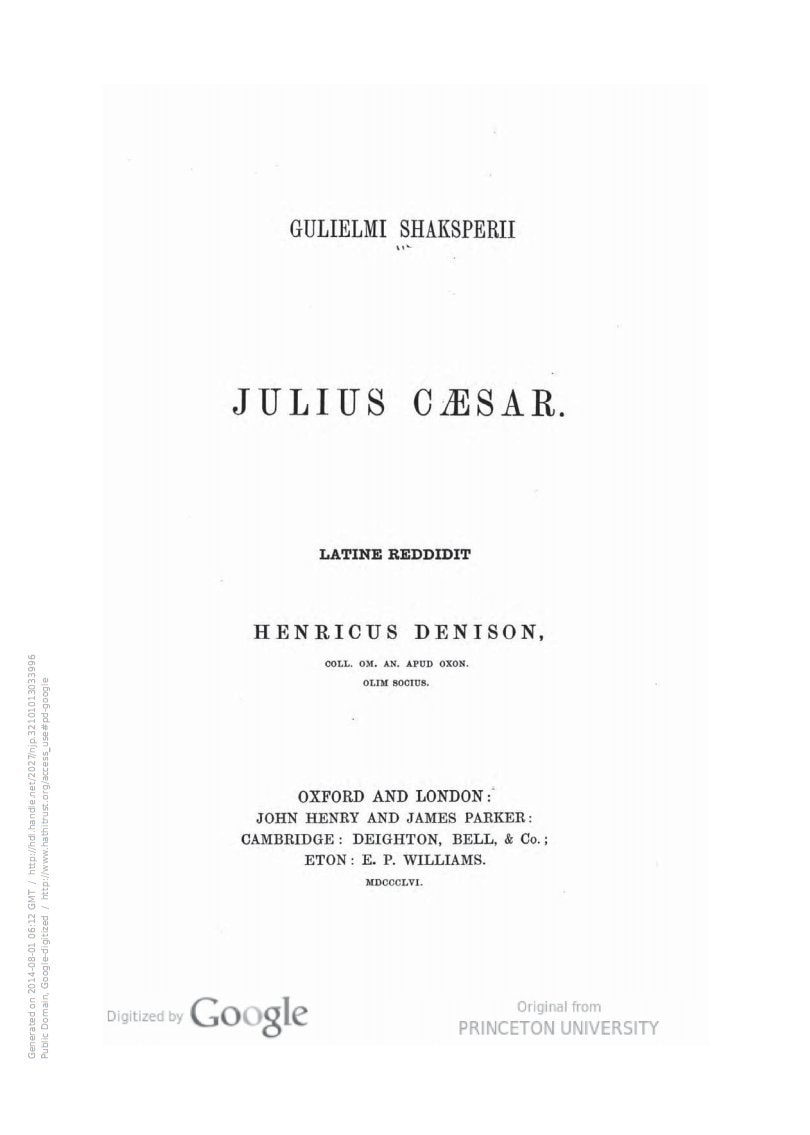
Julius Cæsar
1599
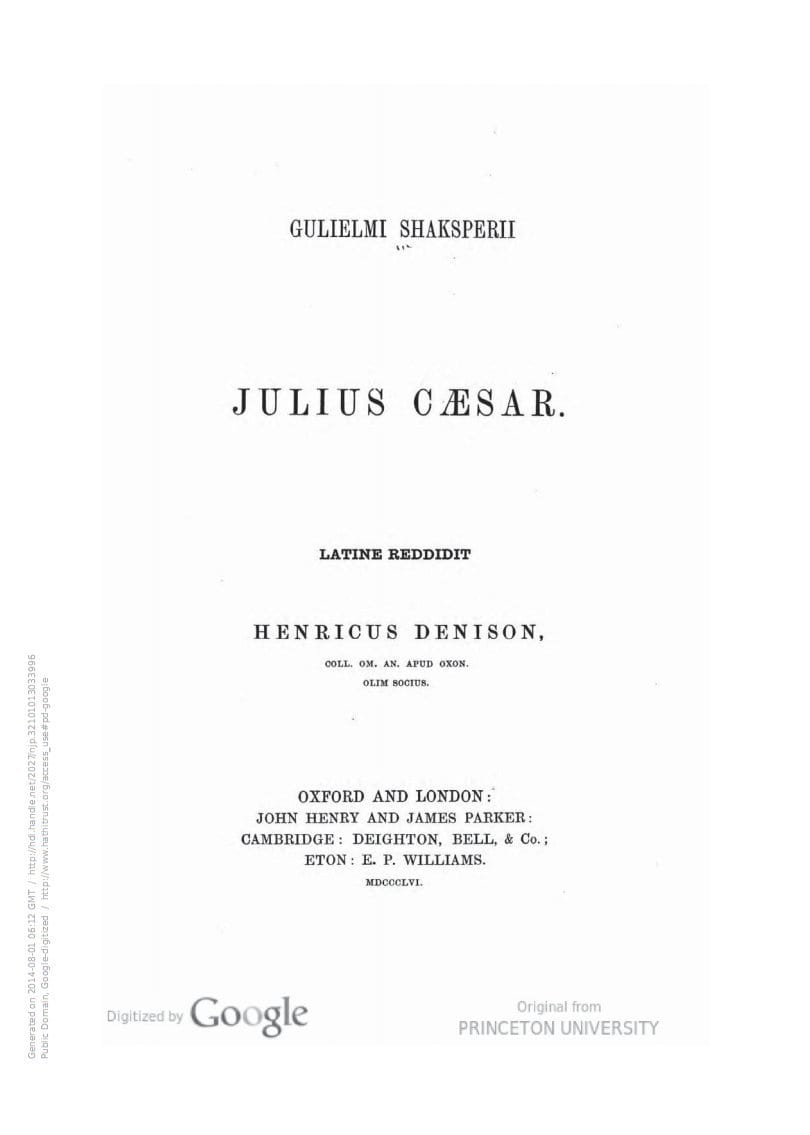
Julius Cæsar
1599
Translated by Henry Denison
Julius Caesar is not really about Caesar, and that's what makes it devastating. The man himself appears in only three scenes before his murder, yet his shadow dominates every moment. The true tragedy belongs to Brutus, a man of genuine honor who convinces himself that assassinating his closest friend is the only way to preserve Roman liberty. Shakespeare's masterpiece asks the question every age wrestles with: can violence ever be justified in service of a greater good? The conspirators gather in a orchard, speak of tyranny and freedom in the same breath, and stab a man they love. What follows is chaos, a civil war that kills the Republic they hoped to save, and a rhetorical duel over Caesar's corpse that proves the living are far more dangerous than the dead. The play ripples with famous lines that have outlasted empires: the soothsayer's warning, Marc Antony's brilliant manipulation of the Roman crowd, the cold logic of Cassius, and Brutus's final, shattering soliloquy. It is a play about the moment republics die, and the ordinary men who believe they can control what comes next.
Editions

X-Ray
“The fault, dear Brutus, is not in our stars, but in ourselves.””
— William Shakespeare
“Cowards die many times before their deaths; The valiant never taste of death but once. Of all the wonders that I yet have heard, It seems to me most strange that men should fear; Seeing that death, a necessary end, Will come when it will come.””
— William Shakespeare
“Men at some time are masters of their fates. The fault, dear Brutus, is not in our stars, but in ourselves, that we are underlings.””
— William Shakespeare
“Et tu, Brute?””
— William Shakespeare
“A coward dies a thousand times before his death, but the valiant taste of death but once. It seems to me most strange that men should fear, seeing that death, a necessary end, will come when it will come.””
— William Shakespeare
“There is a tide in the affairs of menWhich, taken at the flood, leads on to fortune;Omitted, all the voyage of their lifeIs bound in shallows and in miseries.On such a full sea are we now afloat;And we must take the current when it serves,Or lose our ventures.””
— William Shakespeare
“Cry havoc and let slip the dogs of war!””
— William Shakespeare
“The evil that men do lives after them;The good is oft interred with their bones.””
— William Shakespeare
“Friends, Romans, countrymen, lend me your ears; I come to bury Caesar, not to praise him; The evil that men do lives after them, The good is oft interred with their bones, So let it be with Caesar ... The noble Brutus Hath told you Caesar was ambitious: If it were so, it was a grievous fault, And grievously hath Caesar answered it ...Here, under leave of Brutus and the rest, (For Brutus is an honourable man; So are they all; all honourable men) Come I to speak in Caesar's funeral ...He was my friend, faithful and just to me: But Brutus says he was ambitious; And Brutus is an honourable man…. He hath brought many captives home to Rome, Whose ransoms did the general coffers fill: Did this in Caesar seem ambitious? When that the poor have cried, Caesar hath wept: Ambition should be made of sterner stuff: Yet Brutus says he was ambitious; And Brutus is an honourable man. You all did see that on the Lupercal I thrice presented him a kingly crown, Which he did thrice refuse: was this ambition? Yet Brutus says he was ambitious; And, sure, he is an honourable man. I speak not to disprove what Brutus spoke, But here I am to speak what I do know. You all did love him once, not without cause: What cause withholds you then to mourn for him? O judgement! thou art fled to brutish beasts, And men have lost their reason…. Bear with me; My heart is in the coffin there with Caesar, And I must pause till it come back to me””
— William Shakespeare
About Julius Cæsar
Chapter Summaries
- 1.1
- Tribunes Flavius and Marullus encounter Roman citizens celebrating Caesar's triumph and scold them for their fickleness, remembering how they once cheered Pompey. They order the crowd to disperse and plan to remove decorations from Caesar's statues.
- 1.2
- During the Lupercal festival, a soothsayer warns Caesar to 'beware the Ides of March.' Cassius begins manipulating Brutus against Caesar, while Caesar expresses distrust of Cassius to Antony. Casca reports that Antony offered Caesar a crown three times, which he refused.
- 1.3
- Strange omens fill the night as Casca encounters supernatural events. Cassius interprets these as signs against Caesar's tyranny and recruits Casca to the conspiracy. They plan to win over Brutus to legitimize their cause.
Key Themes
- Honor vs. Personal Loyalty
- Brutus faces the central conflict between his personal love for Caesar and his sense of honor and duty to Rome. This internal struggle drives the entire tragedy and questions whether noble intentions justify terrible actions.
- The Corruption of Power
- The play explores how power corrupts both those who seek it and those who wield it. Caesar's potential tyranny, the conspirators' methods, and the triumvirate's ruthlessness all demonstrate power's corrupting influence.
- Fate vs. Free Will
- Characters struggle between accepting destiny and attempting to control their fates. The soothsayer's warnings, omens, and Caesar's ghost suggest predetermined destiny, while the conspirators believe they can shape Rome's future.
Characters
- Julius Caesar(major)
- The powerful Roman dictator whose assassination drives the plot. Though killed in Act III, his influence and ghost continue to affect events throughout the play.
- Marcus Brutus(protagonist)
- Noble Roman senator torn between personal loyalty to Caesar and duty to Rome. His internal conflict and moral struggle form the heart of the tragedy.
- Cassius(antagonist)
- Cunning senator who orchestrates the conspiracy against Caesar. Driven by envy and republican ideals, he manipulates Brutus into joining the plot.
- Mark Antony(major)
- Caesar's loyal friend and skilled orator who turns public opinion against the conspirators. Transforms from grieving friend to ruthless politician seeking revenge.
- Octavius Caesar(major)
- Caesar's adopted heir and future emperor Augustus. Young but determined, he represents the new order that will emerge from the chaos.
- Portia(minor)
- Brutus's wife and Cato's daughter, embodying Roman virtue and strength. Her suicide reflects the personal cost of political upheaval.
Link to this book
Add a free, dofollow link to Lex on your blog, forum, syllabus, or reading list.

<a href="https://lex-books.com/book/julius-c-sar-56a00a87-f45b-4956-99ca-9fbda5efbcea"><img src="https://lex-books.com/badges/read-on-lex.svg" alt="Read Julius Cæsar by William Shakespeare free on Lex" width="160" height="40"></a>[](https://lex-books.com/book/julius-c-sar-56a00a87-f45b-4956-99ca-9fbda5efbcea)[url=https://lex-books.com/book/julius-c-sar-56a00a87-f45b-4956-99ca-9fbda5efbcea][img]https://lex-books.com/badges/read-on-lex.svg[/img][/url]Read Julius Cæsar by William Shakespeare free on Lex: https://lex-books.com/book/julius-c-sar-56a00a87-f45b-4956-99ca-9fbda5efbceaCite this book
Reading this edition for a paper or guide? Copy a citation.
Shakespeare, William. Julius Cæsar. Lex, lex-books.com/book/julius-c-sar-56a00a87-f45b-4956-99ca-9fbda5efbcea.Shakespeare, W. (1599). Julius Cæsar. Lex. https://lex-books.com/book/julius-c-sar-56a00a87-f45b-4956-99ca-9fbda5efbceaShakespeare, William. Julius Cæsar. Lex. https://lex-books.com/book/julius-c-sar-56a00a87-f45b-4956-99ca-9fbda5efbcea.