Anathema: A Tragedy in Seven Scenes
1910
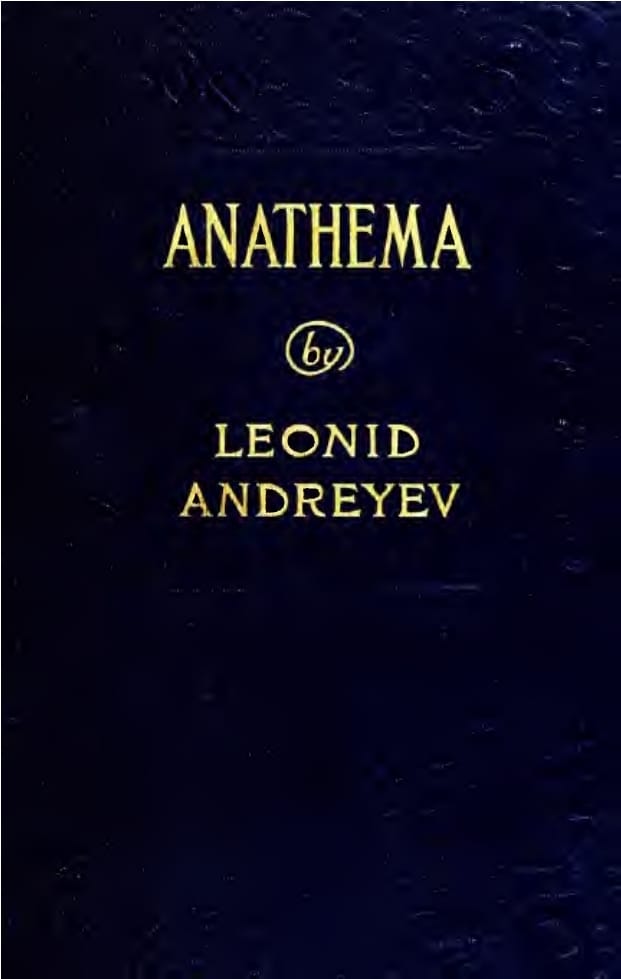
Anathema: A Tragedy in Seven Scenes
1910
Translated by Herman Bernstein
Anathema is Expressionist drama at its most uncompromising. Written in 1910 by Leonid Andreyev, the forgotten father of Russian Expressionism, it follows a cursed spirit condemned to wander eternity, eternally seeking the truth of existence but forever denied it. Anathema's opening confrontation with the Guardian of the Entrances establishes a tone of metaphysical desperation that never relents. Into this mystical landscape steps David Leizer, a broken man whose children have died and whose body is failing, until sudden wealth transforms him into the very thing he despises: a wealthy man in a world of suffering. The play interweaves these two figures: one cursed to know nothing, one cursed to know too much. What follows is a ruthless examination of whether suffering sanctifies, whether wealth corrupts, and whether the pursuit of ultimate truth is salvation or madness. Written on the eve of the Russian Revolution, Anathema captures an era's spiritual crisis, a world where the old certainties had collapsed and nothing had yet replaced them. It endures because its questions remain ours: What do we owe the poor? Can the cursed find redemption? Is knowledge worth its price? For readers of Chekhov, Strindberg, and philosophical drama that refuses easy answers.
Editions
Link to this book
Add a free, dofollow link to Lex on your blog, forum, syllabus, or reading list.

<a href="https://lex-books.com/book/anathema-a-tragedy-in-seven-scenes-088cffe4-0402-48dd-8e23-4573da0c7f81"><img src="https://lex-books.com/badges/read-on-lex.svg" alt="Read Anathema: A Tragedy in Seven Scenes by Leonid Andreyev free on Lex" width="160" height="40"></a>[](https://lex-books.com/book/anathema-a-tragedy-in-seven-scenes-088cffe4-0402-48dd-8e23-4573da0c7f81)[url=https://lex-books.com/book/anathema-a-tragedy-in-seven-scenes-088cffe4-0402-48dd-8e23-4573da0c7f81][img]https://lex-books.com/badges/read-on-lex.svg[/img][/url]Read Anathema: A Tragedy in Seven Scenes by Leonid Andreyev free on Lex: https://lex-books.com/book/anathema-a-tragedy-in-seven-scenes-088cffe4-0402-48dd-8e23-4573da0c7f81Cite this book
Reading this edition for a paper or guide? Copy a citation.
Andreyev, Leonid. Anathema: A Tragedy in Seven Scenes. Lex, lex-books.com/book/anathema-a-tragedy-in-seven-scenes-088cffe4-0402-48dd-8e23-4573da0c7f81.Andreyev, L. (1910). Anathema: A Tragedy in Seven Scenes. Lex. https://lex-books.com/book/anathema-a-tragedy-in-seven-scenes-088cffe4-0402-48dd-8e23-4573da0c7f81Andreyev, Leonid. Anathema: A Tragedy in Seven Scenes. Lex. https://lex-books.com/book/anathema-a-tragedy-in-seven-scenes-088cffe4-0402-48dd-8e23-4573da0c7f81.