My Religion
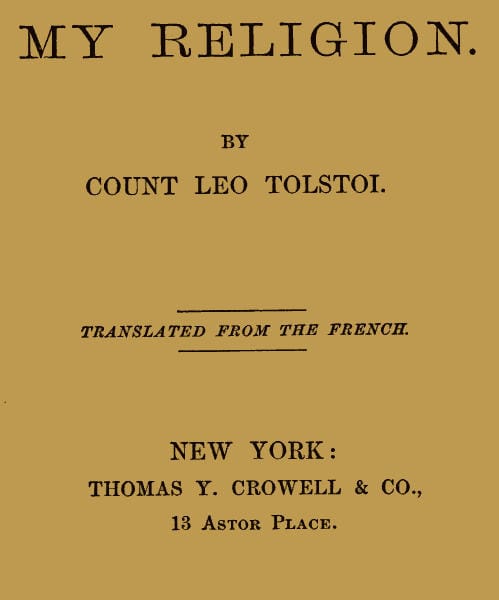
My Religion
Translated by Huntington Smith
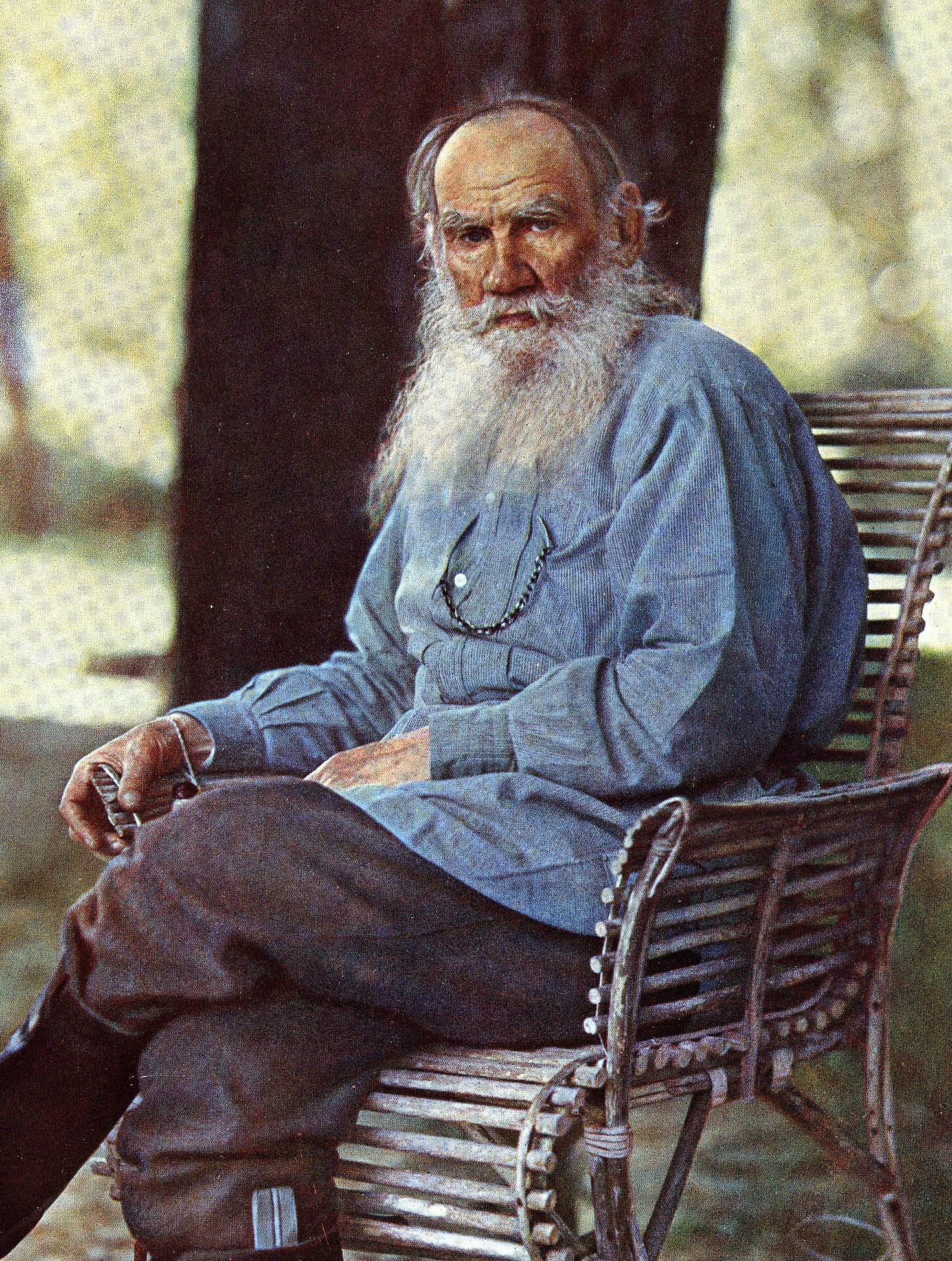
At fifty, Leo Tolstoy nearly drowned in despair. The author of War and Peace and Anna Karenine had everything, and found it meaningless. Then, in a spiritual awakening that would reshape his life and echo across a century, he returned to the Gospels and discovered a Christianity no church had ever taught him. This is his account: a radical rereading of Jesus that rejects mysticism, institutional religion, and even the Resurrection in favor of one bracing command, do not resist evil. Tolstoy argues that true Christian faith demands pacifism, poverty, and absolute nonviolence. The Russian Orthodox Church called this heresy and excommunicated him. Mohandas Gandhi read it in South Africa and wrote to thank the old count for showing him the path of nonviolent resistance that would transform history. Part memoir, part theological revolution, My Religion remains a challenge: what if everything you've been told about faith is wrong? For readers who trust questions more than answers, who want their spirituality unmediated and uncomfortable, this is the book that started a revolution.
Editions
X-Ray
“As long as there are slaughter houses there will always be battlefields.””
— Leo Tolstoy
“What is the law of nature? Is it to know that my security and that of my family, all my amusements and pleasures, are purchased at the expense of misery, deprivation, and suffering to thousands of human beings”
— Leo Tolstoy
“And yet our existence is so organized that every personal enjoyment is purchased at the price of human suffering contrary to human nature.””
— Leo Tolstoy
“The doctrine of Christ, which teaches love, humility, and self-denial, had always attracted me. But Ifound a contrary law, both in the history of the past and in the present organization of our lives – a lawrepugnant to my heart, my conscience, and my reason, but one that flattered my animal instincts. I knewthat if I accepted the doctrine of Christ, I should be forsaken, miserable, persecuted, and sorrowing, asChrist tells us His followers will be. I knew that if I accepted that law of man, I should have theapprobation of my fellow-men; I should be at peace and in safety; all possible sophisms would be athand to quiet my conscience and I should ‘laugh and be merry,’ as Christ says. I felt this, and therefore Iavoided a closer examination of the law of Christ, and tried to comprehend it in a way that should notprevent my still leading my animal life. But, finding that impossible, I desisted from all attempts atcomprehension.””
— Leo Tolstoy
“Our existence is now so entirely in contradiction with the doctrine of Jesus, that only with the greatest difficulty can we understand its meaning. We have been so deaf to the rules of life that he has given us, to his explanations,”
— Leo Tolstoy
“The objection that the doctrine of Jesus is excellent but impracticable, comes not only from believers, but from sceptics, from those who do not believe, or think that they do not believe, in the dogmas of the fall of man and the redemption; from men of science and philosophers who consider themselves free from all prejudice. They believe, or imagine that they believe, in nothing, and so consider themselves as above such a superstition as the dogma of the fall and the redemption.””
— Leo Tolstoy
“And the observance of his five commandments will bring peace upon the earth. They all have but one object,”
— Leo Tolstoy
“And so in place of insignificant, vague, and uncertain phrases subject to arbitrary interpretation, I found in Matthew v. 21-26 the first commandment of Jesus: Live in peace with all men. Do not regard anger as justifiable under any circumstances. Never look upon a human being as worthless or as a fool. Not only refrain from anger yourself, but do not regard the anger of others toward you as vain. If any one is angry with you, even without reason, be reconciled to him, that all hostile feelings may be effaced. Agree quickly with those that have a grievance against you, lest animosity prevail to your loss.””
— Leo Tolstoy
“Death, death, death attends us every second. Our lives are passed in the presence of death. Whileworking individually for your future, you well know that the future will give you nothing but death.And death will destroy all you worked for. Thus, it is clear that life for oneself can never have anymeaning. If there is a rational life, it must be some other kind of life; it must be one, the purpose ofwhich does not consist in securing one’s own future. To live rationally, we must live so that deathcannot destroy our life.””
— Leo Tolstoy
Link to this book
Add a free, dofollow link to Lex on your blog, forum, syllabus, or reading list.

<a href="https://lex-books.com/book/my-religion-2ce62c4d-5030-47ad-a8f9-83d6847fb6a5"><img src="https://lex-books.com/badges/read-on-lex.svg" alt="Read My Religion by Leo Tolstoy free on Lex" width="160" height="40"></a>[](https://lex-books.com/book/my-religion-2ce62c4d-5030-47ad-a8f9-83d6847fb6a5)[url=https://lex-books.com/book/my-religion-2ce62c4d-5030-47ad-a8f9-83d6847fb6a5][img]https://lex-books.com/badges/read-on-lex.svg[/img][/url]Read My Religion by Leo Tolstoy free on Lex: https://lex-books.com/book/my-religion-2ce62c4d-5030-47ad-a8f9-83d6847fb6a5Cite this book
Reading this edition for a paper or guide? Copy a citation.
Tolstoy, Leo. My Religion. Lex, lex-books.com/book/my-religion-2ce62c4d-5030-47ad-a8f9-83d6847fb6a5.Tolstoy, L. (n.d.). My Religion. Lex. https://lex-books.com/book/my-religion-2ce62c4d-5030-47ad-a8f9-83d6847fb6a5Tolstoy, Leo. My Religion. Lex. https://lex-books.com/book/my-religion-2ce62c4d-5030-47ad-a8f9-83d6847fb6a5.