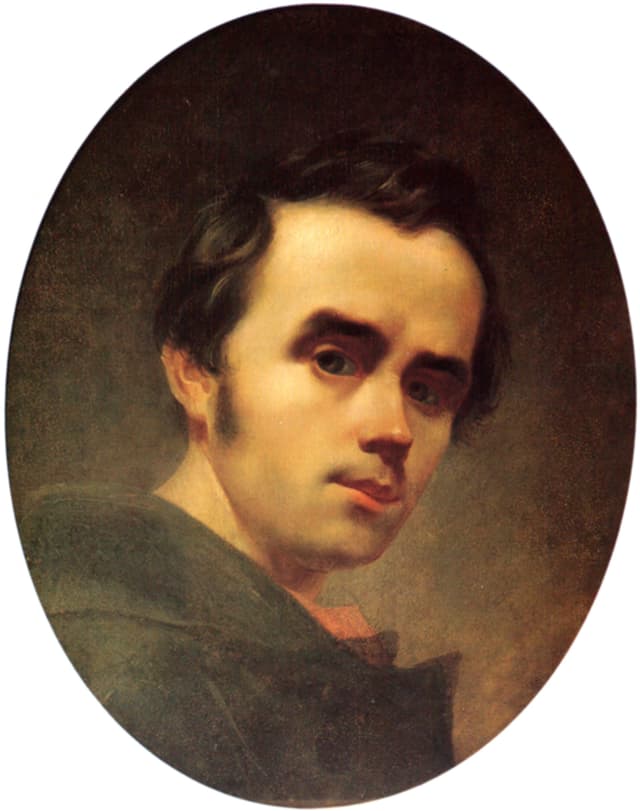
Taras Shevchenko
Taras Shevchenko was a pivotal figure in Ukrainian literature and culture, renowned for his poetry, prose, and artistic contributions. Born into serfdom in Ukraine, he displayed artistic talent from a young age, which led him to the Imperial Academy of Arts in St. Petersburg. His early works reflected the struggles of his people and the beauty of Ukrainian folklore, but his involvement with the Brotherhood of Saints Cyril and Methodius, a group advocating for Ukrainian rights, resulted in his exile to Central Asia. Despite the harsh conditions and restrictions placed upon him, Shevchenko continued to write and create art, gaining recognition among progressive circles in the Russian Empire. Shevchenko's most notable work, the poetry collection "Kobzar," is considered the cornerstone of modern Ukrainian literature and has significantly influenced the development of the Ukrainian language. His writings often addressed themes of national identity, social justice, and the plight of the oppressed, resonating deeply within the Ukrainian consciousness. Though he spent much of his life in exile and faced numerous challenges, Shevchenko's legacy endures, with many viewing him as a national hero and a symbol of Ukrainian cultural revival. His impact has been likened to that of Robert Burns, underscoring his importance not only in Ukraine but also in the broader Slavic cultural landscape.
Famous Quotes
View all 3 quotes“Єсть на світі доля, А хто її знає? Єсть на світі воля, А хто її має? Єсть люде на світі — Сріблом-злотом сяють, Здається, панують, А долі не знають,— Ні долі, ні волі! З нудьгою та з горем Жупан надівають, А плакати — сором. Возьміть срібло-злото Та будьте багаті, А я візьму сльози — Лихо виливати; Затоплю недолю Дрібними сльозами, Затопчу неволю Босими ногами! Тоді я веселий, Тоді я багатий, Як буде серденько По волі гуляти!”
“Як умру, то поховайте Мене на могилі, Серед степу широкого, На Вкраїні милій, Щоб лани широкополі, І Дніпро, і кручі Було видно, було чути, Як реве ревучий. Як понесе з України У синєє море Кров ворожу... отойді я І лани, і гори — Все покину і полину До самого Бога Молитися... а до того Я не знаю Бога. Поховайте та вставайте, Кайдани порвіте І вражою злою кров’ю Волю окропіте. І мене в сем’ї великій, В сем’ї вольній, новій, Не забудьте пом’янути Незлим тихим словом.”
“Ну що б, здавалося, слова... Слова та голос - більш нічого. А серце б'ється - ожива, Як їх почує!.. Знать од Бога І голос той, і ті слова Ідуть меж люди!..”
Books from the author



Link to this page
Add a free, dofollow link to Lex on your blog, forum, syllabus, or reading list.

<a href="https://lex-books.com/author/taras-shevchenko"><img src="https://lex-books.com/badges/read-on-lex.svg" alt="Taras Shevchenko on Lex" width="160" height="40"></a>[](https://lex-books.com/author/taras-shevchenko)[url=https://lex-books.com/author/taras-shevchenko][img]https://lex-books.com/badges/read-on-lex.svg[/img][/url]Taras Shevchenko on Lex: https://lex-books.com/author/taras-shevchenko