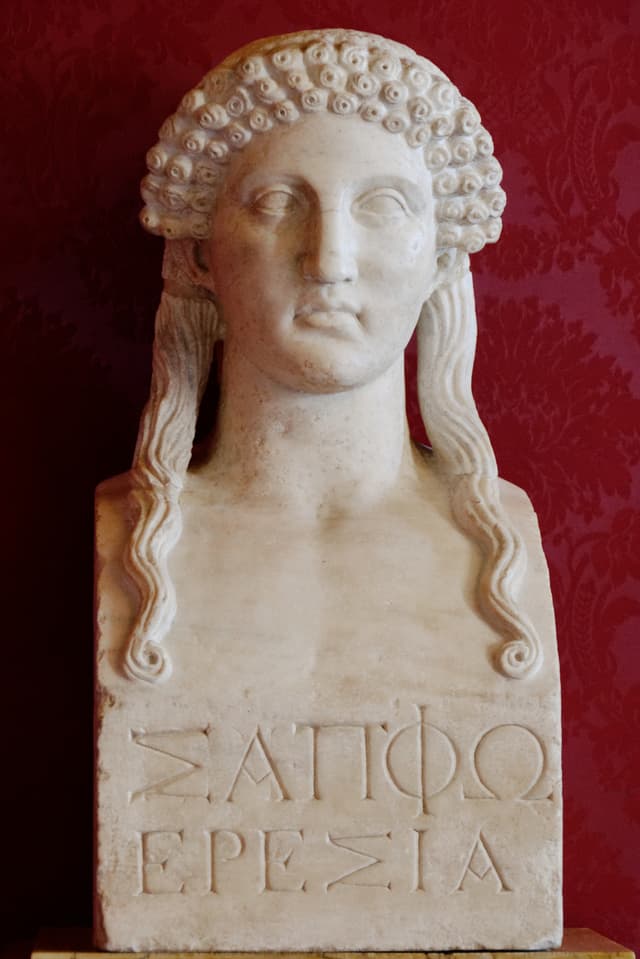
Sappho
Sappho was an ancient Greek poet from the island of Lesbos, renowned for her lyric poetry that celebrated love, beauty, and the complexities of human emotion. Living during the 6th century BCE, she is often regarded as one of the earliest and most significant female voices in Western literature. Although much of her work has been lost to time, the fragments that remain showcase her mastery of language and her ability to convey deep feelings with remarkable intensity. Sappho's poetry often explores themes of love and desire, particularly in relation to women, which has led to her enduring legacy as a symbol of female empowerment and LGBTQ+ representation in literature. Her notable works include various collections and translations, such as "The Poems of Sappho: An Interpretative Rendition into English" and "Sappho: A New Rendering," which have helped to keep her voice alive through the centuries. The fragments of her poetry reveal her innovative use of meter and form, influencing countless poets and writers throughout history. Sappho's work not only contributed to the development of lyric poetry but also established her as a pivotal figure in the canon of Western literature, inspiring generations of artists and thinkers. Despite the limited availability of her complete works, Sappho's impact on literature and her exploration of personal and emotional themes continue to resonate with readers today.
Famous Quotes
View all 3 quotes“someone will remember us I say even in another time”
“Sweet mother, I cannot weave – slender Aphrodite has overcome me with longing for a girl.”
“You may forget but let me tell you this: someone in some future time will think of us”
Books from the author













Link to this page
Add a free, dofollow link to Lex on your blog, forum, syllabus, or reading list.

<a href="https://lex-books.com/author/sappho"><img src="https://lex-books.com/badges/read-on-lex.svg" alt="Sappho on Lex" width="160" height="40"></a>[](https://lex-books.com/author/sappho)[url=https://lex-books.com/author/sappho][img]https://lex-books.com/badges/read-on-lex.svg[/img][/url]Sappho on Lex: https://lex-books.com/author/sappho