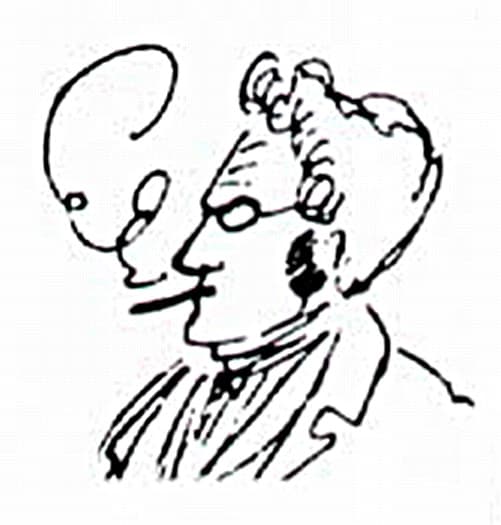
Max Stirner
Max Stirner, born Johann Kaspar Schmidt, was a German philosopher whose radical ideas on individuality and self-consciousness marked him as a significant figure in post-Hegelian thought. Orphaned at a young age, he was raised in West Prussia and later studied at the University of Berlin, where he engaged with Hegel's lectures and became involved with the Young Hegelians. Despite struggling to find a permanent academic position, Stirner became a notable presence in intellectual circles and authored his most influential work, The Unique and Its Property (Der Einzige und sein Eigentum). This text challenged conventional notions of self and society, laying the groundwork for future movements in nihilism, existentialism, and individualist anarchism. Stirner's philosophy emphasized the importance of the individual and the rejection of societal norms, which positioned him as a precursor to various modern philosophical and political ideologies. Although he faced obscurity in his later years, his ideas have continued to resonate, influencing thinkers across diverse fields, including psychoanalysis and postmodernism. Stirner's legacy endures through his radical critique of social alienation and his advocacy for personal autonomy, making him a pivotal figure in the evolution of modern philosophical thought.
Famous Quotes
View all 3 quotes“The state calls its own violence law, but that of the individual, crime.”
“Whoever will be free must make himself free. Freedom is no fairy gift to fall into a man's lap. What is freedom? To have the will to be responsible for one's self.”
“Where the world comes in my way—and it comes in my way everywhere—I consume it to quiet the hunger of my egoism. For me you are nothing but—my food, even as I too am fed upon and turned to use by you. We have only one relation to each other, that of usableness , of utility, of use. We owe each other nothing, for what I seem to owe you I owe at most to myself. If I show you a cheery air in order to cheer you likewise, then your cheeriness is of consequence to me , and my air serves my wish; to a thousand others, whom I do not aim to cheer, I do not show it.”
Books from the author


Link to this page
Add a free, dofollow link to Lex on your blog, forum, syllabus, or reading list.

<a href="https://lex-books.com/author/max-stirner"><img src="https://lex-books.com/badges/read-on-lex.svg" alt="Max Stirner on Lex" width="160" height="40"></a>[](https://lex-books.com/author/max-stirner)[url=https://lex-books.com/author/max-stirner][img]https://lex-books.com/badges/read-on-lex.svg[/img][/url]Max Stirner on Lex: https://lex-books.com/author/max-stirner