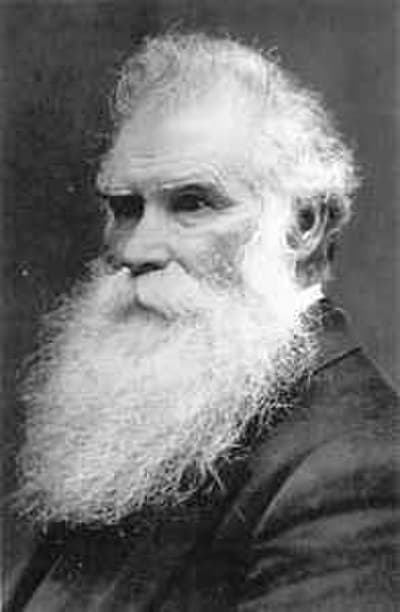
Orson Pratt
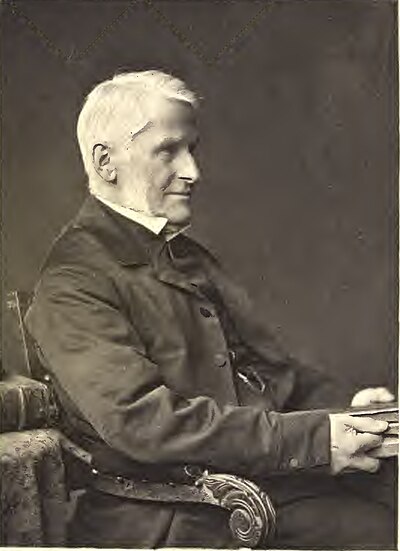
Orson Pratt was a prominent American religious leader and mathematician, recognized as one of the original members of the Quorum of the Twelve Apostles of the Church of Christ (Latter Day Saints). Following the succession crisis within the church, he remained a key figure in the Quorum of the Twelve of the Church of Jesus Christ of Latter-day Saints, where he played a significant role in shaping Mormon theology and doctrine. Pratt was known for his intellectual contributions, particularly in the areas of mathematics and astronomy, which he integrated into his religious teachings. As a prolific writer, Pratt authored several influential works, including 'A Voice of Warning' and 'The Key to the Science of Theology,' which addressed theological principles and the relationship between science and religion. His writings not only provided insights into the beliefs and practices of the Latter-day Saints but also contributed to the broader discourse on faith and reason during a time of significant religious upheaval in America. Pratt's legacy endures through his theological contributions and his role in the early development of the LDS Church, marking him as a pivotal figure in 19th-century American religious history.
Famous Quotes
View all 2 quotes“Do not suppose, however, that those first principles [faith, repentance, baptism, Holy Ghost] are the only ones to be learned; do not become stereotyped in your feelings, and think that you must always dwell upon them and proceed no further. If there be knowledge concerning the future; if there be knowledge concerning the present; if there be knowledge concerning ages that are past, any species of knowledge that would be beneficial to the mind of man, let us seek for it, and that which we cannot obtain by using the light which God has placed within us, by using our reasoning powers, by reading books, or by human wisdom alone, let us seek to a higher source—to that Being who is filled with knowledge.”
“It is not for us, unless we have some definite instructions by the word of God, to tell how He is going to accomplish His great purposes. It is sufficient for us to know that he will do it.”
Books from the author



Link to this page
Add a free, dofollow link to Lex on your blog, forum, syllabus, or reading list.

<a href="https://lex-books.com/author/orson-pratt"><img src="https://lex-books.com/badges/read-on-lex.svg" alt="Orson Pratt on Lex" width="160" height="40"></a>[](https://lex-books.com/author/orson-pratt)[url=https://lex-books.com/author/orson-pratt][img]https://lex-books.com/badges/read-on-lex.svg[/img][/url]Orson Pratt on Lex: https://lex-books.com/author/orson-pratt