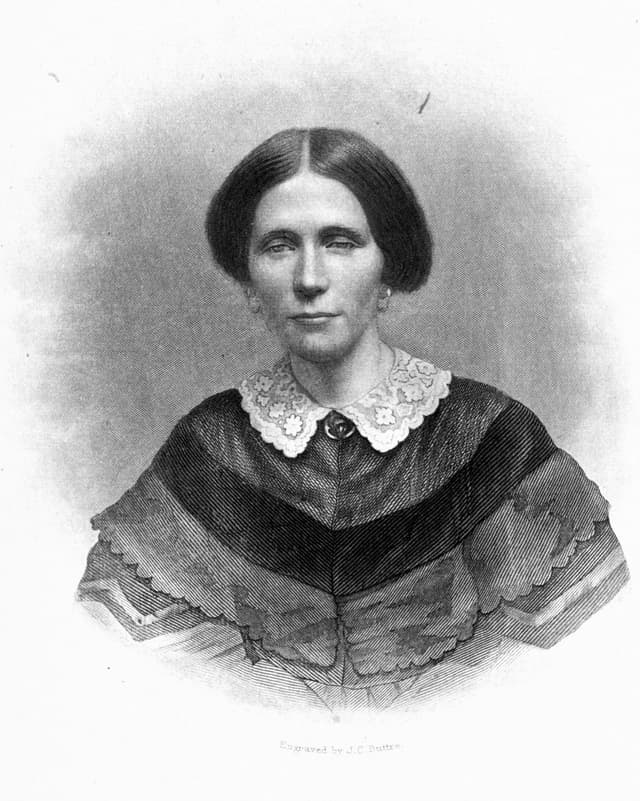
Mary L. Day
Mary L. Day was an American writer renowned for her poignant memoirs that shed light on the experiences of individuals with disabilities. Her most notable work, 'Incidents in the Life of a Blind Girl,' published in 1859, chronicles her own life as a blind woman, offering readers a rare glimpse into the challenges and triumphs she faced. This memoir not only served as a personal narrative but also contributed to the broader conversation about blindness and the capabilities of those living with disabilities during the 19th century. In 1878, Day published a sequel titled 'The World as I Have Found It,' which further explored her experiences and insights. Through her writing, she aimed to inspire empathy and understanding, challenging societal perceptions of blindness. Day's works are significant for their early representation of disabled voices in literature, and they continue to resonate as important contributions to the discourse on disability rights and awareness. Her legacy lies in her ability to articulate the inner lives of those often marginalized, paving the way for future writers and advocates in the field of disability studies.
Famous Quotes
View all 3 quotes“The fact is, Donald’s pathologies are so complex and his behaviors so often inexplicable that coming up with an accurate and comprehensive diagnosis would require a full battery of psychological and neuropsychological tests that he’ll never sit for. At this point, we can’t evaluate his day-to-day functioning because he is, in the West Wing, essentially institutionalized. Donald has been institutionalized for most of his adult life, so there is no way to know how he would thrive, or even survive, on his own in the real world.””
“My grandfather was having a bad day. Most of us were gathered in the library when he came down the stairs, his mustache and eyebrows freshly dyed and his wig askew but impeccably dressed in his three-piece suit. The hair color and wig were recent innovations. My grandfather had always been vain about his appearance and bemoaned his receding hairline. Now his full head of hair gave him a slightly shaggy appearance. Nobody said much about the wig, but the hair dye caused considerable consternation in the family, especially when we were going out in public. My grandfather often left the cheap drugstore dye on too long, turning his eyebrows and mustache a jarring shade of magenta.””
“I saw firsthand how difficult living with my grandfather had become for Gam. My grandfather’s odd behavior had started with small things, such as hiding her checkbook. When she confronted him, he accused her of trying to bankrupt him. When she tried to reason with him, he became enraged, leaving her feeling shaken and unsafe. He worried constantly about money, terrified that his fortune was disappearing. My grandfather had never been poor a day in his life, but poverty became his sole preoccupation; he was tortured by the prospect of it.””
Books from the author




Link to this page
Add a free, dofollow link to Lex on your blog, forum, syllabus, or reading list.

<a href="https://lex-books.com/author/mary-l-day"><img src="https://lex-books.com/badges/read-on-lex.svg" alt="Mary L. Day on Lex" width="160" height="40"></a>[](https://lex-books.com/author/mary-l-day)[url=https://lex-books.com/author/mary-l-day][img]https://lex-books.com/badges/read-on-lex.svg[/img][/url]Mary L. Day on Lex: https://lex-books.com/author/mary-l-day