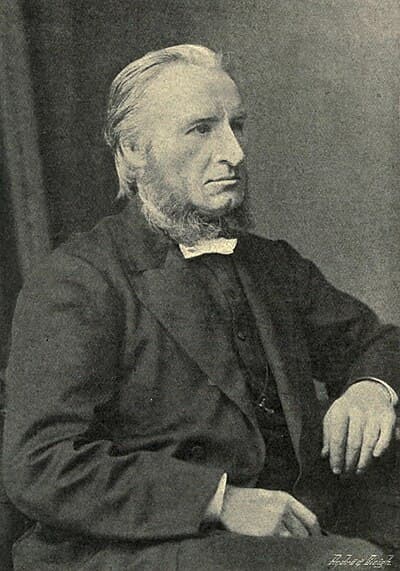
Alexander Whyte
Rev. Alexander Whyte was a prominent Scottish divine known for his influential role in the Free Church of Scotland. Born in 1836, he became a leading figure in Scottish Presbyterianism and served as the Moderator of the General Assembly in 1898. Whyte was not only a respected theologian but also a prolific author, renowned for his sermons and writings that emphasized the importance of personal faith and spirituality. His works, such as 'Bible Characters' and 'The Epistle to the Hebrews', showcased his deep understanding of scripture and his ability to connect theological concepts with everyday life. Whyte's literary contributions extended beyond theology; he was a gifted orator whose sermons captivated audiences and inspired many in their spiritual journeys. His legacy lies in his ability to articulate complex religious ideas in a relatable manner, making him a significant figure in the development of modern Scottish religious thought. His influence continues to be felt in contemporary discussions of faith and spirituality, marking him as a key figure in the history of Scottish Christianity.
Famous Quotes
View all 3 quotes“You’re not likely to err by practicing too much of the cross.”
“Show me a believing man, and I will show you a justified man, and, withal, a man who is never out of his Bible. What else would you have him to read? I would like to hear you urging some of your favourite reading on him. I would like you to tell him where else but in his Bible such faith as his could be fed. Where else could he get songs for the house of his pilgrimage? And shoes for his feet, and a staff for his hand? And his whole furniture for his life of faith, and for his death of victory? Yes: depend upon it, the just man will live, and move, and have his whole being, in his Bible, and in books that have been drawn out of his Bible. But”
“For what a man loves, that that man is. What a man chooses out of a hundred offers, you are sure by that who and what that man is. And accordingly, put the New Testament in any man’s hand, and set the Throne of Grace wide open before any man; and you need no omniscience to tell you that man’s true value. If he lets his Bible lie unopened and unread: if he lets God’s Throne of Grace stand till death, idle and unwanted: if the depth and the height, the nobleness and the magnificence, the goodness and the beauty of divine things have no command over him, and no attraction to him—then, you do not wish me to put words upon the meanness of that man’s mind. Look yourselves at what he has chosen: look and weep at what he has neglected, and has for ever lost!”
Books from the author



Link to this page
Add a free, dofollow link to Lex on your blog, forum, syllabus, or reading list.

<a href="https://lex-books.com/author/alexander-whyte"><img src="https://lex-books.com/badges/read-on-lex.svg" alt="Alexander Whyte on Lex" width="160" height="40"></a>[](https://lex-books.com/author/alexander-whyte)[url=https://lex-books.com/author/alexander-whyte][img]https://lex-books.com/badges/read-on-lex.svg[/img][/url]Alexander Whyte on Lex: https://lex-books.com/author/alexander-whyte