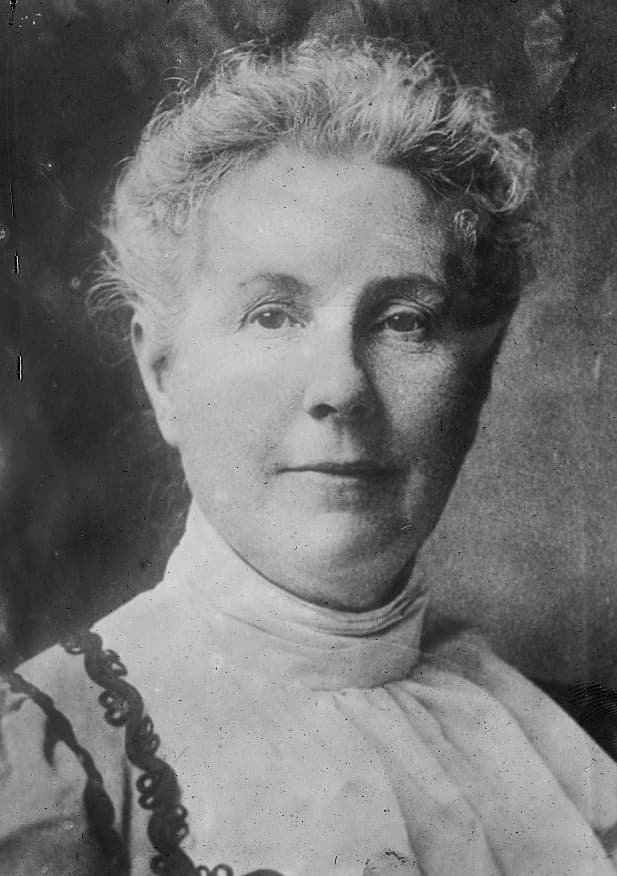
Sarah Knowles Bolton
Sarah Knowles Bolton was an influential American writer and social reformer, born in Farmington, Connecticut. She married Charles E. Bolton in 1866 and became an active voice in the women's movement, serving as one of the first corresponding secretaries of the National Woman's Christian Temperance Union. Bolton's literary career was marked by her extensive contributions to various publications, including her role as associate editor of the Boston Congregationalist from 1878 to 1881. Her writings often focused on social issues, advocating for female higher education and profit-sharing, reflecting her commitment to improving society through faith and hard work. Bolton traveled throughout Europe for two years, where she deepened her understanding of social questions and the role of women in society. She authored several notable works, including biographies and essays that highlighted the achievements of women and the importance of social reform. Her legacy lies in her pioneering efforts to elevate women's voices in literature and social discourse, making her a significant figure in the context of 19th-century American literature and women's rights advocacy.
Famous Quotes
View all 3 quotes“- Paddle Your Own Canoe Voyager upon life's sea, To yourself be true, And whatever your lot may be, Paddle your own canoe. Never, though the winds may rave, Falter or look back; But upon the darkest wave Leave a shining track. Paddle your own canoe. Nobly dare the wildest storm, Stem the hardest gale, Brave of heart and strong of arm You will never fail. When the world is cold and dark, Keep your aim in view; And toward the beacon work, Paddle your own canoe. ... ..Would you crush the giant wrong, In the world's free fight? With a spirit brave and strong, Battle for the right. And to break the chains that bind The many to the few To enfranchise slavish mind,- Paddle your own canoe. Nothing great is lightly won, Nothing won is lost, Every good deed, nobly done, Will repay the cost. Leave to Heaven, in humble trust, All you will to do: But if succeed, you must Paddle your own canoe.”
“so great is the number of fools.”
“A civil question demands a civil answer, whether the person addressed be king or peasant.”
Books from the author





Link to this page
Add a free, dofollow link to Lex on your blog, forum, syllabus, or reading list.

<a href="https://lex-books.com/author/sarah-knowles-bolton"><img src="https://lex-books.com/badges/read-on-lex.svg" alt="Sarah Knowles Bolton on Lex" width="160" height="40"></a>[](https://lex-books.com/author/sarah-knowles-bolton)[url=https://lex-books.com/author/sarah-knowles-bolton][img]https://lex-books.com/badges/read-on-lex.svg[/img][/url]Sarah Knowles Bolton on Lex: https://lex-books.com/author/sarah-knowles-bolton