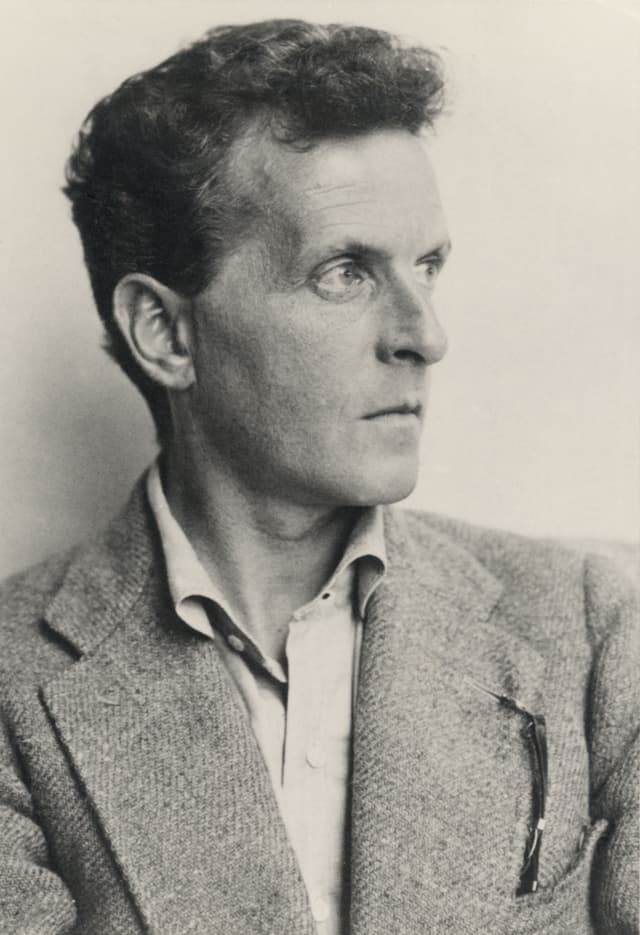
Ludwig Wittgenstein
Ludwig Wittgenstein was an influential Austro-British philosopher known for his profound contributions to logic, the philosophy of language, and the philosophy of mind. Born into a wealthy family in Vienna, he initially studied engineering before turning to philosophy, where he would leave an indelible mark. His early work culminated in the 'Tractatus Logico-Philosophicus,' a concise yet groundbreaking text that sought to outline the relationship between language and reality. Despite its brevity, the 'Tractatus' established Wittgenstein as a pivotal figure in 20th-century philosophy, proposing that the structure of language reflects the structure of reality itself. However, his later work, particularly in 'Philosophical Investigations,' marked a significant shift in his thinking, where he argued that meaning arises from the practical use of language in various forms of life, challenging the ideas presented in his earlier writings. Wittgenstein's philosophical journey is often characterized by a transition from the rigid logical structures of his early work to a more nuanced understanding of language's fluidity and context in his later writings. His teaching tenure at the University of Cambridge from 1929 to 1947 allowed him to influence a generation of philosophers, even as he published only a handful of works during his lifetime. The posthumous publication of his manuscripts, especially 'Philosophical Investigations,' solidified his legacy as one of the most significant philosophers of the 20th century. His ideas continue to resonate across various disciplines, making him a central figure in discussions about language, meaning, and the nature of philosophical inquiry.
Famous Quotes
View all 3 quotes“A serious and good philosophical work could be written consisting entirely of jokes.”
“The limits of my language means the limits of my world.”
“I don't know why we are here, but I'm pretty sure that it is not in order to enjoy ourselves.”
Books from the author




Link to this page
Add a free, dofollow link to Lex on your blog, forum, syllabus, or reading list.

<a href="https://lex-books.com/author/ludwig-wittgenstein"><img src="https://lex-books.com/badges/read-on-lex.svg" alt="Ludwig Wittgenstein on Lex" width="160" height="40"></a>[](https://lex-books.com/author/ludwig-wittgenstein)[url=https://lex-books.com/author/ludwig-wittgenstein][img]https://lex-books.com/badges/read-on-lex.svg[/img][/url]Ludwig Wittgenstein on Lex: https://lex-books.com/author/ludwig-wittgenstein