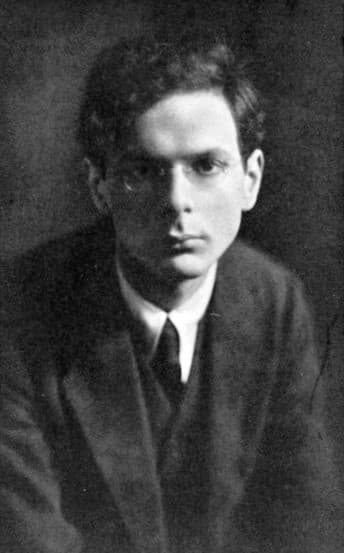
Julius West
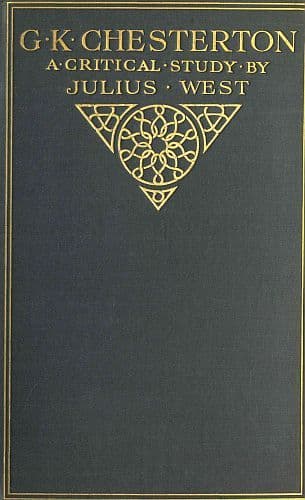
Julius West, originally named Julius Rappoport, was a multifaceted historian, poet, and translator whose contributions spanned literature and political thought. He is perhaps best known for his critical studies, including a Fabian Tract on John Stuart Mill and an examination of G. K. Chesterton's work, which showcased his keen analytical skills and engagement with contemporary intellectual debates. West's translations of Anton Chekhov brought the Russian playwright's nuanced storytelling to English-speaking audiences, enriching the literary landscape of his time. In addition to his literary endeavors, West's historical scholarship included a posthumously published history of Chartism, reflecting his interest in social movements and political reform. His travels to Russia during the 1917 revolution allowed him to witness the fervor of the era firsthand, where he encountered key figures like Lenin and Trotsky. Though his life was tragically cut short at a young age, West's work continues to be recognized for its depth and insight, marking him as a significant figure in the early 20th-century literary and historical discourse.
Famous Quotes
View all 13 quotes“What is really required to defend ‘the West’ against the sudden rise of these barbaric and elemental forces is the strengthening, to an extent perhaps still unknown to Western man, of a heroic vision of life. Apart from the military-technical apparatus, the world of the ‘Westerners’ has at its disposal only a limp and shapeless substance – and the cult of the skin, the myth of ‘safety’ and of ‘war on war’, and the ideal of the long, comfortable, guaranteed, ‘democratic’ existence, which is preferred to the ideal of the fulfilment which can be grasped only on the frontiers between life and death in the meeting of the essence of living with the extreme of danger.””
“The 'human' sense of life, so typical of the modern West, confirms its plebeian and lower aspect. That which some were ashamed of – 'man' – others took pride in. The ancient world elevated the individual to God, made every effort to unbind him from passion, to adapt him to transcendence, with free air of heights in contemplation as well as in action; it knew traditions of non-human heroes and of men of divine blood. The Semiticised world not only deprived the 'creature' of the divine, but finally reduced God to a human figure. Bringing back to life the demonism of a Pelasgian substratum, it substituted the pure Olympian regions, vertiginous in their radiant perfection, with the terrorist viewpoints of its apocalypses, of hells, of predestination, of perdition. God was no longer the aristocratic god of the Romans, the god pf patricians, to whom one prays standing, in the light of the fire, head up high and which is carried at the head of the victorious legions [...]””
“Christianity is at the root of the evil that has corrupted the West. This is the truth, and it does not admit uncertainty. In its frenetic subversion of every hierarchy, in its exaltation of the weak, the disinherited, those without lineage and without tradition; in its call to “love”, to “believe”, and to yield; in its rancor toward everything that is force, self-sufficiency, knowledge, and aristocracy; in its intolerant and proselytising fanaticism, Christianity poisoned the greatness of the Roman Empire. Enemy of itself and of the world, this dark and barbarous wave remains the principal cause of the West’s decline.””
Books from the author




Link to this page
Add a free, dofollow link to Lex on your blog, forum, syllabus, or reading list.

<a href="https://lex-books.com/author/julius-west"><img src="https://lex-books.com/badges/read-on-lex.svg" alt="Julius West on Lex" width="160" height="40"></a>[](https://lex-books.com/author/julius-west)[url=https://lex-books.com/author/julius-west][img]https://lex-books.com/badges/read-on-lex.svg[/img][/url]Julius West on Lex: https://lex-books.com/author/julius-west