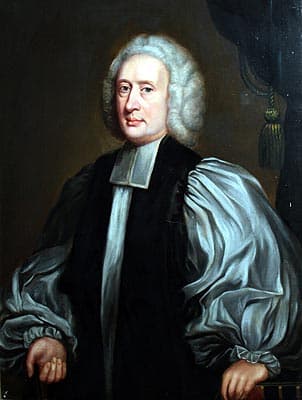
Joseph Butler
Joseph Butler was an influential English Anglican bishop, theologian, and philosopher, born in Wantage, Berkshire. He is best known for his significant contributions to moral philosophy and theology, particularly through his principal works, 'Fifteen Sermons Preached at the Rolls Chapel' (1726) and 'The Analogy of Religion' (1736). In these texts, Butler offered profound critiques of deism and challenged prevailing philosophical ideas, including Thomas Hobbes's egoism and John Locke's theory of personal identity. His arguments emphasized the importance of moral intuition and the role of conscience, positioning him as a key figure in the development of ethical thought during the 18th century. Butler's influence extended beyond his immediate contemporaries, impacting a wide array of philosophers and thinkers, such as David Hume, Adam Smith, and John Henry Newman. Often regarded as one of the pre-eminent English moralists, his work laid foundational ideas that shaped subsequent discussions in moral philosophy and theology. Additionally, Butler's insights contributed to the early discourse on economics, influencing political economist Josiah Tucker. His legacy endures in the realms of ethics and religious philosophy, where his ideas continue to provoke thought and debate.
Famous Quotes
View all 3 quotes“Every thing is what it is, and not another thing.”
“Though a man hath the best eyes in the world, he cannot see any way but that which he turns them.”
“If people would observe the obvious occasions of silence; if they would subdue the inclination to tale-bearing, and that eager desire to engage attention, which is an original disease in some minds; they would be in little danger of offending with their tongue, and would, in a moral and religious sense, have due government over it.”
Books from the author


Link to this page
Add a free, dofollow link to Lex on your blog, forum, syllabus, or reading list.

<a href="https://lex-books.com/author/joseph-butler"><img src="https://lex-books.com/badges/read-on-lex.svg" alt="Joseph Butler on Lex" width="160" height="40"></a>[](https://lex-books.com/author/joseph-butler)[url=https://lex-books.com/author/joseph-butler][img]https://lex-books.com/badges/read-on-lex.svg[/img][/url]Joseph Butler on Lex: https://lex-books.com/author/joseph-butler